
Summary
Editor's rating
Value for money: good starter Sonicare, but extras cost more
Design: simple, light, and mostly practical
Battery life: solid but not mind-blowing
Comfort in daily use: gentle but takes a few days to get used to
Durability and build: feels sturdy, but long-term is the real test
What you actually get with the Sonicare 3100
Effectiveness: does it actually clean better than a manual brush?
Pros
- Cleans noticeably better than a manual brush, especially along the gum line
- Simple to use: one mode, clear 2-minute timer with 30-second QuadPacer
- Good battery life (around two weeks) with a basic but useful battery indicator
Cons
- Only one brush head included and no travel case in this version
- Official replacement heads are relatively expensive compared to third-party options

Specifications
View full product page →| Brand | Philips |
A basic Sonicare that actually feels like an upgrade
I’ve been using the Philips Sonicare 3100 Series (the black HX3671/14) for a few weeks now, after years with cheap manual brushes and a short stint with a basic Oral-B. I grabbed this one because I wanted something simple: no flashy app, no ten brushing modes, just a brush that actually cleans properly and doesn’t die after three days. On paper it’s exactly that: one mode, pressure sensor, timer, and a decent battery.
In daily use, it really does feel like a step up from a manual brush. The first time I used it, my gums tingled a bit and it was slightly weird, but after about three days I got used to the sonic vibration. What stood out quickly was how smooth it feels on the teeth compared to rotating brushes I’ve tried. It’s more of a buzzing glide along the gum line than a drilling sensation.
I’m not going to pretend it’s some life-changing gadget, but it clearly cleans better than a manual brush. After the 2‑minute cycle, my teeth feel closer to that “just left the dentist” feeling than anything I’ve had at home before. The built‑in timer and the pauses every 30 seconds are actually useful, not just a gimmick. They force you to stop rushing the back teeth and the inside surfaces.
If you’re expecting lots of customization or fancy accessories, this isn’t it. It’s a fairly basic handle, one head, one charger, no travel case. But if you just want a solid electric toothbrush that gets the job done without needing an instruction manual or an app, the 3100 fits that role pretty well from what I’ve seen so far.
Value for money: good starter Sonicare, but extras cost more
On the value side, the Sonicare 3100 sits in a pretty reasonable spot. It’s not the cheapest electric toothbrush out there, but compared to Philips’ higher-end Sonicare models, this one is much more affordable while still giving you the key features: sonic cleaning, pressure sensor, and a proper timer with quadrant pacing. For someone trying electric brushing for the first time, I think it hits a good balance between price and features.
Where the value drops a bit is the lack of extras. You only get one brush head and no travel case. If you want a case, you either buy the slightly more expensive version or pick up a generic one. Replacement Philips heads are also not cheap. You can get third-party heads on Amazon for less, and some reviewers say they’re fine, but that’s an extra step and a bit of trial and error. So while the handle itself is good value, the ongoing cost of keeping it stocked with heads can add up if you stick to official ones.
Compared to a basic Oral-B model I’ve used, the Sonicare 3100 feels gentler and more polished, and the battery life is better. Some reviewers even said they bought it just to test if electric brushes were worth it and ended up impressed. I’m in the same boat: the difference compared to manual brushing is clear enough that I don’t see myself going back. For what you pay, you get a solid clean, a decent battery, and a few genuinely helpful features instead of gimmicks.
If you want advanced stuff like multiple modes, Bluetooth, apps, or a fancy display, this is not that product. But if your goal is simply to improve your brushing without spending a fortune, the value is pretty strong, as long as you’re aware that replacement heads are where the brand makes its money.
Design: simple, light, and mostly practical
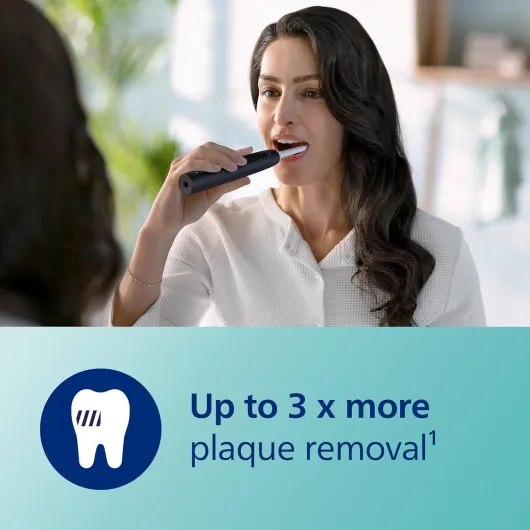
The design of the Sonicare 3100 is pretty minimal. The black version looks clean and neutral, no shiny chrome bits or weird shapes. The handle is slim and fairly light, which I noticed compared to older bulkier electric brushes I’ve used. It’s easy to hold, and it doesn’t feel like a power tool in your hand. There’s just one big button on the front and a tiny battery indicator light near the bottom. That’s all you see.
The grip is decent. The surface isn’t rubbery, but it’s not super slippery either. I’ve used it with wet hands a bunch of times and never dropped it. If you’re used to those chunky Oral-B handles with a lot of rubber, this does feel less grippy but more comfortable to move around in your mouth. The head clicks on and off the handle easily, so swapping brush heads later shouldn’t be a problem.
Noise-wise, I’d call it moderate. It vibrates with a high-pitched hum, but it’s not too loud. My old oscillating brush sounded more aggressive. If someone is sleeping in the next room with the door closed, this shouldn’t bother them. The vibration in the hand is noticeable but not annoying, and after a few uses I stopped thinking about it.
On the downside, there’s no built-in travel protection. No cap for the bristles, no travel case, nothing to stop the button from being pressed in a bag. If you travel a lot, you’ll either want the version with a case or you’ll end up wrapping it in a flannel or using an old case like one of the Amazon reviewers mentioned. Overall, the design is functional and low-profile, but clearly focused on keeping costs down rather than adding nice little extras.
Battery life: solid but not mind-blowing
Battery life on the Sonicare 3100 is pretty solid, especially if you’re used to older brushes that need charging every few days. With my usage (2 minutes, twice a day), I’m getting around two weeks on a full charge, which lines up with what one of the Amazon reviewers reported. After about 14 days, the battery indicator starts to change, and that’s usually my cue to stick it on the charger overnight.
The brush has a small battery light at the bottom of the handle. When it’s fully charged it’s green, and as it runs down it changes behaviour (solid vs flashing). It’s not super detailed—there’s no exact percentage—but it’s enough to avoid the classic “brush dies mid-brush” problem. Compared to some basic Oral-B models that give you zero battery indication and just cut out suddenly, this is an improvement.
Charging is straightforward: you drop it onto the little charger base and plug that in. The base is small and doesn’t take up much space on the sink. It’s not USB-C or anything fancy, but for a bathroom device that mostly lives in one spot, I don’t really care. I tend to charge it overnight every couple of weeks, and that’s been enough to keep it going without drama.
If you travel a lot, the battery life is decent enough for short trips without needing the charger, but for longer holidays you’ll probably want to pack it, especially if you’re brushing more than twice a day. Overall, battery performance is dependable and low-maintenance, even if it’s not the longest-lasting brush on the market. It gets the job done without you having to think about it too much, which is exactly what I want from something I use half-asleep in the morning.
Comfort in daily use: gentle but takes a few days to get used to
In terms of comfort, the Sonicare 3100 is pretty good once you get past the first few days. If you’re coming from a manual brush, the sonic vibration feels odd at the start. The first time I used it, my nose and lips tickled a bit and my gums felt slightly sensitive afterwards. That settled down after about three or four brushing sessions. The EasyStart feature, which ramps up power over the first 14 uses, actually helps. You don’t go straight to full intensity on day one, so it’s easier on your gums.
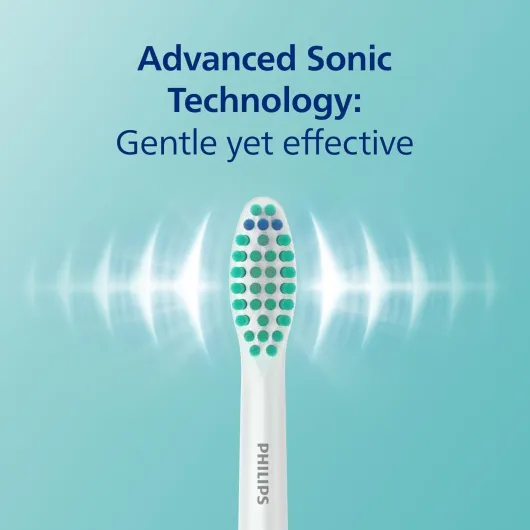
The brush head that comes with it, the C1 ProResults, has soft bristles that feel gentle enough while still feeling like they’re doing something. I don’t get that harsh scratching feeling I had with some cheap third-party heads on older brushes. The head size is reasonable: not huge, not tiny. It’s small enough to reach the back molars without feeling like you’re dislocating your jaw. I can clean the inside of my lower front teeth (where tartar loves to build up) without jabbing my gums too badly.
The pressure sensor also plays into comfort. On the first week, I triggered it a few times because I was treating it like a manual brush and pressing too hard. The little pulse in the handle is a clear sign to ease off. Once I adjusted, my gums felt less sore and I stopped seeing any redness after brushing. If you have sensitive gums, that’s a real plus. It kind of trains you to let the brush do the work instead of scrubbing like crazy.
Overall, comfort is solid once you’re used to the sonic feel. It’s not instant love, but after a week it just feels normal and pretty gentle. If you already know you hate the buzzing sensation of sonic brushes, this won’t magically fix that, but compared to some rougher rotating models, I find this one easier on the mouth for twice-a-day use.
Durability and build: feels sturdy, but long-term is the real test
Durability is always tricky to judge early, but I can at least talk about how the Sonicare 3100 feels and what I’ve seen so far. The handle feels solid enough in the hand. There are no creaks when you squeeze it, no loose parts, and the brush head clicks on firmly without wobbling. It’s also rated as safe around water (as you’d expect), and I’ve rinsed it under the tap after every use with no issues. The finish hasn’t faded or scratched noticeably yet.
Several Amazon reviewers mention using it for months without any problems, and some compare it favourably to older Sonicare models that lasted years. One person said they replaced a much older Sonicare 700 with this 3100 and were happy with it, which is a good sign. Another user mentioned dropping a different brand brush multiple times before it died; I’ve already knocked the 3100 over on the sink a couple of times and it survived fine, no weird rattling or behaviour afterwards.
The weak spot with most electric brushes is usually the battery after a couple of years and the seal around the moving shaft. I obviously can’t test that in a few weeks, but Philips has been making these for a long time, and the design here looks similar to their other Sonicare models that people keep for years. Replacement heads are easy to find too, including cheaper third-party ones if you don’t want to pay full Philips prices, so you’re not tied to expensive consumables forever.
So far, nothing about the build makes me worry, but I wouldn’t call it bulletproof either. It’s light, which is nice for handling but also means it doesn’t feel like a tank. If you’re careful and don’t drop it on tiles every day, I’d expect it to last a good while. Time will tell, but based on feel and other users’ comments, durability seems acceptable for the price bracket.
What you actually get with the Sonicare 3100
Out of the box, the Philips Sonicare 3100 is pretty bare-bones: you get the handle, one C1 ProResults brush head, and a small charger base. That’s it. No travel case, no spare heads, no wall adapter, just the USB-style or 2‑pin shaver plug charger (depending on region). For the price, I would have liked at least a simple plastic cap or pouch, but functionally you have everything you need to start brushing.
The brush itself has just one cleaning mode, which honestly is fine for most people. You press the button once to turn it on, again to turn it off. There’s no cycle of modes to scroll through accidentally. It has a built‑in 2‑minute SmarTimer and a QuadPacer that pauses briefly every 30 seconds to tell you to move to the next section of your mouth. That part is actually very practical in everyday use and lines up with what dentists usually recommend: four zones, 30 seconds each.
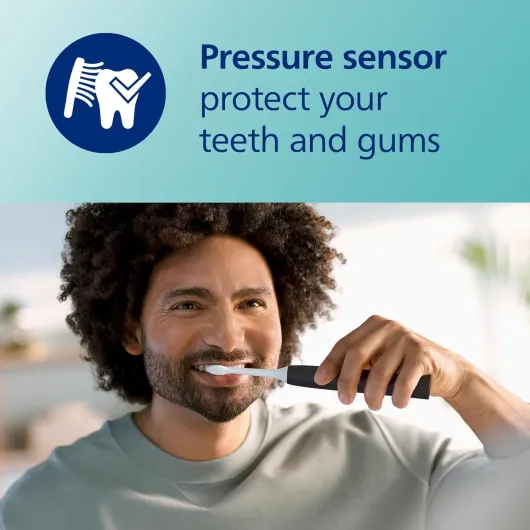
There’s also a pressure sensor, but it’s not a big flashy light or a loud beep. The handle just pulses when you push too hard. The first week I triggered it a few times on my front teeth without realising how much I was pressing. After that, I naturally eased off and now I rarely set it off. If you’re heavy-handed like me, this is useful to keep your gums from getting sore.
In short, the presentation is simple: one mode, one head, one charger, and a couple of smart features (timer + pressure sensor). No clutter, no app, no extras. It feels aimed at someone who wants an introduction to Sonicare without paying for the high-end models. If you expect a full kit with cases and spare heads, you’ll be a bit underwhelmed, but for a basic starter setup it’s enough.
Effectiveness: does it actually clean better than a manual brush?
This is the main question: does the Sonicare 3100 actually clean better than a regular toothbrush? From my experience over a few weeks, yes, it does a noticeably better job, especially along the gum line and between teeth. I’m not measuring plaque with lab equipment, but just by feel and by looking in the mirror, there’s a difference. After the 2‑minute cycle, my teeth feel smoother when I run my tongue over them, particularly on the back molars and the inside surfaces that I tend to rush with a manual brush.
The sonic motion (62,000 movements per minute according to Philips) basically means you just guide the brush slowly along each tooth and let it buzz. You don’t need to scrub. I focus on the gum line, and that’s where I feel the biggest improvement. Spots where I used to get a bit of redness or plaque build-up now feel cleaner. One Amazon reviewer mentioned it really getting into the gum line, and I agree with that. You can feel it working in the tight areas without having to jam the bristles in.
The built-in timer and QuadPacer also help with effectiveness because they keep you honest about the 2 minutes. With a manual brush I’d often quit at around 45 seconds without realising. Here, you get four 30‑second blocks: upper outside, upper inside, lower outside, lower inside (or however you want to divide it). The brief pause every 30 seconds is easy to notice, and then it shuts off at 2 minutes so you know you’re done. It sounds basic, but in practice it does push you to brush properly.
Is it flawless? No. If you have very tight gaps or heavy staining, you’ll still need floss, interdental brushes, and maybe whitening treatment if that’s your thing. This brush won’t magically fix everything. But for everyday plaque removal and general gum health, it’s more than decent. I’d say it’s a clear level up from a manual brush and at least on par, if not better, than basic rotating models I’ve tried, especially in terms of gentleness versus cleaning power.
Pros
- Cleans noticeably better than a manual brush, especially along the gum line
- Simple to use: one mode, clear 2-minute timer with 30-second QuadPacer
- Good battery life (around two weeks) with a basic but useful battery indicator
Cons
- Only one brush head included and no travel case in this version
- Official replacement heads are relatively expensive compared to third-party options
Conclusion
Editor's rating
Overall, the Philips Sonicare 3100 Series is a solid, no-nonsense electric toothbrush. It cleans clearly better than a manual brush, feels gentler than some rotating models, and the built-in timer and pressure sensor actually help you brush properly without thinking too much. The battery life is decent at around two weeks per charge with normal use, and the handle is light and easy to control. For everyday brushing and basic gum care, it gets the job done very well for the price.
It’s not perfect. You only get one brush head, there’s no travel case, and official replacement heads aren’t cheap. There’s just one mode, so if you like lots of customization, you might find it a bit boring. But that simplicity is also its strength: you turn it on, follow the 30‑second beeps, and you’re done. No app, no learning curve, no nonsense. I’d recommend it to anyone moving from manual brushing or from a very basic electric brush who wants something a bit better without going into premium price territory.
If you already own a high-end Sonicare with multiple modes and accessories, this will feel like a step down. If you travel constantly and need a case in the box, you might want a different bundle. But for most people who just want cleaner teeth, healthier gums, and a reliable brush that doesn’t feel cheap, the Sonicare 3100 is a good, practical choice.
![Sonicare 5500 Electric Toothbrush, Sonic Toothbrush with 2 Modes, Pressure Alert, EasyStart, SmarTimer and BrushPacer, Navy, Model HX7113/01 [New Technology] Sonicare 5500, Navy, Travel Case](https://www.electric-toothbrush-guru.com/storage/1025316/conversions/71vNjog50vL._AC_SL1500_-medium.webp)