
Summary
Editor's rating
Is it good value for money?
Simple, slightly plasticky, but practical design
Battery life and charging in real life
Comfort in the mouth and in the hand
Daily performance, pressure control, and modes
What you actually get out of the box
Does it actually clean better than a manual brush?
Pros
- Clearly better cleaning than a manual brush, especially along the gumline and back teeth
- Simple, easy-to-use design with useful timer and pressure control, no app needed
- Reasonable price point that often goes on sale, making it good value for everyday use
Cons
- Battery life is only about a week with regular use, not ideal for frequent travelers
- Replacement brush heads add ongoing cost and aren’t the cheapest
- Basic, slightly dated design with minimal battery indication and no travel case included

Specifications
View full product page →| Brand | Oral-B |
A basic electric toothbrush that actually feels like an upgrade
I’ve been using the Oral-B Pro 1000 for a few weeks now, after years of cheap manual brushes and one bargain electric brush that died in six months. I wanted something simple, not an app-connected gadget with a dozen modes I’d never use. This one kept coming up as a kind of “entry-level but decent” option, so I grabbed the black version and gave it a go.
First impression: it’s not fancy, but it feels like a real step up from a manual brush. The first time I used it, I could tell it was hitting spots I normally miss, especially around the back molars and along the gumline. The built-in timer that buzzes every 30 seconds is a bit weird at first, but after a couple of days my brain just followed it without thinking. I realised I’d probably been brushing for like 45 seconds my whole life instead of the recommended two minutes.
In daily use, the Pro 1000 is basically: press button, brush, rinse, done. No app, no screen, no light show in your bathroom. The main thing I noticed after about a week was that my teeth felt smoother during the day, especially between meals. My gums were a bit sensitive the first two or three brushes, but that calmed down quickly once I stopped pressing like I was still using a manual brush.
It’s not perfect. The battery isn’t endless, the handle is a bit plasticky, and you have to remember to buy replacement heads, which aren’t super cheap. But overall, as a regular person who just wants cleaner teeth without turning brushing into a hobby, it hits a good balance between simplicity, performance, and price.
Is it good value for money?
On the price side, the Oral-B Pro 1000 usually sits in that mid-low range of electric brushes. It’s clearly cheaper than the high-end connected models, but more expensive than a disposable battery-powered brush or a simple manual. For what it offers – solid cleaning, pressure control, timer – I’d say the value is pretty good, especially if you catch it on sale, which happens fairly often.
Where the cost creeps up is with the replacement heads. The official Oral-B heads aren’t the cheapest, and you’re supposed to replace them every three months or so. If you stick to the brand heads, you’re looking at a recurring cost that adds up over a year. There are third-party compatible heads that are cheaper, but quality can vary, so it’s a bit of a gamble. Still, even with the ongoing cost of heads, it’s not outrageous given the improvement in cleaning compared to a manual brush.
For the money, you’re not paying for gimmicks. There’s no app, no pointless LED ring that changes color, no ten different modes you’ll forget about. You’re paying for a simple brush that does the basics well: cleans better than manual, protects your gums a bit with pressure control, and nudges you to brush the full two minutes. If that’s what you care about, you’ll likely feel you got your money’s worth.
If you’re extremely budget-focused and don’t care about the extra cleaning performance, a manual brush is obviously cheaper long-term. On the other hand, if you’re thinking of jumping straight to a top-tier model with a screen and Bluetooth, I’d honestly say try something like the Pro 1000 first. For a lot of people, this level of features and price is the sweet spot between spending too little and overpaying for stuff you won’t really use.
Simple, slightly plasticky, but practical design
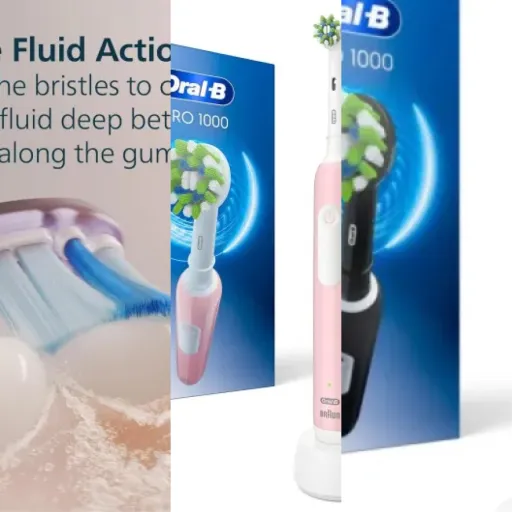
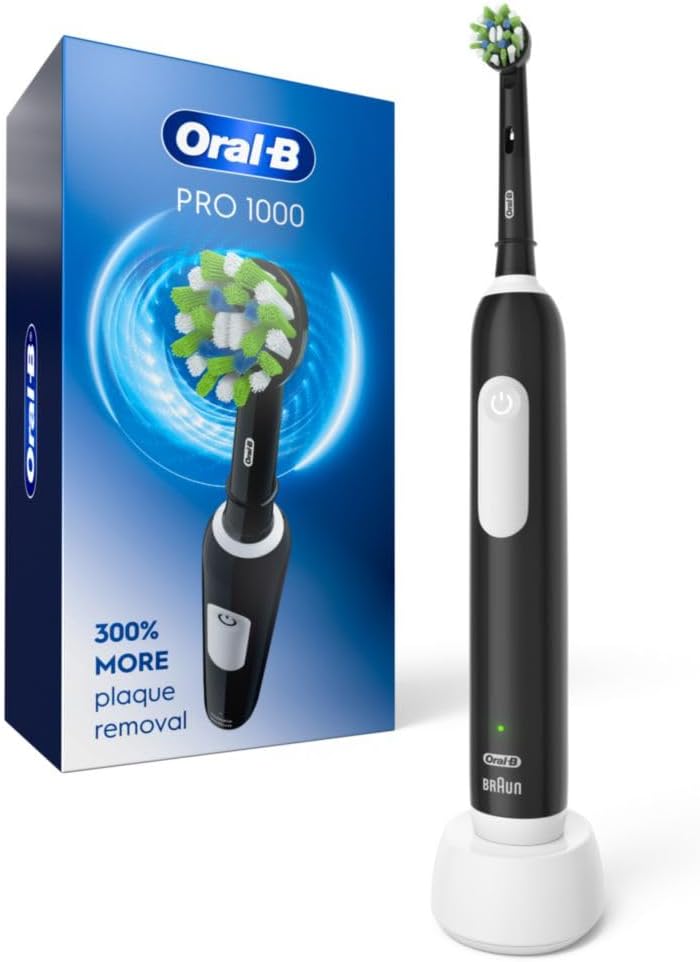
The design of the Oral-B Pro 1000 is pretty straightforward: a slim, slightly chunky handle with a rubbery grip area and a round brush head on top. I went for the black version, which looks a bit nicer than the classic white-and-blue, but it’s still obviously a toothbrush, not some design object. The plastic doesn’t feel premium, but it doesn’t feel like a toy either. It’s somewhere in that middle zone of “good enough for everyday use”.
In the hand, it’s comfortable. The grip area has a bit of texture so it doesn’t slip when your hand is wet or soapy. I’ve used it with toothpaste foam all over my fingers and it never felt like it was going to shoot out of my hand into the sink. The single button is easy to hit, even half-asleep in the morning. There’s no guessing which mode you’re in; you just press and it goes. That’s honestly all I wanted.
The round head is the main difference versus manual brushes or some other electric brands. It’s smaller and easier to maneuver around the back teeth and along the gumline. At first it felt like it was taking longer because I had to move tooth by tooth instead of scrubbing a whole row at once, but after a few days I got used to it. The angle makes it easier to get behind the last molars, which is usually where plaque piles up for me.
On the downside, the overall look is a bit dated compared to newer “sleek” brushes. The charging stand is small but very light, so it can slide around if your counter is wet. Also, the LED indicator is tiny and not super visible unless you’re looking for it. But in day-to-day use, the design is practical, and that matters more to me than whether it looks fancy on the sink.
Battery life and charging in real life
The battery is where I’d say the Oral-B Pro 1000 is decent but not impressive. Using it twice a day for two minutes, I got roughly 7–9 days on a full charge. That’s okay, but not great compared to some newer brushes that last two or three weeks. If you’re mostly using it at home and can leave the charger plugged in, it’s a non-issue. If you travel a lot and don’t like carrying chargers, it’s a bit more annoying.
The charging system is simple: a small stand with a peg that the brush sits on. No cables to plug directly into the handle, just place it on the stand and it charges inductively. The stand is light and doesn’t take much space on the sink, which I liked. The downside is there’s no detailed battery indicator. You just get a basic LED that lights up when it’s on the charger and flashes when the battery is low. There’s no way to see “you have 30% left” or anything like that.
In practice, I ended up leaving it on the charger every few days, just to avoid the surprise of it dying mid-brush. It did cut out on me once halfway through a session when I ignored the flashing light for a couple of days. Not the end of the world, but slightly annoying when you’re rushing in the morning. Since then, whenever I see the LED flash, I just drop it on the base overnight and it’s fine.
If you’re expecting a long-lasting battery you can forget about for weeks, this isn’t it. But if you’re okay with topping it up regularly, it’s acceptable. For the price range, I’d say the battery life is average: not terrible, not great, just workable for everyday home use.
Comfort in the mouth and in the hand
Comfort-wise, the Oral-B Pro 1000 is pretty solid once you get past the first few uses. If you’re switching from a manual brush, the vibration and noise feel a bit intense at the start. The first night I used it, my gums tingled afterwards and I thought I might have overdone it. The trick is to let the brush do the work and stop pressing like you’re scrubbing a pan. After about three days of lighter pressure, my gums stopped feeling sensitive and brushing actually felt easier.
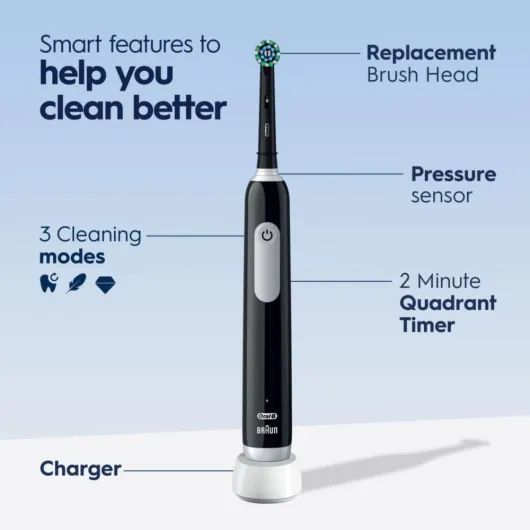
The brush head is listed as “hard” in the specs, but in the mouth it doesn’t feel like sandpaper. It’s firm enough that you feel it cleaning, especially along the gumline, but not so stiff that it hurts, as long as you don’t mash it into your teeth. The built-in pressure control that cuts the pulsations when you press too hard is actually useful. I triggered it a few times at the beginning, which was a good reminder to back off. After a week, I rarely triggered it anymore because I’d adjusted my grip.
In the hand, the weight is decent. It’s heavier than a manual brush, obviously, but light enough that holding it for two minutes isn’t tiring. The shape works well for both a standard grip and a more relaxed hold. I’ve used it in the shower a couple of times, and even with wet hands it stayed secure and comfortable. No weird edges digging into your fingers or anything like that.
Noise level is okay. It’s not silent – people in the next room will hear a faint buzz – but it’s not a power drill either. If you’re sensitive to noise early in the morning, it might annoy you a bit, but I got used to it quickly. Overall, in terms of comfort, it’s not luxurious, but for daily use it’s completely fine and didn’t cause any lasting irritation or pain once I got past the first few days of getting used to it.
Daily performance, pressure control, and modes
In terms of pure performance, the Pro 1000 is pretty straightforward: you get solid power, consistent vibrations, and a basic set of features that actually matter. When you hit the button, it ramps up quickly and stays at the same intensity the whole time. I never felt it randomly slowing down mid-brush unless the battery was really close to empty. Even then, it still finished the two minutes without just dying halfway through.
The pressure control is one of those features you don’t think you need until you have it. If you push too hard, the brush stops its pulsation and just rotates more gently. The first week, I triggered this multiple times per session, which says a lot about how hard I’d been brushing with a manual brush. Over time, I subconsciously adjusted and now I rarely trigger it, which is probably better for my gums. It’s a simple system, but it works, and it’s nice to have that feedback without needing an app.
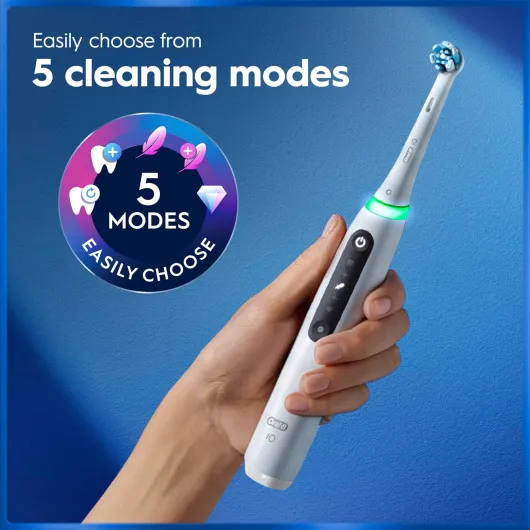
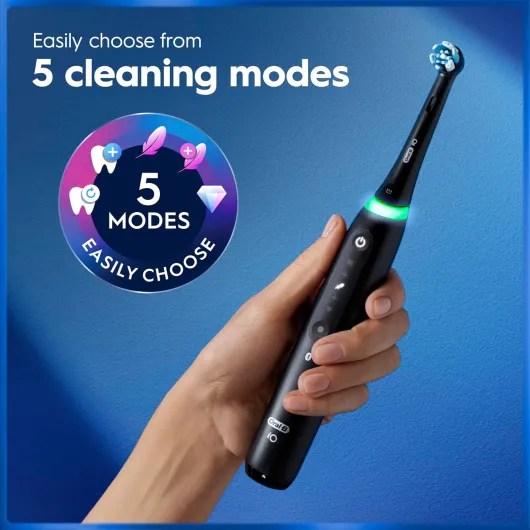
Regarding modes, the product description talks about multiple cleaning modes, but on this specific model it’s not like you have a whole menu to choose from. You basically get a standard daily clean with that built-in pressure control. Personally, I didn’t miss the extra modes. I mostly want one setting that works every time, and that’s what this gives. If you’re into special whitening modes or super-gentle settings, you might want a higher-end model, but for regular brushing this is enough.
Day-to-day, the performance is consistent: no random glitches, no weird noises, no sudden shutdowns. The only real limitation is that it’s not the quietest brush and it doesn’t have the most powerful motor on the market, but for normal use it’s more than strong enough. If you’re upgrading from a cheap manual brush or a low-power budget electric, you’ll notice the difference right away.
What you actually get out of the box
Out of the box, the Oral-B Pro 1000 is pretty bare-bones, which can be good or bad depending on what you expect. You get the handle, a single round brush head, and a small charging stand. That’s it. No travel case, no extra heads, no wall adapter – just the basic setup. For the price, I would have liked at least a cheap plastic travel cover for the head, but you can live without it.
The handle has one big button and a small LED that shows charging status. There are no fancy screens or battery percentage indicators, just a simple light that comes on when it’s charging and flashes when it needs juice. The cleaning modes are handled by how long you press the button, but in practice I mostly stayed on the standard mode. The brand talks about several modes, but on this model it’s basically a straightforward daily clean with pressure control, not a whole menu to scroll through.
Setup is almost idiot-proof: pop the brush head onto the metal rod until it clicks, plug in the base, and drop the handle onto it. It started with some charge already, but I let it sit for a few hours before first use. There’s no app pairing, no account, no QR codes – you just plug and brush. Honestly, that’s refreshing in 2026 when everything wants your email address.
Overall, the presentation is very no-frills. If you like lots of accessories and a premium unboxing, this will feel a bit cheap. If you just want something that works and don’t care about the rest, the minimal package is fine. Just keep in mind you’ll probably end up buying at least a couple of extra heads right away if more than one person wants to use it.
Does it actually clean better than a manual brush?
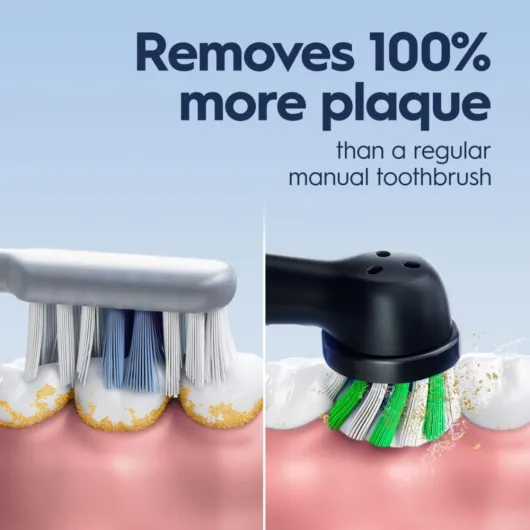
This is the main point: does the Oral-B Pro 1000 actually clean better than a basic manual brush? In my experience, yes, and not just a little. After the first proper two-minute session, my teeth felt smoother when I ran my tongue over them, especially on the inside surfaces that I usually rush through. The feeling you get after a dentist cleaning obviously isn’t there, but it’s noticeably closer than what I used to get with a manual brush.
The combination of the round head and the rotation/pulsation movement does a good job around the gumline. I tend to get plaque building up near the lower front teeth. After about a week of using this twice a day, I could see and feel less buildup in that area. My gums also looked a bit less red. I’m not going to pretend it’s a miracle device, but the difference compared to my old manual brush was pretty clear. The quadrant timer that buzzes every 30 seconds is a bit annoying at first, but it forces you to actually spend time in each area instead of doing a quick 20-second scrub and calling it a day.
I also tried skipping a day to see how it felt going back and forth between manual and electric. On the day I used a manual brush again, my teeth just didn’t feel as clean, especially between the teeth and near the back molars. Going back to the Oral-B the next day, that smooth feeling came back. It’s not night and day, but it’s enough that I’d rather stick with the electric now.
One thing to be clear about: it won’t fix bad brushing habits on its own. If you barely touch your gums or rush the job, you’ll still do a mediocre job. But if you follow the timer and let the head sit on each tooth for a second or two, it really does remove more gunk. For everyday use, I’d say the effectiveness is the main reason to buy it, and on that front it gets the job done very well for the price.
Pros
- Clearly better cleaning than a manual brush, especially along the gumline and back teeth
- Simple, easy-to-use design with useful timer and pressure control, no app needed
- Reasonable price point that often goes on sale, making it good value for everyday use
Cons
- Battery life is only about a week with regular use, not ideal for frequent travelers
- Replacement brush heads add ongoing cost and aren’t the cheapest
- Basic, slightly dated design with minimal battery indication and no travel case included
Conclusion
Editor's rating
Overall, the Oral-B Pro 1000 is a straightforward electric toothbrush that does what most people actually need: it cleans noticeably better than a manual brush, helps you stop brushing too hard, and forces you to brush for a proper two minutes. It’s not loaded with fancy features, and honestly, that’s part of the appeal. After a few weeks of use, my teeth felt smoother, plaque buildup around the gumline went down, and my gums looked a bit healthier. It’s not magic, but it’s a clear upgrade from basic brushing.
It’s not perfect, though. The battery life is just okay, the design feels a bit basic, and you’ll have to budget for replacement heads, which aren’t the cheapest. If you travel a lot or want a super long-lasting battery, you might find it a bit limited. And if you’re into techy stuff like apps, detailed stats, or lots of brushing modes, this model will feel too simple for you.
I’d recommend it to anyone who’s currently using a manual brush or a very cheap electric and just wants a solid, no-drama upgrade without spending a fortune. It’s also good if you want pressure control and a timer without dealing with apps. If you already own a higher-end electric brush with more features, this will probably feel like a step down. For most everyday users, though, it hits a good balance of performance and price and gets the job done without turning toothbrushing into a gadget obsession.
![Sonicare 5500 Electric Toothbrush, Sonic Toothbrush with 2 Modes, Pressure Alert, EasyStart, SmarTimer and BrushPacer, Navy, Model HX7113/01 [New Technology] Sonicare 5500, Navy, Travel Case](https://www.electric-toothbrush-guru.com/storage/1025316/conversions/71vNjog50vL._AC_SL1500_-medium.webp)