Summary
Editor's rating
Is the Philips Sonicare 4100 worth the money?
Simple design, quiet motor, and a small head that actually fits everywhere
Battery life and charging: strong battery, slightly annoying charger setup
Comfort and feel in the mouth: intense at first, then pretty natural
Build quality and long-term feel
What you actually get in the box
Cleaning performance: does it actually make a difference?
Pros
- Strong cleaning performance with noticeable smoother teeth compared to manual brushing
- Long battery life (around 2+ weeks) with simple charging base
- Useful features only: timer, QuadPacer, and pressure sensor without unnecessary extra modes
Cons
- No wall adapter included and older Sonicare chargers may not be compatible
- Only one brush head in the box and genuine replacement heads are not cheap

Specifications
View full product page →| Brand | Philips Sonicare |
| Package Dimensions | 10.59 x 7.95 x 3.11 inches; 1.04 Pounds |
| Item model number | BD5002AZ |
| Date First Available | May 2, 2025 |
| Manufacturer | Philips Sonicare |
| ASIN | B0F5VHLR3X |
| Best Sellers Rank | See Top 100 in Health & Household |
| Age Range (Description) | Adult |
A simple electric toothbrush that actually feels like an upgrade
I’ve been using the Philips Sonicare 4100 for a few weeks now, after years with basic manual brushes and a cheaper electric model. I’m not a dentist, just someone who’s lazy enough about brushing that I wanted something that would basically force me to do it properly. The short version: this thing does what it says. My teeth feel smoother, and I actually notice when I skip a session now, which wasn’t really the case before.
What pushed me to try this one specifically was the mix of price and features. A lot of electric toothbrushes are loaded with useless stuff: Bluetooth apps, five brushing modes you never touch, light shows, the whole circus. This one is more bare‑bones in a good way. You get a pressure sensor, a timer, two intensity levels, and that’s pretty much it. That’s already more than enough for daily use.
The first time I used it, I’ll be honest, it felt a bit intense. The vibration is strong and the sonic buzzing is a bit weird if you’re used to manual brushing or those cheaper rotating heads. But after two or three days, my mouth got used to it, and that strong vibration is exactly what makes the teeth feel properly cleaned, especially along the gum line and between teeth. It’s not painful, just different at the beginning.
Overall, I’d say this is a pretty solid everyday toothbrush for someone who wants better cleaning without paying the premium for all the fancy stuff. It’s not perfect, there are a couple of annoying details I’ll get into later (especially the charger situation), but in daily use, it gets the job done and makes normal brushing feel kind of lazy by comparison.
Is the Philips Sonicare 4100 worth the money?
In terms of price, the Sonicare 4100 usually sits in the mid‑range. It’s not the cheapest electric toothbrush out there, but it’s also far from the top‑tier models that cost well over a hundred bucks. I picked it up around the $30–$50 range depending on sales, which feels reasonable for what you get: strong cleaning, a pressure sensor, and decent battery life. Compared to really basic rotating brushes or no‑name brands, this feels like a clear step up without going into luxury territory.
Where the value can get a bit iffy is the ongoing cost of brush heads. Genuine Philips heads aren’t super cheap, especially if you stick to the recommended replacement schedule (around every three months). If you’re on a tight budget, that recurring cost can add up over the years. On the other hand, one handle can be shared by two people with separate heads, so that spreads the cost a bit. Some users also use compatible third‑party heads to save money, but that’s a personal choice.
Feature‑wise, you’re paying for actual useful things rather than gimmicks: the timer, QuadPacer, pressure sensor, and sonic cleaning. You’re not paying for Bluetooth apps or seven cleaning modes you’ll never touch. If you like that this is a straightforward brush that focuses on cleaning performance instead of tech toys, then the price feels fair. It’s basically a solid middle‑ground: better than entry‑level cheap options, but without the markup of the flashy high‑end stuff.
If you’re coming from a manual brush, you’ll likely feel a real difference and probably see some benefit in your next dentist visit, which makes the cost easier to justify. If you already own a working mid‑range electric brush, this is more of a side‑grade unless your old one is dying or the battery is shot. So, good value overall, but not some miracle deal. It’s just a solid, reasonably priced tool that does its job well.
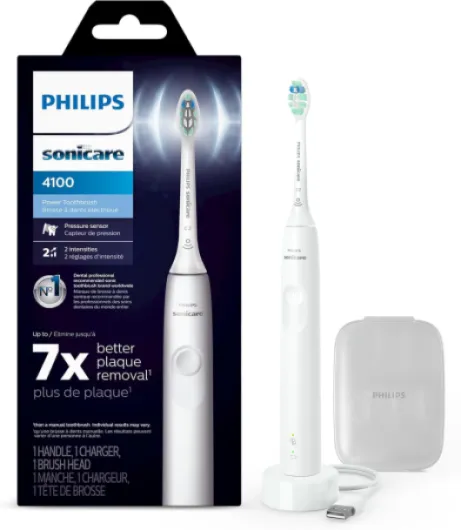
Simple design, quiet motor, and a small head that actually fits everywhere
Design‑wise, the Sonicare 4100 is pretty straightforward. The handle is slim and fairly light, so it doesn’t feel like holding a power drill in your mouth. I’ve used older Sonicare models before, and this one feels a bit thinner and more balanced. If you have small hands or just hate bulky handles, that’s a plus. The surface has a slight matte feel, so it doesn’t get too slippery even when wet, though it’s not heavily rubberized either.
The brush head it comes with (C2 Optimal Plaque Control) is on the smaller side, which I actually prefer. It’s easier to reach the back molars and the inside surfaces without feeling like you’re jamming a giant tool into your cheeks. The bristles are rated as soft, and they do feel soft on the gums, but combined with the sonic vibration you still feel like it’s scrubbing properly. After a few days, I didn’t see any weird fraying or flattening of the bristles, which sometimes happens with cheaper heads.
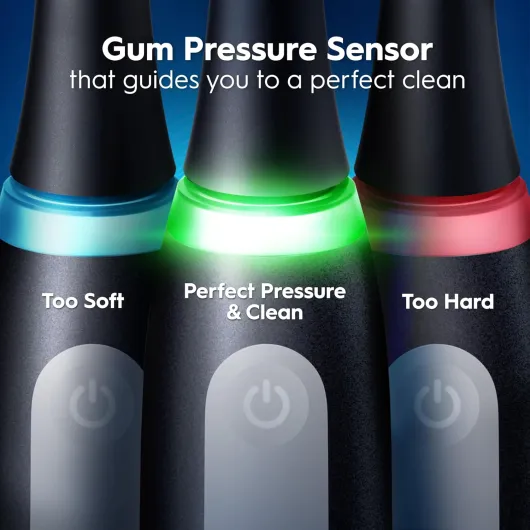
Noise level is decent. It’s not silent, obviously, but compared to some older electric brushes that sound like a lawn mower, this one is more like a muted buzzing. You could use it in the morning without waking up the whole house. The pressure sensor is built into the handle and doesn’t add any awkward bulk. When you press too hard, you feel the vibration drop a bit and you get a subtle warning, but there’s no huge flashing light or anything annoying like that.
Overall, the design is practical: one button, a couple of lights, small head, and a handle that’s easy to hold. No chrome accents, no fake premium look, but it doesn’t scream “cheap plastic” either. It sits somewhere in the middle: decent quality, focused on function. If you like super fancy designs, this won’t impress you, but if you just want something that feels solid in the hand and fits well in the mouth, it does the job.
Battery life and charging: strong battery, slightly annoying charger setup
The battery life on the Sonicare 4100 is honestly one of its best points. Philips claims up to two weeks on a full charge, and in my use, brushing twice a day, I got a bit more than that before the battery light started warning me. Some users even report closer to three to four weeks depending on intensity and duration, which doesn’t surprise me. You’re not constantly thinking about charging it, which is exactly what you want with a toothbrush.
The downside is the charging setup. In the box, you get a USB charger base, but no wall adapter. That means you either plug it into an existing USB brick from your phone or into a USB port on a laptop or outlet adapter. It’s not the end of the world, but for a bathroom device, I’d rather just have a standard plug included. The whole “we did this for sustainability” line feels a bit like an excuse to cut costs, especially since older Sonicare models came with a full charger and they changed the connector type along the way.
Charging itself is simple: you just drop the handle onto the base and let it sit. There’s a small light that indicates charging status. It’s not fast charging or anything, but you don’t really need that for a toothbrush. I just leave it overnight when the battery light gets low, and by the next morning, it’s good to go again. If you’re a frequent traveler, the long battery life means you can probably leave the charger at home for trips under two weeks, which is handy.
Overall, I’d rate the battery performance as very good, but the lack of a wall adapter and the fact that older chargers aren’t always compatible is a bit of a pain. If you already live in a USB‑everywhere world, you won’t care much. If you’re used to just plugging things into a bathroom outlet, you might roll your eyes. Still, once charged, it lasts long enough that the annoyance is occasional, not constant.
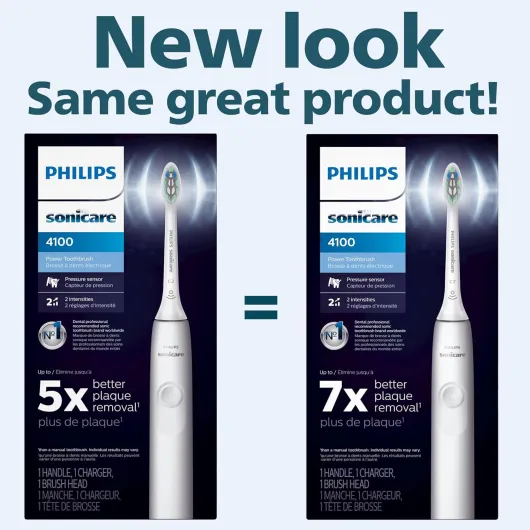
Comfort and feel in the mouth: intense at first, then pretty natural
On comfort, there are two parts: how it feels in your hand, and how it feels in your mouth. In the hand, it’s fine: the weight is balanced, and the single button is easy to hit even with wet fingers. I never felt like I was going to drop it, even when half asleep. The slim handle makes it easier to maneuver, especially when you’re trying to reach the back teeth without twisting your wrist into weird angles.
In the mouth, the first impression is honestly a bit harsh if you’ve never used a sonic brush before. The vibration is strong and you feel it not just on your teeth, but in your jaw and even a bit in your skull the first couple of uses. But after two or three days, it stops feeling weird and just feels like a thorough clean. The built‑in feature that slowly ramps up intensity over the first few uses (the “easy start” type function) helps a lot. You don’t go straight to full blast on day one, so your gums have time to get used to it.
The bristles themselves are soft enough that my gums didn’t bleed or feel abused, which has happened to me with some harder bristles and aggressive manual brushing. The pressure sensor is also useful here: if you’re someone who tends to scrub like you’re sanding wood, the brush will basically tell you to chill by reducing the vibrations when you push too hard. After a week, I naturally started using lighter pressure, which is better for the gums long term.
Day‑to‑day, brushing with this for the full two minutes feels manageable. I didn’t feel any jaw fatigue or gum soreness once I got used to it. I’d say it’s very comfortable once you pass that initial adaptation phase. If you have extremely sensitive gums, you’ll probably use the lower intensity setting and maybe still need a few days to adjust, but for normal use, it’s pretty friendly. Not luxurious or anything, but practical and easy enough to live with twice a day.
Build quality and long-term feel
I haven’t had this specific unit for years yet, obviously, but you can still get a sense of durability from the build and from what long‑time Sonicare users report. The handle feels solid with no creaks or loose parts when you twist it a bit in your hand. The button has a firm click and doesn’t feel mushy or cheap. The finish doesn’t show water spots too badly and wipes clean easily, which matters because these things live in a humid, messy bathroom environment.
From reading other users’ experiences, a lot of people have had their older Sonicare brushes last anywhere from 5 to almost 10 years, with the battery being the first thing to slowly degrade. One reviewer mentioned their first Sonicare lasted about 9.5 years before the battery stopped reaching full. If this 4100 follows the same pattern, it should be fine for several years of daily use. Obviously, that’s speculation based on brand history, but nothing in the build quality so far makes me think it’s fragile.
The brush heads click on securely and don’t wobble while in use. I’ve had cheaper electric brushes where the head started to loosen over time and rattle more and more. So far, no such issue here. The brush head case also feels decent enough: it’s just plastic, but the hinge doesn’t feel like it’s going to snap instantly, and it closes firmly enough to keep dust out if you’re traveling or storing spare heads.
Of course, it’s still mostly plastic, so if you drop it on tile floor repeatedly, I’m sure it’ll eventually crack or get scuffed. But for normal bathroom use—getting splashed, knocked over occasionally, thrown into a bag—it seems sturdy enough. I wouldn’t call it premium, but it doesn’t feel flimsy either. As long as you’re not abusing it, I’d expect it to hold up well for regular everyday brushing.
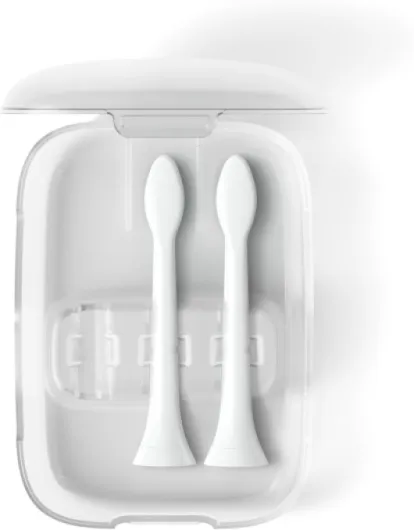
What you actually get in the box
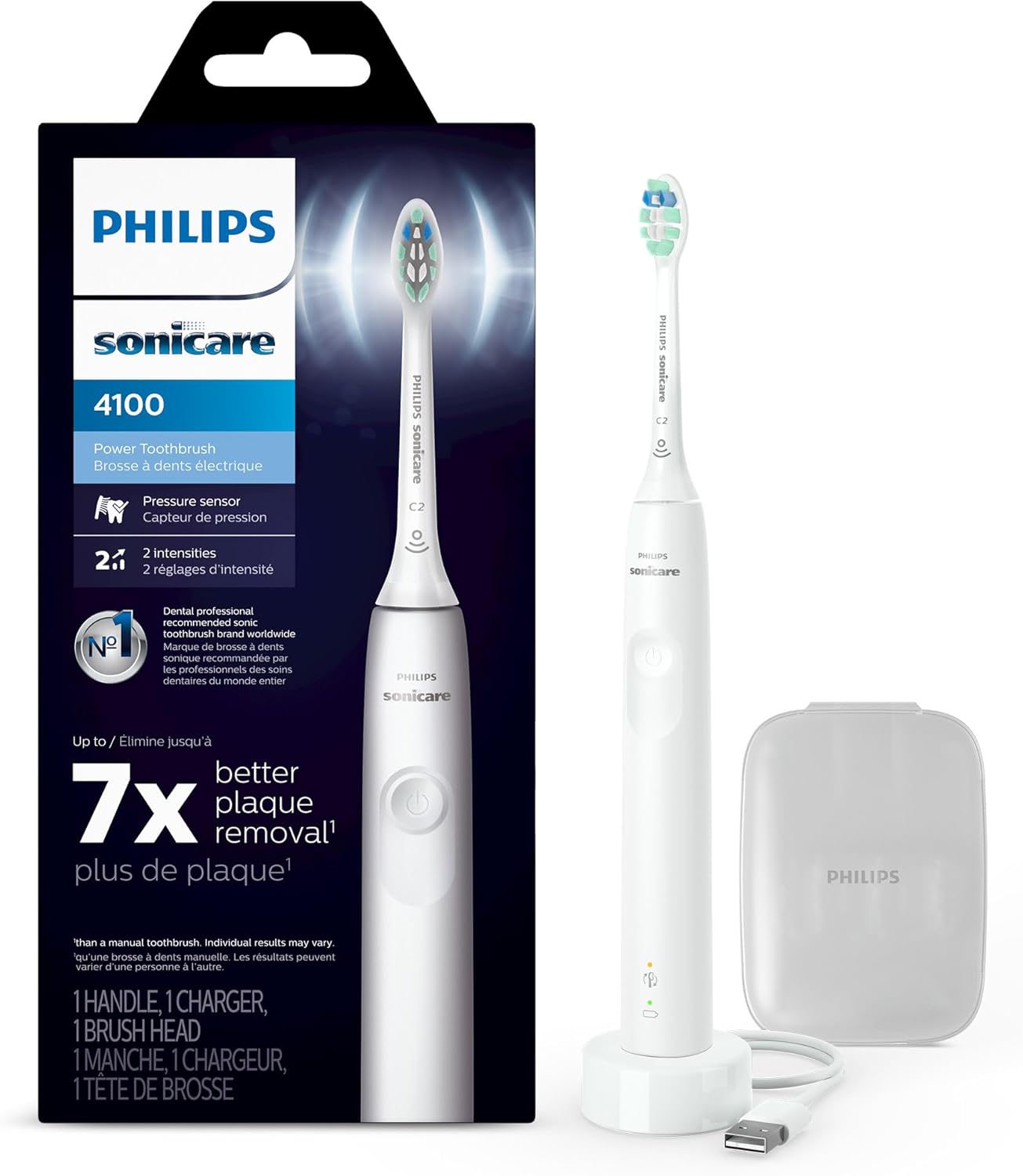
In the box, you get the basics: one Sonicare 4100 handle, one C2 Optimal Plaque Control brush head, a USB charger, and a small brush head case that fits up to three heads. No wall adapter, which is slightly annoying, but if you already own a phone charger brick, you can plug the USB cable into that. The set is clearly geared towards someone who wants a simple setup without a bunch of spare parts lying around.
The handle itself is lightweight and feels more compact than a lot of chunkier electric brushes I’ve tried in the past. There’s only one button on the front, which turns it on and cycles the intensity. No screen, no extra buttons. You also get some indicator lights: one for battery and one for the BrushSync feature that basically tells you when the head should be replaced. The model I tested is the white version, which is neutral and goes with pretty much any bathroom setup. Nothing flashy here, but it doesn’t look cheap either.
The brush head case is a small but useful bonus. It’s not a full travel case for the handle, just for the heads, but it does keep them clean if you throw them in a bag or keep multiple heads for different people. If you travel with the whole setup, you’ll probably still want a separate pouch or case for the handle and charger, but for the price point, I wasn’t expecting more than this.
In practice, the package is very much “what you need, nothing more”. One thing to note: you only get a single brush head in the box, so if you’re planning to share the handle with someone else or just want backups, you’ll need to buy extra heads pretty quickly. Compared to some pricier kits that ship with two or three heads, this feels a bit bare, but again, it keeps the initial cost down.
Cleaning performance: does it actually make a difference?
This is where the Sonicare 4100 is clearly better than a manual brush, at least in my mouth. After the first proper two‑minute session, my teeth felt noticeably smoother when I ran my tongue over them, especially along the gum line and on the back surfaces I usually rush through. That “just left the dentist” feeling is maybe a bit of an exaggeration, but it’s clearly a step up from my usual lazy manual brushing. Plaque buildup around the lower front teeth, which is usually where I see it first, reduced over about a week of twice‑daily use.
The brush uses sonic vibrations (they claim 31,000 strokes per minute), which basically means it shakes the plaque loose and moves fluid around the teeth. It’s not magic, but in practice it does seem to clean between teeth better than a standard manual brush. It’s not a replacement for flossing, but on nights when I skipped floss (which happens more often than it should), my mouth still didn’t feel gross the next morning. With my old manual brush, I could feel roughness between teeth much faster.
The built‑in timer and QuadPacer make a bigger difference than I expected. Every 30 seconds it pauses briefly to tell you to move to the next quadrant of your mouth. That simple feature forces you to spend equal time on each area instead of over‑focusing on the front teeth and rushing the rest. Over two weeks, I noticed I was way more consistent with full coverage. It sounds basic, but it works, especially if you’re someone who usually brushes for like 40 seconds and calls it a day.
Is it perfect? No. If you have heavy staining from coffee, tea, or smoking, this alone won’t whiten your teeth in any dramatic way. It’s more about daily plaque control and gum health. But for that, it’s pretty solid. My mouth feels cleaner, my gums look less irritated, and I don’t feel that fuzzy film on my teeth at the end of the day as quickly. For the price range, I’d say the cleaning performance is the main strong point of this brush.
Pros
- Strong cleaning performance with noticeable smoother teeth compared to manual brushing
- Long battery life (around 2+ weeks) with simple charging base
- Useful features only: timer, QuadPacer, and pressure sensor without unnecessary extra modes
Cons
- No wall adapter included and older Sonicare chargers may not be compatible
- Only one brush head in the box and genuine replacement heads are not cheap
Conclusion
Editor's rating
The Philips Sonicare 4100 is a straightforward electric toothbrush that focuses on the basics and mostly gets them right. The cleaning performance is strong, the timer and 30‑second pacing actually help you brush properly, and the pressure sensor is handy if you tend to brush too hard. The small brush head reaches tight spots easily, and the battery life is long enough that you rarely think about charging it. It’s not flashy, but in daily use, it quietly does what you bought it for: cleaning your teeth better than a regular manual brush.
It’s not perfect. The lack of a wall adapter is annoying, and the fact that older Philips chargers aren’t always compatible feels a bit like forced obsolescence. You only get one brush head in the box, and buying genuine replacements isn’t cheap in the long run. There’s also a short adjustment period where the vibration feels intense, especially if you’ve never used a sonic brush before. But once you get past that, it’s pretty easy to live with.
I’d recommend this mainly to people who want a no‑nonsense electric toothbrush with solid cleaning power and don’t care about fancy apps or multiple modes. If you’re moving up from a manual brush or a very basic electric brush, you’ll probably notice the difference. If you already own a good mid‑range electric brush that still works, I wouldn’t rush to replace it unless the battery is dying. Overall, it’s a good, practical choice with a decent price‑to‑performance ratio, as long as you’re okay with buying replacement heads and sorting out your own wall adapter.