
Summary
Editor's rating
Price vs value: who should actually buy this
Design and build: looks premium, feels good, but is it tough?
Comfort in the mouth and daily use
What you actually get in the box
Cleaning performance and real-world results
Battery life and overall performance over time
App, sensors, and all the “smart” stuff: useful or just gimmicks?
Pros
- Very good cleaning performance with multiple useful modes and soft but effective brush heads
- Strong battery life (roughly 2+ weeks on a charge) and convenient glass and travel charging options
- Pressure sensor and guided features help protect gums and improve brushing habits, especially at the start
Cons
- High price compared to mid-range Sonicare models that already clean very well
- Repeated user reports of mechanical and moisture-related failures for such an expensive device
- App and smart features are nice but tend to be used less over time, making the premium harder to justify

Specifications
View full product page →| Brand | Philips Sonicare |
A $300+ toothbrush… is it actually worth it?
I’ve been using the Philips Sonicare DiamondClean Smart 9750 in Lunar Blue for a while now, and I’ll be blunt: this is a fancy toothbrush with a price that makes you pause. I came from a basic Sonicare model that cost under $100, so switching to this felt a bit like going from a basic hatchback to a loaded SUV just to drive to the grocery store. The question I had from day one was simple: does it actually clean better, and is all the smart stuff more than a gimmick?
From the first use, the difference in the clean feeling is clear. My teeth feel smoother after brushing, especially around the gumline and behind the front teeth where I usually miss spots. The extra modes like Gum Health and Deep Clean+ don’t feel like marketing; they really do change how the brush behaves. But at the same time, you’re paying a lot for features like app tracking, a glass charger, and a fancy travel case that not everyone actually needs day to day.
Reading other reviews, there’s a clear pattern: people love the cleaning performance and the look, but there are some repeated complaints about durability and the internal mechanism going loose after months or a few years. I had that in mind while testing, and I’ll be honest, on such an expensive device, that kind of feedback makes me a bit nervous about long-term ownership. Philips support seems decent from what users report, but you shouldn’t have to rely on warranty swaps for something this pricey.
So this review is from that angle: someone who likes good gear, isn’t against paying more if it actually delivers, but also doesn’t have patience for overhyped “smart” features. I’ll go through what actually feels useful in daily life, what feels like overkill, and where this thing is strong versus where it’s just an expensive way to do the same job as a cheaper Sonicare.
Price vs value: who should actually buy this
This is where things get a bit tricky. The DiamondClean Smart 9750 is expensive If you’re the type who likes high-end gadgets, wants coaching from the app, travels often, and actually uses different modes for gum care, deep cleaning, and whitening, then the 9750 can feel like a complete oral care kit. In that case, the value is decent because you’re actually using what you paid for. Also, if you have gum issues or lots of plaque buildup historically, the combination of good heads, pressure sensor, and guided brushing can genuinely help clean up your routine. On the downside, if you just want a solid electric toothbrush that cleans better than manual and you don’t care about apps or fancy chargers, this is probably overkill. A mid-range Sonicare without all the smart extras will give you 80–90% of the real-world cleaning for a lot less money. And when you factor in the reports of mechanical failures and moisture issues, the high price stings more, because you expect rock-solid durability at this level and you’re not clearly getting that. So in terms of value, I’d call it: great performance, premium experience, but only good value if you actually use the full feature set and you’re okay gambling a bit on long-term durability. If you’re more practical and just want clean teeth without all the tech, there are cheaper Sonicare options that will get the job done just fine.
Design and build: looks premium, feels good, but is it tough?
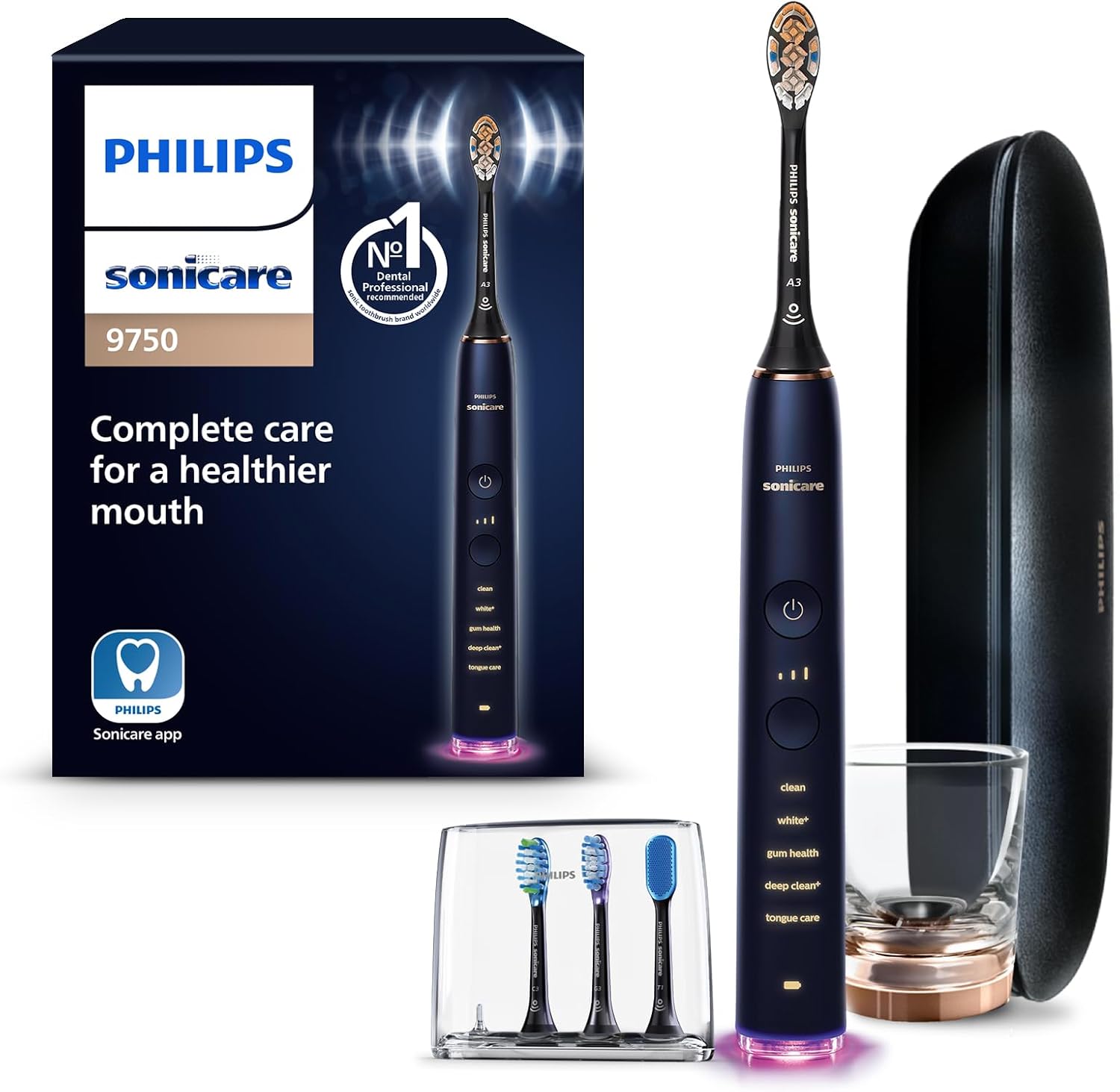
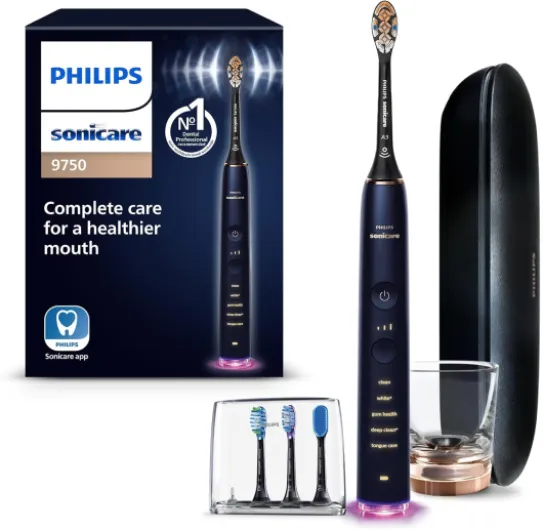
The design is honestly one of the main selling points. The Lunar Blue color looks clean and modern, and the handle has a matte finish that doesn’t feel slippery even when wet. It’s slimmer than I expected for something with so many features. The button layout is simple: one power button and one mode/intensity button, plus a light ring around the bottom that doubles as a pressure warning and status indicator. No clutter, no weird extra controls.
The charging glass is one of those things that looks a bit gimmicky at first but is actually convenient. You just drop the handle in the glass and it charges through the base. It’s more stable than I thought and doesn’t tip easily. That said, if you have a tiny sink or bathroom counter, it does take more space than a small plastic stand. And realistically, you’re not going to drink from that glass, so it’s basically a dedicated charger cup.
Now, on the build quality side, this is where I’m a bit cautious. My unit so far hasn’t failed, but reading other user reviews about the oscillation mechanism getting loose and the “wiggly bit” going floppy after some time is hard to ignore. One user said their first lasted about three years, another had one fail after just three months. Moisture getting into the handle and messing with the electronics or battery is a common theme in complaints about this model. For something at this price, that kind of pattern is not great.
So design-wise: it looks good, feels good in the hand, and the interface is straightforward. But I wouldn’t call it bulletproof. If you’re rough with your stuff, drop it often, or leave it constantly soaked in a wet cup, I wouldn’t be surprised if you run into the same issues others have reported. If you’re careful and dry it off a bit after use, you’ll probably get more life out of it, but I still think Philips could do better on the sealing, given the cost.
Comfort in the mouth and daily use
Comfort is one area where the DiamondClean Smart 9750 does really well. The brush heads are labeled as soft, and they do feel gentle on the gums. I have slightly sensitive gums that bleed if I go at them too hard with a manual brush. With this Sonicare, even on the higher intensity, I didn’t get that raw, scraped feeling. The vibration is powerful but not harsh, more of a buzzing glide than a jackhammer. If you’ve never used a sonic brush before, the first few uses feel weird, but you adjust quickly.
The handle is light enough that your hand doesn’t get tired during the standard two-minute cycle. The built-in timer and quadpacer (it pauses slightly every 30 seconds) help you move around your mouth without thinking too much. That actually improves comfort mentally, because you’re not constantly second-guessing if you’ve brushed long enough. The pressure sensor is also useful: when you press too hard, the light ring flashes and the vibration slightly changes. I noticed I was pressing harder than needed, so I backed off and my gums felt better after a few days.
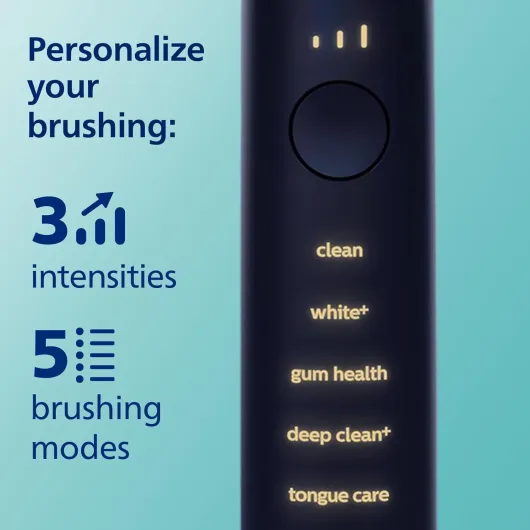
One thing to know: on Deep Clean+ mode at higher intensity, the vibration can feel a bit much if you’re sensitive, especially on the front teeth. I ended up using medium intensity for that mode most of the time. The Gum Health mode is noticeably gentler and good if your mouth is sore or if you’ve just had some dental work done. So the flexibility of 5 modes and 3 intensities isn’t just a checkbox; it actually lets you find a combo that doesn’t annoy your teeth or gums.
As for daily hassle, it’s straightforward. Rinsing the head, wiping the handle, and dropping it in the glass is quick. The only mild comfort downside is the noise: it’s not loud, but it has that sonic high-pitched hum. If you share a small space and brush early or late, it’s not silent. Still, overall, in terms of comfort of use and feel in the mouth, it’s pretty solid and better than the cheaper Sonicares I’ve tried.

What you actually get in the box
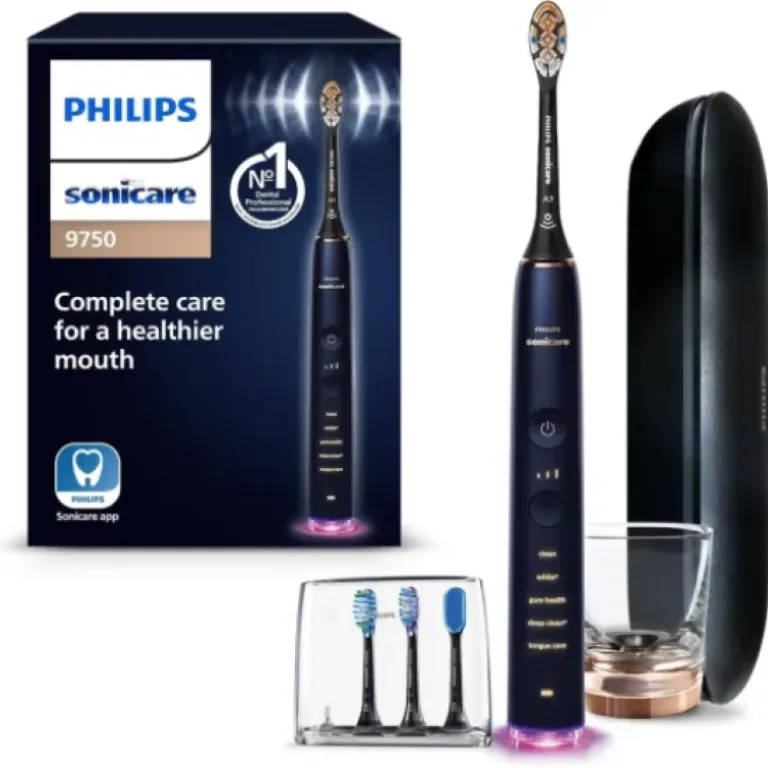
The 9750 kit is pretty loaded. In my box I had the handle, a couple of premium brush heads (A3 Premium All-in-One and C3 Premium Plaque Control), the famous charging glass with its base, and a travel case that also doubles as a charger via USB. Compared to my old basic Sonicare that came with one brush head and a plastic stand, this clearly feels like the “flagship” package Philips is pushing. You can tell they want you to feel like you bought something high-end the second you open it.
In practice, the different brush heads are the biggest real upgrade versus cheaper models. The A3 All-in-One is the one I used most. It’s quite soft, but the shape and density of bristles make it feel more thorough around the gumline and in tight spots. The C3 Plaque Control is slightly firmer and better when you haven’t been very disciplined with flossing. And the handle can detect which head is on it and automatically pick a matching mode, which is handy if you don’t want to fiddle with buttons every time.
The marketing says up to 20x more plaque removal and 15x healthier gums compared to a manual brush. I can’t measure that, but compared to my old manual brush and even my older Sonicare, I do notice less plaque buildup between cleanings at the dentist. After about two weeks, I felt less roughness behind my lower front teeth, which is usually where I get tartar first. So, while the numbers feel like marketing, the effectiveness difference is noticeable if you’re switching from manual or a very cheap electric brush.
Overall, the package is generous, but it also screams “you’re paying for this.” If you’re the type who just wants a solid electric brush, some of the included fancy stuff is nice-to-have, not essential. If you like having a full kit with modes, heads, and a good travel setup, then the 9750 covers that box pretty well.
Cleaning performance and real-world results
This is where the 9750 actually justifies a good chunk of its price. The cleaning performance is strong. Philips advertises 62,000 bristle movements per minute, and while I can’t verify the number, you do feel that fast, consistent vibration. After a normal two-minute Clean mode, my teeth feel smooth, especially on the front and chewing surfaces. The difference compared to a manual brush is obvious, and even versus an older Sonicare, I notice slightly better cleaning around the gumline and between teeth.
The different modes are not just labels. Here’s how they felt for me in practice:
- Clean: my daily go-to, balanced and not too harsh.
- White+: feels a bit more intense, focuses more on front teeth; good if you drink a lot of coffee or tea.
- Gum Health: softer pulses, nice when gums are irritated.
- Deep Clean+: longer and more thorough; I use it every few days when I want that “just from the dentist” feel.
- Tongue Care: shorter, gentler mode for the tongue; not life-changing, but it does help with breath.
After about two weeks of twice-daily use, I noticed less plaque buildup in the usual trouble spots (lower front teeth and back molars). My gums looked a bit less red at the edges, and brushing felt less aggressive thanks to the pressure sensor and softer heads. Compared to cheaper electric brushes I’ve used, the main difference is consistency: the brush basically forces you into a proper routine with the timer, pacing, and feedback.
Is it massively better than a mid-range Sonicare without all the smart features? Honestly, the core cleaning is in the same ballpark. The 9750 feels a bit more polished and the heads are better, but if you strip away the app and the fancy glass, the cleaning upgrade alone doesn’t fully justify the huge price gap. It’s very effective, no question, but you’re paying for the full “system,” not just a big jump in cleaning power.
Battery life and overall performance over time
On battery, the 9750 does well. Philips claims “weeks” of use per charge, and that matches my experience. With two brushes a day on Clean or Gum Health modes, I got around 2 to 2.5 weeks before the battery indicator dropped to the last bar. One Amazon user mentioned going 8 days without even thinking about charging and still having plenty of juice, which lines up with what I saw. So if you travel for a week or so, you can easily leave the charger at home, especially with the travel case option.
Charging in the glass is straightforward: just drop it in and it starts. You don’t have to line up pins or anything. From nearly empty to full takes a few hours, and I usually just left it overnight. The travel case charging via USB is handy if you’re going somewhere longer; it’s one of those features you don’t use every month but are happy to have when you do. The only downside is you’re lugging a bigger case than a simple cap or sleeve.
Performance-wise, the brush stays strong until the battery is low; it doesn’t noticeably weaken as it drains. That’s important because some cheaper brushes get weaker right before dying, which kind of kills the point of consistent cleaning. The 9750 keeps its intensity and only warns you with the indicator lights when it’s time to recharge. No surprise shutoffs in the middle of brushing so far.
The catch, again, is the long-term reliability of the battery and internals. Some users report issues like sudden drops in voltage, moisture-related failures, or the vibration mechanism going weak even though the battery seems fine. I haven’t hit that yet, but for a brush in this price range, I’d expect 4–5 years of solid performance without drama. Based on reviews, real-world results seem more mixed: some people get several years, others barely pass a year before something fails. The good part is Philips support appears to replace faulty units fairly quickly, but I’d prefer not needing that in the first place.
App, sensors, and all the “smart” stuff: useful or just gimmicks?
The 9750 is sold as a “smart” toothbrush, and that’s where the app and sensors come in. You connect it to the Philips Sonicare app via Bluetooth. The setup is simple enough: install the app, pair the brush, and it starts tracking your brushing sessions. It shows a 3D map of your mouth and tries to highlight where you’re missing spots or not spending enough time. If you like data and coaching, it’s kind of fun at first.
The smart sensors do a few things: they track position, pressure, and scrubbing. If you move the brush too fast or skip areas, the app nags you. If you press too hard, the light ring on the handle flashes. The app can also suggest modes based on goals, like gum health or stain removal, and the handle automatically adjusts when you change brush heads thanks to BrushSync. Technically, it’s pretty polished for a toothbrush.
Now, the honest part: after the first couple of weeks, I used the app less and less. Once you get the hang of proper technique and timing, having your phone open every time you brush is a bit annoying. Standing at the sink with your phone on the counter, screen getting splashes of water and toothpaste, is not ideal. The pressure sensor on the handle and the built-in timer are enough for daily use without the app most of the time.
So, are the smart features useful? They’re helpful at the start, especially if you’ve never had coaching on how to brush properly or you tend to rush. They can also be handy if your dentist has told you to improve certain areas. But long term, for most people, they’re more of a bonus than a necessity. I wouldn’t pay the full premium just for the app. The core hardware and brush heads matter more.
Pros
- Very good cleaning performance with multiple useful modes and soft but effective brush heads
- Strong battery life (roughly 2+ weeks on a charge) and convenient glass and travel charging options
- Pressure sensor and guided features help protect gums and improve brushing habits, especially at the start
Cons
- High price compared to mid-range Sonicare models that already clean very well
- Repeated user reports of mechanical and moisture-related failures for such an expensive device
- App and smart features are nice but tend to be used less over time, making the premium harder to justify
Conclusion
Editor's rating
The Philips Sonicare DiamondClean Smart 9750 is a very capable toothbrush that genuinely cleans well and feels good to use. The different modes, soft but efficient brush heads, and the pressure sensor all help you brush better without overdoing it on your gums. The app and sensors are useful at the beginning to fix bad habits, and the battery life is strong enough that you don’t have to think about charging every few days. If you’re coming from a manual brush or a very basic electric, the difference in how clean your teeth feel is pretty obvious.
Where it’s less convincing is the price and the long-term reliability question. You’re paying a lot for extras like the glass charger, travel case, app integration, and automatic brush head detection. Those are nice, but not essential for everyone. On top of that, there are enough user reports about mechanical issues and moisture-related failures that I wouldn’t call this a worry-free purchase. Philips support seems responsive and has replaced failed units even out of warranty in some cases, which is good, but that doesn’t fully fix the fact that something this expensive should be sturdier.
I’d say this brush is for people who like premium gadgets, are serious about their oral care routine, and don’t mind paying more for comfort, features, and a nicer overall experience. If you just want clean teeth and don’t care about apps or fancy charging setups, a cheaper Sonicare will make more sense and hurt your wallet a lot less. For me, the 9750 is a strong performer, but not the best value in the lineup unless you really lean into all the features it offers.
![Sonicare 5500 Electric Toothbrush, Sonic Toothbrush with 2 Modes, Pressure Alert, EasyStart, SmarTimer and BrushPacer, Navy, Model HX7113/01 [New Technology] Sonicare 5500, Navy, Travel Case](https://www.electric-toothbrush-guru.com/storage/1025316/conversions/71vNjog50vL._AC_SL1500_-medium.webp)