
Summary
Editor's rating
Value for money: full price, no; big discount, worth a look
Design: clever idea, slightly clumsy in real life
Battery life: decent stamina, annoying blind charging
Comfort in the mouth: strong vibrations, but you get used to it
Build quality and lifespan: feels solid, but mixed stories
Performance and daily use: smart, but not magic
What you actually get in the box
Does it actually clean better than a cheap brush?
Pros
- Cleans teeth well with strong sonic action and a useful 2‑minute timer
- Comfortable handle with decent ergonomics and multiple brush heads included
- Good battery life per charge (around 5–7 days with twice‑daily use)
Cons
- No battery level indicator, so you never know how much charge is left
- Model is discontinued and long‑term head availability and support are uncertain
- Auto sensor feature is fussy and not as effortless as advertised

Specifications
View full product page →| Brand | Colgate |
Smart toothbrush or overkill gadget?
I’ve been using the Colgate A1500 ProClinical for a few weeks now, twice a day, after years with basic Oral‑B and a cheap Philips sonic brush. So I had a pretty clear idea of what I wanted: something that actually cleans better than a manual brush, doesn’t die after two days of battery, and isn’t a pain to use half asleep at 7am. This one is sold as a kind of “smart” brush with sensors that change the speed depending on where you are in your mouth. On paper it sounds fancy, but I was more interested in whether my teeth felt clean and my gums stopped getting irritated.
First impression: it does clean well. After the standard 2‑minute cycle, my teeth feel smooth, closer to that “just left the hygienist” feeling than with my old cheap electric. The sonic vibration is strong but not brutal, and after about three days I stopped noticing the tingling on my lips. If you’re coming from a manual brush, the first uses will feel weird, but that’s normal with any electric.
What surprised me most is that the auto mode isn’t a gimmick, but it’s also not as magical as the marketing suggests. The brush really does change speed and movement style when you tilt it, but in real life you’re not always holding it at textbook angles, especially when you’re in a rush. Sometimes it changes speed when you don’t need it, or doesn’t change when you expect it to. So yes, it works, but you still have to pay attention.
Overall, my feeling after a few weeks is: it’s a pretty solid sonic toothbrush with some smart features that are nice but not life‑changing. It cleans well, the timer is useful, and the build feels decent. On the downside, the lack of battery indicator is annoying, the auto mode can be a bit fussy, and given the original RRP, you’d expect more polish. At a strong discount, it’s interesting. At full price, I’d think twice and compare with Sonicare or mid‑range Oral‑B first.
Value for money: full price, no; big discount, worth a look
Let’s talk money. The original RRP floating around for this brush is pretty high (around the £180+ mark), which, honestly, is hard to justify today. At that level, you’re competing with top‑end Sonicare and Oral‑B models that have better indicators, more refined timers, and sometimes more modern chargers. At full price, I’d say this Colgate is overpriced for what it offers. You’re paying for the smart sensor gimmick and the Colgate brand more than for genuinely superior hardware.
Where it starts to make sense is at the kind of heavy discounts people mention in reviews – 70–75% off, or roughly £30–40. At that price, it suddenly becomes quite interesting: you get a solid sonic motor, multiple heads in the box, a travel case, and decent battery life. The cleaning performance is clearly above a cheap £15 electric, and you’re not paying the premium of a brand‑new flagship model. For that bracket, I’d call it good value as long as you accept its flaws (no battery light, slightly dated design, discontinued model).
Don’t forget the running costs: replacement heads are still reasonably priced compared to some Sonicare heads, which helps over the long term. If you change them every 2–3 months as recommended, you’re looking at a moderate yearly cost, not insane. That said, since the model is discontinued, I wouldn’t stock up the handle expecting 10 years of easy head availability. Buy a couple of packs, see how it goes, and reassess later.
So in terms of value: if you find it on a big promo, it’s a decent deal and a nice upgrade over a basic brush. If you only see it near its original RRP, I’d skip it and look at current models from Sonicare or Oral‑B with clearer indicators and better long‑term support. Paying top dollar for a discontinued, slightly clunky product doesn’t make much sense, even if the cleaning itself is pretty good.
Design: clever idea, slightly clumsy in real life
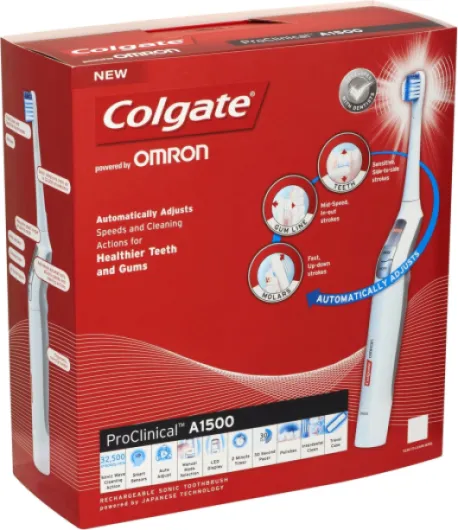
The design is clearly focused on this whole “smart sensor” concept. Inside, there are sensors that detect how the handle is angled and adjust the brushing style: slower side‑to‑side for sensitive teeth, medium in‑out strokes along the gum line, and faster up‑down for molars. In theory, this means you just move the brush around your mouth and it does the thinking for you. In practice, you still need to hold it fairly straight and stable for it to pick up the angle correctly. If you’re half asleep and moving quickly, you’ll notice it sometimes changes mode mid‑tooth because your wrist angle shifted.
The handle itself is quite ergonomic. The rubber parts give a good grip even with wet hands, and it’s not too heavy. I can do the full 2 minutes without any hand fatigue. The neck of the brush is slightly angled, which does help reach the back molars without dislocating your jaw. Compared to a chunky Oral‑B round head handle, this one feels a bit slimmer and more balanced. That said, when you stand it upright, it’s not super stable. Several users mentioned it, and I agree – a light bump and it can tip over, so I usually lay it flat on the counter.
Control‑wise, it’s simple: power button and mode button. No screen, no extra LEDs, nothing to distract you. I like that part. What I like less is the 30‑second pacer “blip”. Instead of a clear vibration change or a beep, it just briefly cuts power. Sometimes that little pause happens at the same time as the auto speed change, and you barely notice it. A small beep or a more obvious vibration pattern would have been clearer. So the idea is good, but the execution is a bit half‑baked.
Overall, the design is functional, not flashy. It feels like a product from a few years back: practical shape, decent ergonomics, but some weird misses like the unstable base and the not‑very‑obvious timer pulse. If you like simple, physical buttons and no app, you’ll be fine with it. If you’re picky about details like clear feedback and stability on the sink, you might find it a bit rough around the edges.
Battery life: decent stamina, annoying blind charging
Battery life is one of the stronger points, with one big caveat. With my routine (2 minutes, twice a day), I got roughly 5–7 days on a full charge before I felt the power start to drop. That matches several user reviews that mention about a week of use. For a rechargeable brush that doesn’t live permanently on its stand, that’s totally acceptable. You can easily go away for a long weekend with it fully charged and leave the charger at home.
The problem is the complete lack of battery indicator. There’s no light showing low battery, no charge progress, nothing. The manual just tells you to leave it on the charger for 16 hours. So you only realise it’s low when: a) power drops mid‑brush, or b) it dies completely. That’s irritating for a product that was sold at a premium price. It feels like an oversight from another era. I ended up just charging it every 4–5 days overnight to be safe, which is a bit silly because you’re overcharging it without knowing if it’s needed.
In terms of long‑term battery health, the reviews are mixed. Some people got around 2–3 years before the battery started to fade and hold less charge, which is pretty standard for sealed rechargeable batteries in this category. One reviewer was annoyed because their handle broke around the joint rather than just the battery wearing out; another had Colgate give them a full refund after about 3 years when the battery wouldn’t hold charge anymore, which is actually pretty good customer service. My take: don’t expect it to last 10 years, but 2–3 years of normal use seems realistic if you’re not abusing the charge cycles.
So overall, battery life per charge is good enough, but the user experience around charging is poor. If you’re the type who likes to see exactly how much juice is left, this will bug you. If you don’t mind leaving it on the charger regularly and not thinking about it, you’ll probably be fine. For the original price bracket, though, a simple LED indicator really should have been there.
Comfort in the mouth: strong vibrations, but you get used to it
On the comfort side, the first two or three days are a bit strange if you’re not used to sonic brushes. The A1500 vibrates up to 32,500 strokes per minute, which is quite a lot. At the beginning, my lips tingled and the whole mouth felt a bit “buzzed” after brushing. That matches what some reviewers said. The good news is that your mouth adapts quickly. After a week, I barely noticed it and it just felt like a normal part of the routine.
The brush heads are oval and not huge, so they fit well even in a smaller mouth. I didn’t feel like I was gagging trying to reach the back molars. The bristles are medium‑soft. In Optimum mode, it feels fine on both teeth and gums. In Deep Clean mode, though, I agree with one of the reviews: it can be a bit harsh on the gums if you press too hard or stay too long in the same spot. You really need to let the brush glide and not push like a manual brush. If you already have sensitive gums, I’d stick to Auto or Optimum most of the time.
Another comfort detail: the noise. It’s not crazy loud, but it’s not quiet either. Typical high‑frequency sonic buzz. You can watch TV with it on in the same room, but people will hear it in a small flat. Personally, it doesn’t bother me, but if you’re sensitive to high‑pitched sounds, you’ll notice it. The handle doesn’t vibrate too much in the hand, which is good – some cheaper brushes make your whole wrist buzz, this one is more controlled.
Day‑to‑day, I found it comfortable enough that I didn’t dread brushing. That’s already a win. The main thing is to give yourself a week to adapt to the sonic sensation and avoid jamming it into your gums on Deep Clean. Once you get the hang of the pressure and angles, it’s fine. Not ultra gentle, not brutal – just a strong brush that you have to respect a bit. If you’re coming from a very soft manual brush and very sensitive gums, there might be an adjustment period where your gums feel a bit worked, but that’s pretty standard with stronger electrics.
Build quality and lifespan: feels solid, but mixed stories
In the hand, the A1500 feels solid: the plastic and rubber don’t feel cheap, the buttons have a firm click, and there’s no rattling when you shake it. The neck doesn’t flex under normal pressure, and after a few weeks of use with water splashes and toothpaste everywhere, nothing has peeled or loosened. So in terms of finish, it gives a decent impression. It doesn’t feel like a flimsy discount brush.
Where things get more interesting is when you look at user reports over 2–3 years. Some people say they got several years out of it before the battery started to fade slowly, which is pretty normal. One reviewer said the brush broke at the joint under the switches after just over two years, despite only using it once a day. That’s not catastrophic, but it’s not great either, considering the original price tag. Another user, on the other hand, had their battery die after about 3 years and Colgate gave them a full refund after they sent it back, which is a strong point for customer service.
The other durability angle is the ecosystem: this model is now discontinued. That means it’s harder to find in shops, and at some point, heads might become more difficult to source. Right now, they’re still around and not crazy expensive compared to Sonicare heads, but it’s something to keep in mind if you’re the type to keep a brush body for 5+ years. If Colgate fully shifts to a new line, this one will slowly fade out, and you might end up stuck with a working handle and no heads.
So I’d summarise durability like this: build feels good, but long‑term reliability is average, based on mixed user stories. If you get it at a deep discount, two to three years of use is acceptable. At full RRP, I’d expect more robust construction and a clearer repair or battery replacement option, which you don’t really have here. It’s sealed, so when the battery is done, the whole thing basically becomes e‑waste unless Colgate offers a refund again, which you obviously can’t count on.
Performance and daily use: smart, but not magic
On pure performance, the A1500 is solid. The motor is strong enough that it doesn’t bog down when you touch tooth surfaces, and the sonic action feels consistent across the 2‑minute cycle, at least when the battery is reasonably charged. The three main modes cover most needs: Auto for when you can’t be bothered to think, Optimum for everyday use, and Deep Clean when you want a more intense session (personally I only use that once in a while).
The auto‑adjusting sensors are the headline feature. They do work: tilt the brush differently and you can hear and feel the change in speed and movement. On molars, it ramps up; on the sides, it calms down. The issue is that you need to hold it fairly straight and steady for it to trigger the right mode. If you brush in a lazy, zigzag way, it’s less precise. I found myself using Auto on days when I was more focused, and just switching to Optimum when I didn’t want to think about angle detection. So the tech is there, but it’s not some magic autopilot. Think of it as an assist, not an autopilot.
The built‑in timer is useful: 2 minutes total with a quick pause every 30 seconds to tell you to move to another quadrant. On paper, that’s great. In reality, the 30‑second “blip” is sometimes too subtle. If the brush is already changing speed automatically at the same time, you don’t always catch it. A short beep or a more obvious vibration pattern would have made it much clearer. One reviewer even said the pacers scared them at first because they felt a bit abrupt. I get that – the first few times, the sudden cut in power feels odd.
Overall, in daily use, I’d describe the performance as reliable but slightly old‑fashioned in terms of user feedback. It cleans well, the modes are useful, the sensors are interesting, but you can feel that it’s from a generation before today’s app‑heavy, LED‑everywhere brushes. If you want something that just works without connecting to your phone, it’s fine. If you’re looking for super polished user experience with clear indicators and perfect pacing cues, you might find it a bit rough.
What you actually get in the box
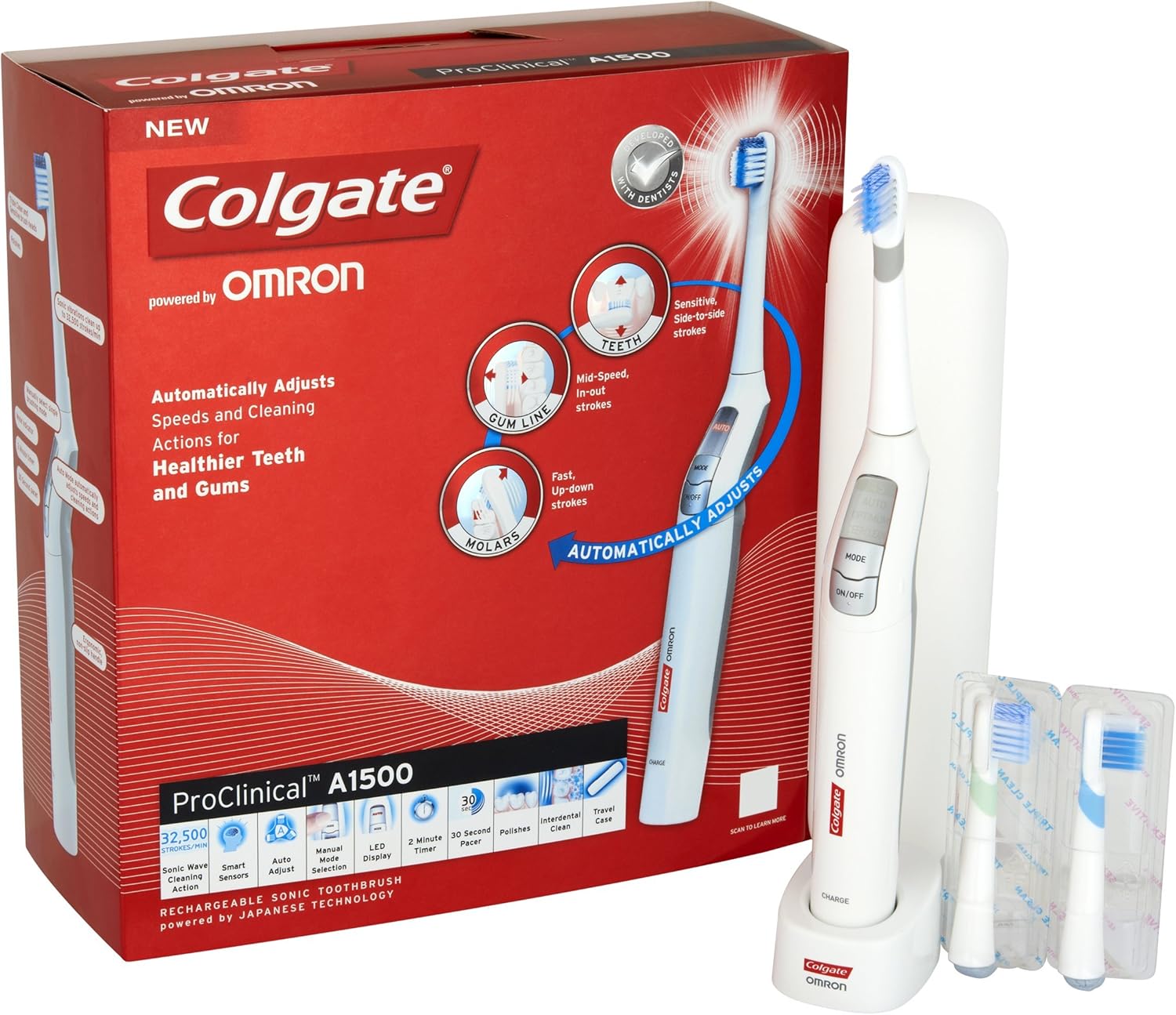
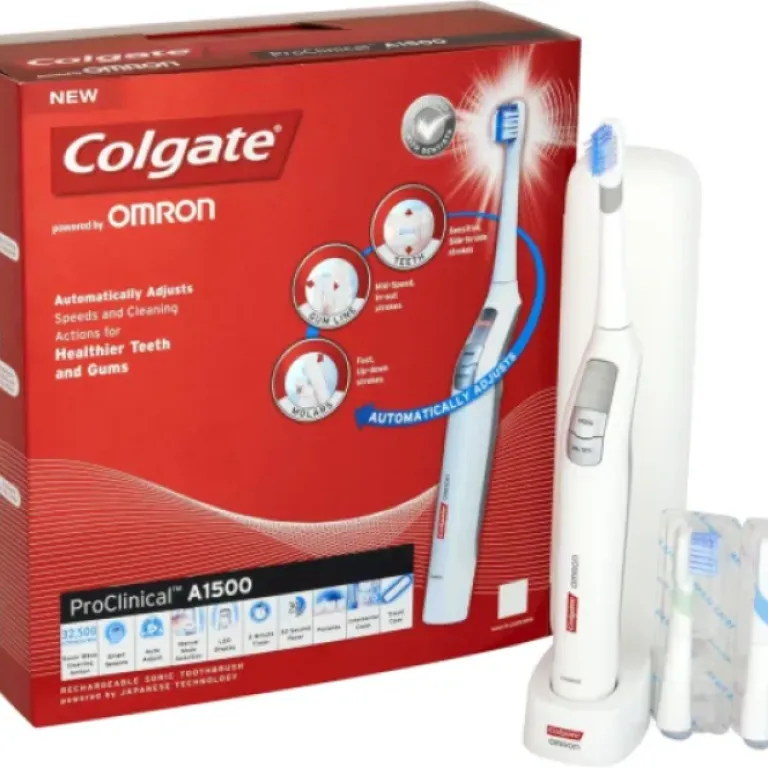
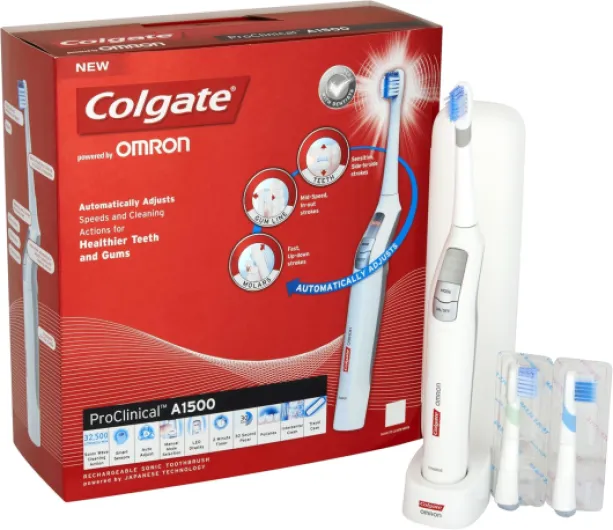
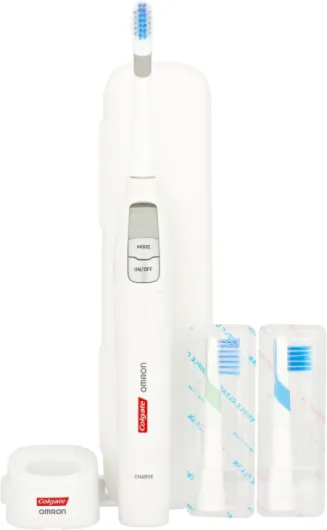
Out of the box, the Colgate A1500 looks like a fairly standard mid/high‑range electric toothbrush. Mine came in a big red box that feels a bit over the top for what’s inside. You get: the handle, a charging base, several brush heads (mine had three), and a simple travel case. That’s it. No fancy glass charger, no app, no Bluetooth nonsense. Personally, I don’t mind – I’d rather the money go into the motor and battery than into a gimmicky stand – but the packaging size compared to the actual content is clearly inflated for shelf impact.
The brush itself is white, with a mix of plastic and rubber, and three main buttons: power and mode selection. The modes are labeled Auto, Optimum, and Deep Clean. In Auto, the internal sensors decide the speed depending on how you hold it. In Optimum and Deep Clean, you’re basically using it like a normal sonic brush with two power levels. It’s simple enough: no learning curve, you just press power and go. The manual is basic but clear, and it explains the 2‑minute timer with 30‑second pacing pulses.
One thing I noticed quickly: there is no battery level indicator. No LEDs showing if it’s half full, almost empty, or fully charged. The manual just tells you to charge it for 16 hours. That’s pretty old‑school for a product in this price range. In practice, you realise it’s low when it starts to lose power mid‑brush, which is not ideal if you’re about to head out. I ended up putting it on the charger every 4–5 days just to be safe, which kind of defeats the point of having a decent battery.
Overall, in terms of presentation, it’s straightforward: you get a solid bundle with enough heads to last a while and a practical travel case, but nothing fancy. The big box and heavy packaging feel a bit wasteful. If you’re expecting a premium unboxing moment, forget it. If you just want a functional kit ready to use out of the box, it does the job. Just be aware of that missing battery light – it’s a small detail that becomes annoying over time.
Does it actually clean better than a cheap brush?
This is the real question: does the Colgate A1500 actually clean better than a basic electric or a manual brush? For me, the answer is yes, but with some nuance. After 2 minutes in Auto or Optimum mode, my teeth feel smooth when I run my tongue over them, especially on the front and chewing surfaces. Plaque buildup along the gum line seems lower than with my old cheap Oral‑B. I used to sometimes feel a slight roughness after a day; with this, that happens less. One user mentioned their dentist was impressed with their cleaning, and I can believe that based on how my teeth feel.
Where it’s a bit less convincing is the gum line and between teeth if you rely only on the auto sensors. If you just let the brush do its thing and move quickly, it tends to focus more on tooth surfaces than really massaging the gums. I still needed floss and sometimes an interdental brush to feel like the whole mouth was properly taken care of. To be fair, that’s true for basically all electric brushes: if you expect it to replace floss, you’ll be disappointed. But I understand the reviewer who said their gums never felt fully clean; if your technique is off, this brush will not magically fix it.
Compared to a cheap Oral‑B oscillating brush, I’d say the A1500 gives a more “polished” feel on the enamel but a bit less aggressive on plaque at the gum line unless you pay attention to angles. The sonic action is good for breaking up that biofilm layer, but you still have to guide it slowly along the gum line. If you rush, you end up with clean teeth but average gum care. On the plus side, I had less gum irritation overall than with a hard manual brush, as long as I avoided smashing it in Deep Clean mode.
In practice, it gets the job done solidly, especially if:
- you use the full 2‑minute timer and respect the 30‑second zones,
- you don’t skip flossing,
- you spend a bit more time on the gum line with gentle pressure.
Pros
- Cleans teeth well with strong sonic action and a useful 2‑minute timer
- Comfortable handle with decent ergonomics and multiple brush heads included
- Good battery life per charge (around 5–7 days with twice‑daily use)
Cons
- No battery level indicator, so you never know how much charge is left
- Model is discontinued and long‑term head availability and support are uncertain
- Auto sensor feature is fussy and not as effortless as advertised
Conclusion
Editor's rating
After using the Colgate A1500 ProClinical regularly, my overall take is that it’s a good sonic toothbrush with some smart ideas, but not a modern benchmark. It cleans well, especially on tooth surfaces, and leaves that smooth, just‑polished feel if you use it properly for the full 2 minutes. The auto sensor system does work and can be useful, but it’s not as effortless as the marketing suggests – you still need to hold it correctly and pay attention. The handle is comfortable, the heads are a good size, and the included travel case and extra heads are practical.
On the downside, the lack of any battery indicator is a pain, the 30‑second pacer feedback is not very clear, and long‑term durability reports are mixed. Add to that the fact that the model is discontinued, and it becomes hard to recommend at anything close to its original high RRP. At a big discount, though, it’s a decent buy: you get solid cleaning performance and a simple, no‑app brush that gets the job done without too much fuss.
I’d say it’s for people who want a straightforward sonic brush, are okay with a slightly older design, and can grab it on sale. It’s especially suited if you’re upgrading from a manual brush or a very basic electric and don’t care about smartphone features. If you’re picky about clear indicators, long‑term parts availability, or you’re paying full price, I’d steer you toward a more recent Sonicare or Oral‑B instead. This one is good, but there’s better out there now for the same money.
![Sonicare 5500 Electric Toothbrush, Sonic Toothbrush with 2 Modes, Pressure Alert, EasyStart, SmarTimer and BrushPacer, Navy, Model HX7113/01 [New Technology] Sonicare 5500, Navy, Travel Case](https://www.electric-toothbrush-guru.com/storage/1025316/conversions/71vNjog50vL._AC_SL1500_-medium.webp)