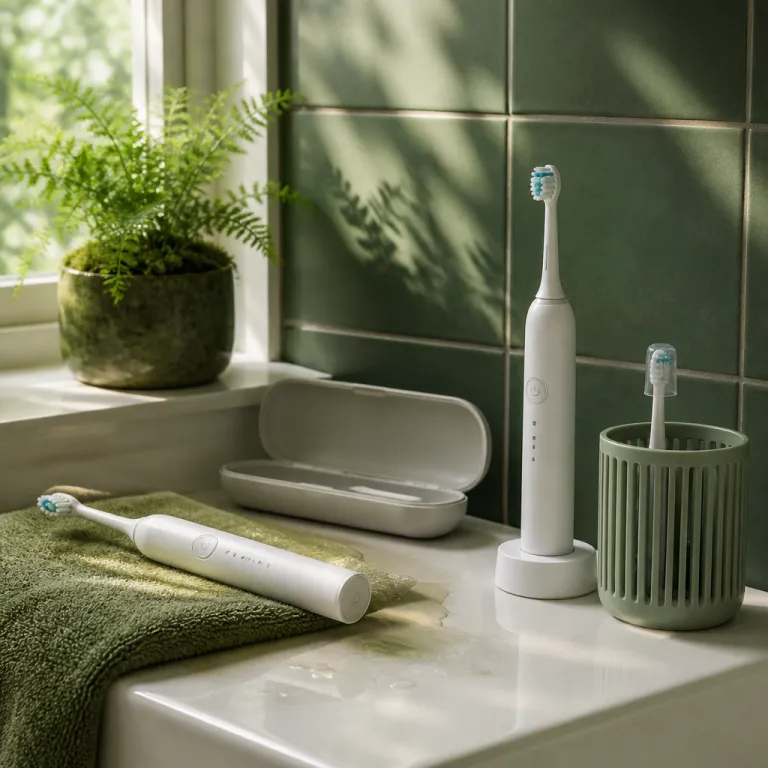
Daily brush head care that actually keeps the bristles working
Think of your electric toothbrush as a power tool for oral health. If you want the brush to remove plaque effectively, you must treat the toothbrush head like a precision part, not a disposable plastic nub. A clean toothbrush head will always feel smoother on enamel and gums than one clogged with dried toothpaste, hardened minerals, and hidden bacteria.
Right after brushing, keep the water running just warm enough to help the cleaning process. Hold the electric toothbrush under the stream and gently rub the bristles with your thumb so the water can rinse away foam, food particles, and any early biofilm that would otherwise transfer bacteria back into your mouth. This simple toothbrush cleaning step will do more for long term oral hygiene than any extra brushing mode on the handle.
Once the brush head looks visibly clean, resist the urge to shake it violently. Instead, tap the electric toothbrush gently on the sink edge, then let the brush head drip for a few seconds so excess water can escape from the head handle junction. That upright position is crucial, because a toothbrush stored upright on the counter will air dry faster and prevent bacteria from multiplying in damp bristles.
For people asking how to clean electric toothbrush maintenance in the most efficient way, the answer starts with this tiny routine. Rinse, inspect, and then let the toothbrush head stand in an upright position where air can circulate freely around every bristle. Over time, this habit will keep the brush head softer, reduce odors, and support better oral health between dental visits.
Do not forget the underside of the brush head, where it slides onto the metal shaft of the electric toothbrush handle. That hidden area traps toothpaste, saliva, and water, which can harden into a crust that interferes with vibration and makes the toothbrush clean less effectively. A quick wipe with your fingers under running water will prevent buildup and keep the head handle connection working smoothly.
Deep cleaning the handle and shaft so power does not go to waste
Most first time users obsess over the brush head and ignore the handle, yet the handle is the engine of every electric toothbrush. When the shaft where the toothbrush head attaches is coated in dried toothpaste and minerals from water, the vibration has to fight through that grime before it even reaches the bristles. That means your expensive electric toothbrushes will feel weaker long before the motor actually wears out.
Once a week, remove the brush head and look closely at the exposed metal shaft and the plastic collar around it. You will often see a ring of chalky residue that normal rinsing did not remove, especially if your household water is hard and leaves deposits on fixtures. To keep the electric toothbrush performing at its best, use a damp cloth or cotton swab to clean residue from that area, then dry it carefully so moisture does not sit against the seal.
Pay attention to the rubber seal where the head handle connection meets the body of the toothbrush. If you let toothpaste and bacteria sit there, the material can degrade faster and eventually allow water to seep into the handle, which will shorten the life of the battery and electronics. Gentle cleaning around this seal is one of the most underrated maintenance tips for long term toothbrush health.
For a deeper handle cleaning session, mix a small bowl of warm water with a drop of mild dish soap. Dip only a cloth or cotton pad into the solution, then wipe the entire handle, avoiding any open charging ports or exposed contacts so you do not transfer water where it should never go. This kind of careful toothbrush cleaning will keep the surface grippy, remove skin oils, and prevent the handle from becoming a breeding ground for bacteria.
People who care about oral hygiene often ask whether they should floss or brush first with an electric toothbrush for better oral health, and guidance from dental associations explains that sequence matters less than doing both thoroughly and consistently. What matters for the handle is that you clean it regularly, because a slippery, grimy surface makes you rush and reduces the quality of every brush stroke. A well maintained handle will help you keep a steady grip, apply light pressure, and let the motor do the work instead of your wrist.
The charging base, water resistance, and where leaks really start
The charging base is the forgotten part of most electric toothbrush setups, yet it quietly collects water, toothpaste, and minerals every single day. When you place a wet toothbrush upright on the stand, gravity pulls droplets down the handle and onto the base, where they pool around the charging contacts. Over time, that mix of water and bacteria can harden into a crust that looks ugly and can interfere with safe charging.
To keep the base clean, unplug it first, then wipe the surface with a slightly damp cloth and a tiny amount of mild soap. Focus on the ring where the handle rests and the area around any metal pins, because this is where mineral deposits from water will build up fastest and where corrosion can quietly start. Dry the base thoroughly before plugging it back in, since leaving moisture near electronics is one of the fastest ways to shorten the life of electric toothbrushes.
Manufacturers often advertise water resistance ratings such as IPX7, which means the toothbrush can survive brief immersion in water up to about one meter for around 30 minutes under laboratory conditions. In real bathrooms, the weak point is rarely the sealed body but the area around the charging contacts and the base, where repeated exposure to splashes and standing water can slowly defeat the design. That is why regular toothbrush cleaning of the base and contacts is not cosmetic; it is essential maintenance for the health of the battery and internal circuits.
When you think about how to clean electric toothbrush maintenance in a complete way, you must include the charging ecosystem, not just the brush head and handle. A clean charging base will help prevent overheating, reduce the risk of bacteria from pooled water, and keep the whole system looking and functioning like new. If you ever see rust, greenish deposits, or a burning smell, stop using the charger and contact the manufacturer, because those are signs that moisture has already compromised safety.
Many people also wonder whether a two in one combo brush and flosser can replace separate tools, and independent testing has shown that these devices often fall short of the best dedicated flossers and brushes for thorough plaque removal. For deeper context on how combination devices compare with stand alone tools, you can read a detailed analysis of the combo brush and flosser promise on a specialist review site that evaluates real world performance. Whatever setup you choose, keeping the charging base clean and dry will always be non negotiable if you want reliable power and consistent brushing strength.
Smart storage, air drying, and the mistakes that grow bacteria
Where and how you store toothbrush equipment between uses matters as much as how you rinse it. A damp brush head sealed in a travel case becomes a tiny greenhouse for bacteria, even if you used the best toothpaste and brushed for the dentist recommended two minutes. The goal of good toothbrush storage is simple; let the brush air dry quickly while keeping it away from obvious contamination.
After each use, place the clean toothbrush in an upright position, either on its charging base or in a ventilated stand that keeps the toothbrush upright and separated from other toothbrushes. This position lets water drain away from the head handle junction and exposes the bristles to moving air, which will help them dry faster and prevent bacteria from multiplying in a warm, wet clump. If several family members share a holder, make sure the brush heads do not touch, because that contact can transfer bacteria from one person to another.
A common mistake is leaving the electric toothbrush lying flat on the edge of the sink, where water and toothpaste can pool around the brush head. That habit keeps the toothbrush clean for only a few minutes before the damp underside becomes a sticky film that traps dust and airborne particles from the bathroom. Storing the toothbrush upright is a small change that pays off in better oral hygiene and longer lasting bristles.
Travel cases are useful for keeping the head and handle together in a bag, but they are terrible long term homes for brush heads. If you must pack a wet brush, open the case as soon as you arrive and let the brush head air dry fully before closing the lid again, because trapped moisture will always encourage bacterial growth. For everyday storage at home, a simple open stand is usually the best option for both cleaning and maintenance.
People who care about the privacy policy of their health data sometimes forget that physical hygiene habits are just as important as digital safeguards. You would not share your medical records casually, so do not casually share a toothbrush or let multiple heads touch in a crowded cup. Smart storage, proper air flow, and a little space between brushes will keep your electric toothbrush and your mouth in far better condition.
When to replace parts, how to spot failure, and routine maintenance tips
No electric toothbrush lasts forever, but good maintenance can stretch its useful life by years. The brush head is the first part that needs regular replacement, usually every three months or sooner if the bristles splay, because worn bristles clean less effectively and can irritate gums. The American Dental Association notes that most people should replace manual or powered brush heads about every three to four months, or sooner if the bristles become frayed, and this guidance is echoed in ADA consumer resources on toothbrush care. A fresh toothbrush head will always feel more precise and gentle, especially for people upgrading from a manual toothbrush for the first time.
Watch for early warning signs that the handle is starting to fail, such as a wobble in the shaft, reduced vibration strength, or a battery that drains much faster than it used to. Cracks in the plastic or rubber around the head handle junction are especially serious, because they can let water seep inside and damage the motor or battery, even if the product still claims a strong water resistance rating. When you see these issues, no amount of toothbrush cleaning will fully restore performance, and replacing the handle becomes a matter of both cleaning effectiveness and safety.
For people focused on how to clean electric toothbrush maintenance in a practical way, a simple schedule works best. Once a day, rinse and air dry the brush head thoroughly; once a week, deep clean the handle and charging base; and every few months, replace the brush heads and inspect the seals for damage. Turning this into a short checklist makes it easier to follow: (1) daily rinse and upright air drying, (2) weekly wipe of shaft, seals, and base, and (3) seasonal replacement of worn brush heads.
Good oral hygiene also depends on what you do before and after brushing, not just on the state of the tool. Dental experts explain that whether you floss or brush first for better oral health matters less than doing both carefully and using a clean electric toothbrush that can actually reach plaque without dragging old bacteria along for the ride. The Centers for Disease Control and Prevention and similar public health agencies emphasize consistent brushing with fluoride toothpaste, daily interdental cleaning, and regular dental visits as the foundation of home care.
When you evaluate different toothbrushes, look beyond marketing claims and think about how easy they will be to keep clean day after day. A design with smooth seams, a stable upright position on the counter, and a simple charging base will always be easier to maintain than a complex system with tight crevices that trap water. In the long run, the best electric toothbrush is not just the one with the most features, but the one you can keep truly clean without turning maintenance into a chore.
FAQ
How often should I deep clean my electric toothbrush handle and base ?
For most people, a weekly deep cleaning of the handle and charging base is enough to prevent buildup. Remove the brush head, wipe the shaft and seals with a damp cloth, and clean the base after unplugging it so water does not reach the electronics. If you live in an area with hard water that leaves visible deposits, you may need to repeat this routine twice a week or use a mild solution of one part white vinegar to three parts water on a cloth to dissolve mineral residue.
Can I rinse my electric toothbrush under the tap without damaging it ?
Most modern electric toothbrushes are designed to be rinsed under running water, as long as you do not submerge the handle completely. Keep the stream focused on the brush head and the upper part of the handle, then dry the body with a towel so water does not sit around the charging contacts. Always check the manufacturer instructions, because some models have specific guidance about water exposure and recommended cleaning agents.
Is it safe to store my electric toothbrush in the shower ?
Leaving an electric toothbrush in a steamy shower is one of the fastest ways to shorten its life. Constant moisture keeps the brush head from drying, encourages bacteria growth, and can eventually weaken seals around the head handle junction. It is better to store the toothbrush upright in a drier part of the bathroom, where air can circulate freely.
How do I know when to replace the brush head ?
You should replace the brush head when the bristles start to splay, fade in color, or feel less effective against your teeth. For most users, this happens after about three months of twice daily brushing, but people who press hard or have braces may need new brush heads more often. If you notice a persistent bad smell even after thorough cleaning, that is another sign that it is time for a fresh toothbrush head.
Can multiple people share one electric toothbrush handle safely ?
Sharing a single handle with separate brush heads can be safe if each person has a clearly marked head and the heads never touch during storage. Always store toothbrushes upright and spaced apart so they can air dry without transfer bacteria between bristles. If anyone in the household has a contagious illness or compromised immune system, dentists usually recommend separate handles for better hygiene.
Sources
American Dental Association (ADA) – guidance on toothbrush replacement and powered toothbrush use in ADA consumer resources on brushing and oral hygiene
Centers for Disease Control and Prevention (CDC) – recommendations on oral hygiene and home dental care in CDC oral health fact sheets and prevention guidelines
Mayo Clinic – Oral Health resources on brushing technique, flossing, and toothbrush care in Mayo Clinic patient education materials