Discover our ranking of the 3 best electric toothbrushes with whitening mode based on our tests.

Why whitening modes on electric toothbrushes really matter

An electric toothbrush with a dedicated whitening mode targets surface stains more efficiently than a standard manual brush. These specialized settings typically combine higher-frequency sonic or oscillating movements with polishing patterns that smooth the enamel surface while limiting excess pressure on gums. For anyone comparing options, understanding how these whitening-focused features influence plaque removal, stain lifting, and overall brightness is the first step toward choosing the best electric toothbrushes with whitening mode for everyday use.

Clinical data supports the move from manual to powered brushing. A 2014 Cochrane review of over 5,000 participants found that powered brushes removed about 21% more plaque after three months than manual toothbrushes and reduced gingivitis by roughly 11% (Robinson et al., Cochrane Database Syst Rev. 2014). While this review focused on plaque and gum health, other research has examined whitening outcomes more directly. In one randomized trial, a sonic brush with a stain-removal mode produced significantly greater reductions in extrinsic discoloration over six weeks than a manual brush when both were used with the same whitening toothpaste (Goyal et al., Am J Dent. 2014). Sonic toothbrushes, which can reach 31,000–62,000 brush movements per minute, create fluid dynamics around the teeth that help disrupt plaque and stains in tight spaces a basic manual brush often misses. When you combine this action with a built-in two-minute timer and a pressure sensor, whitening electric toothbrushes encourage consistent technique that supports both cosmetic brightening and long-term oral health.

It is also important to look beyond the sticker price and consider the total cost of ownership over the battery life of the handle and the replacement brush heads. A premium rechargeable electric toothbrush from a brand such as Philips Sonicare or Oral-B may cost $70–$200 upfront, yet its durable lithium-ion battery (often 2–3 weeks of use per charge), ADA Accepted status, and strong average ratings on Amazon or other retailers can make the investment more reasonable over several years. In my experience, it is usually better to buy a mid-range model from a reputable brand with affordable replacement heads than a flashy top-tier handle you cannot afford to maintain. If you compare electric toothbrushes carefully, the best products balance whitening performance, smart features, and a fair overall cost so that you are not paying only for marketing claims.

Ranking

#1 🏆 Best choice
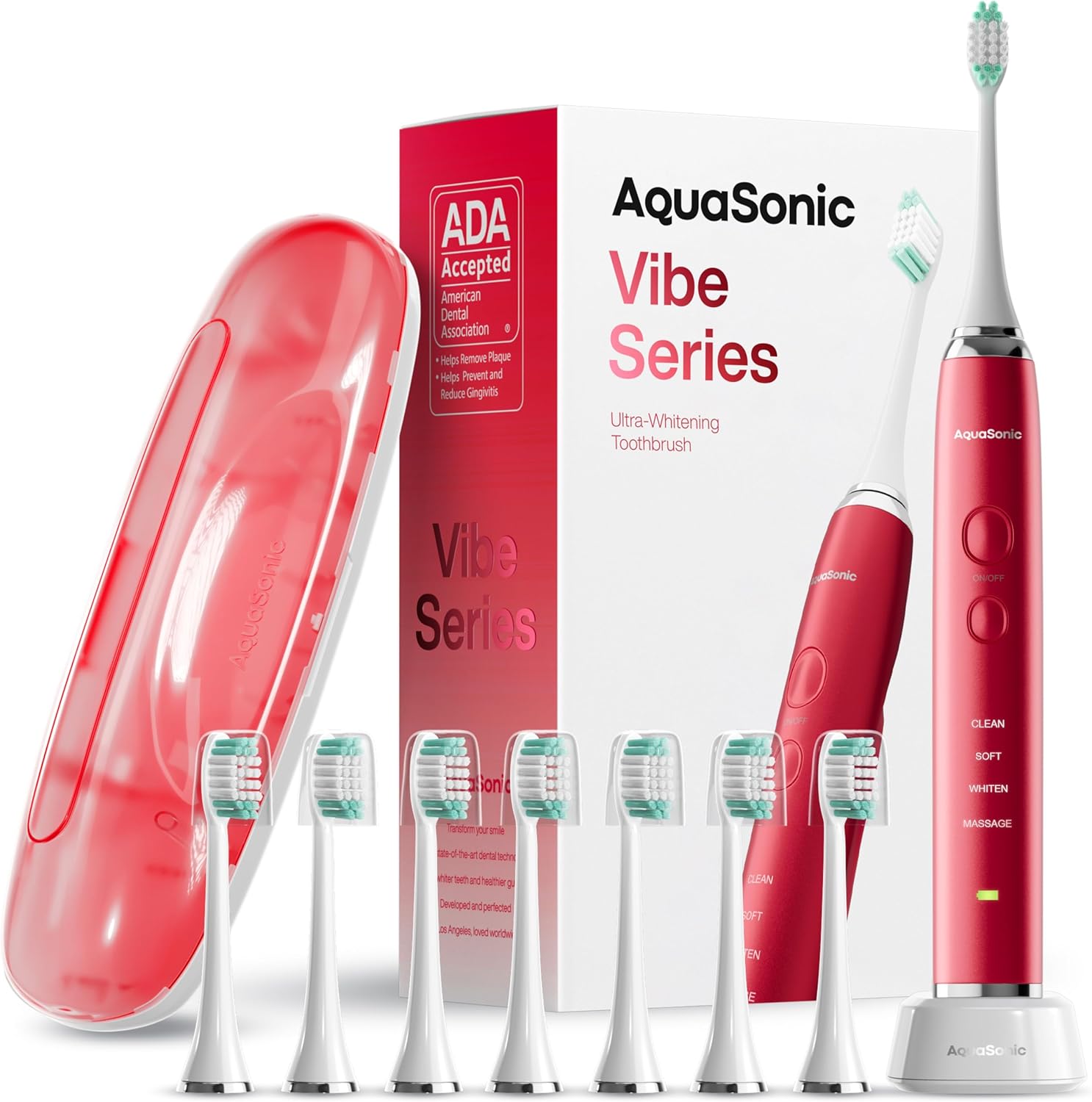
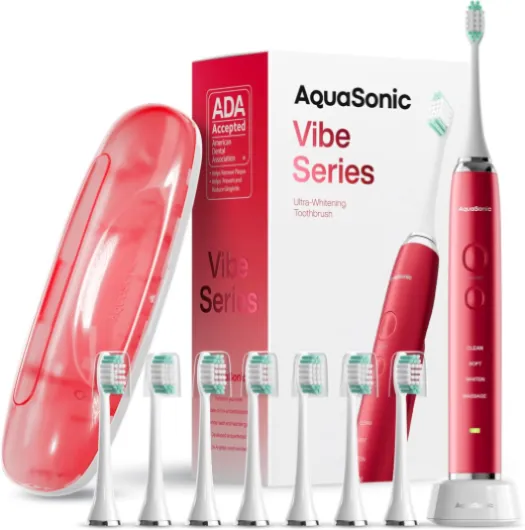
Vibe Series Ultra-Whitening Toothbrush – ADA Accepted Electric Toothbrush - 8 Brush Heads & Travel Case – 40,000 VPM Motor & Wireless Charging - 4 Modes w Smart Timer – Ruby

Aquasonic

Vibe Series Ultra-Whitening Toothbrush – ADA Accepted Electric Toothbrush - 8 Brush Heads & Travel Case – 40,000 VPM Motor & Wireless Charging - 4 Modes w Smart Timer – Ruby

⭐ Très bien noté 🔥 Populaire
  • Cleans as well as many higher‑priced sonic brushes in daily use
  • Comes with 8 DuPont brush heads and a travel case, good overall value
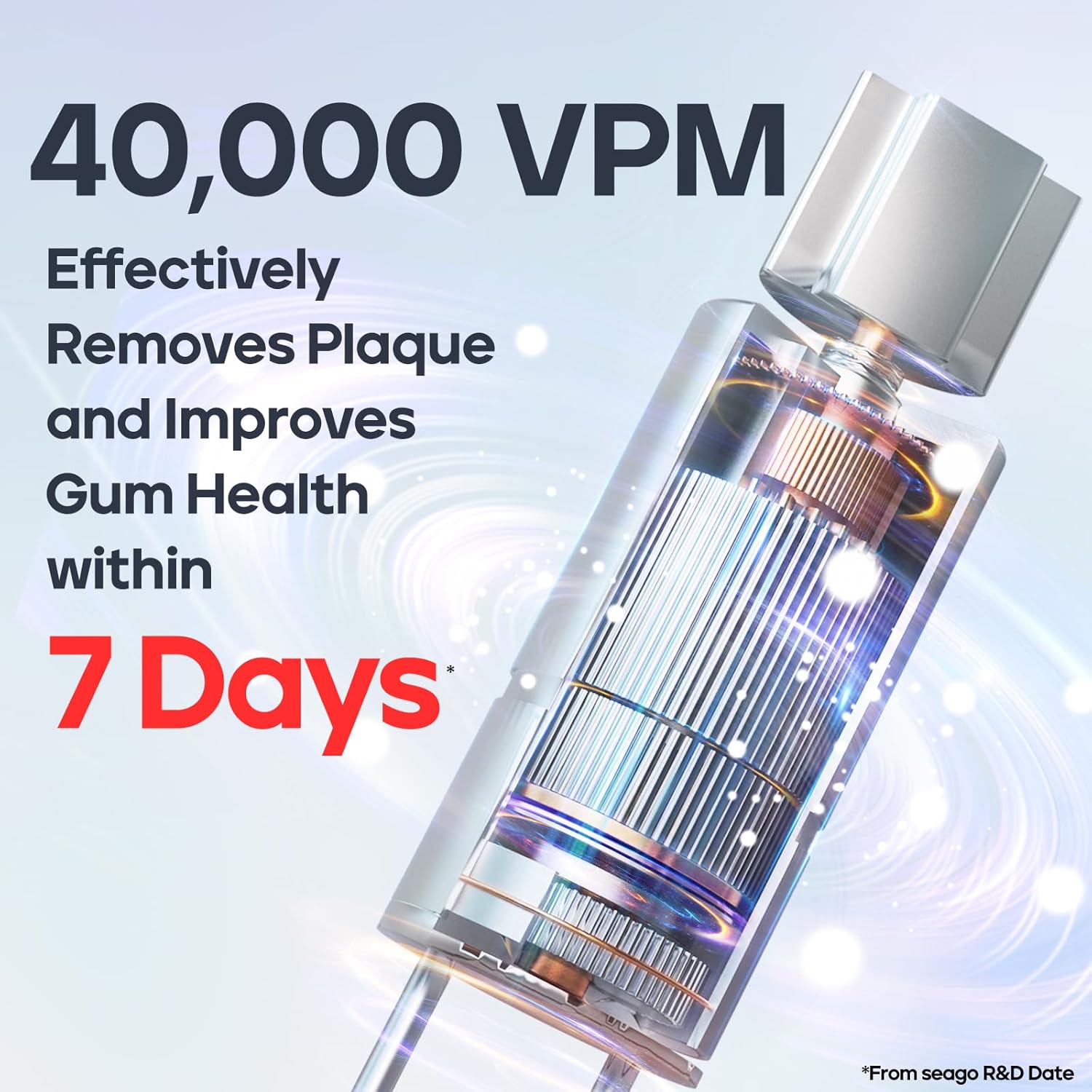
  • Strong motor, decent battery life, and simple wireless charging base
Overall, the Aquasonic Vibe Series Ultra-Whitening Toothbrush is a solid, no‑nonsense sonic toothbrush that hits the basics well and doesn’t drain your wallet. The cleaning performance is right up there with more expensive brands in daily use, the ADA seal is reassuring, and the bundle of 8 brush heads plus a travel case makes the price look pretty reasonable. The motor has enough power, the timer works as it should, and the battery life is good enough that you’re not constantly hunting for the charger.It’s not perfect: the travel case is a bit bulky, there’s no pressure sensor or app, and the long‑term durability is still unknown compared to the big names. But if you just want your teeth to feel clean, your gums to stay in decent shape, and you don’t care about tracking your brushing on your phone, this brush gets the job done without much fuss. It’s a good fit for people upgrading from manual brushes or tired of paying premium prices for replacement heads. If you’re a tech geek who wants all the smart features and brand prestige, you’ll probably want to look elsewhere and spend more.
8.5 /10
★★★★★ ★★★★★
🌟 Excellent See full review →
See offer Amazon
#2 🔥 Most popular
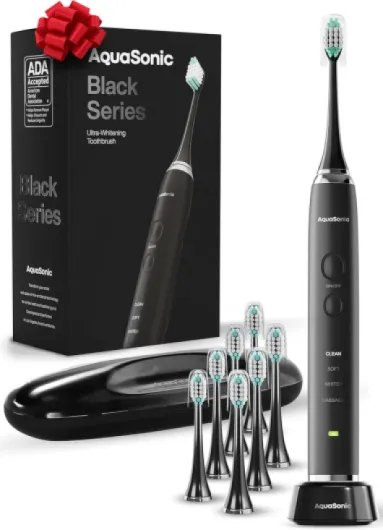
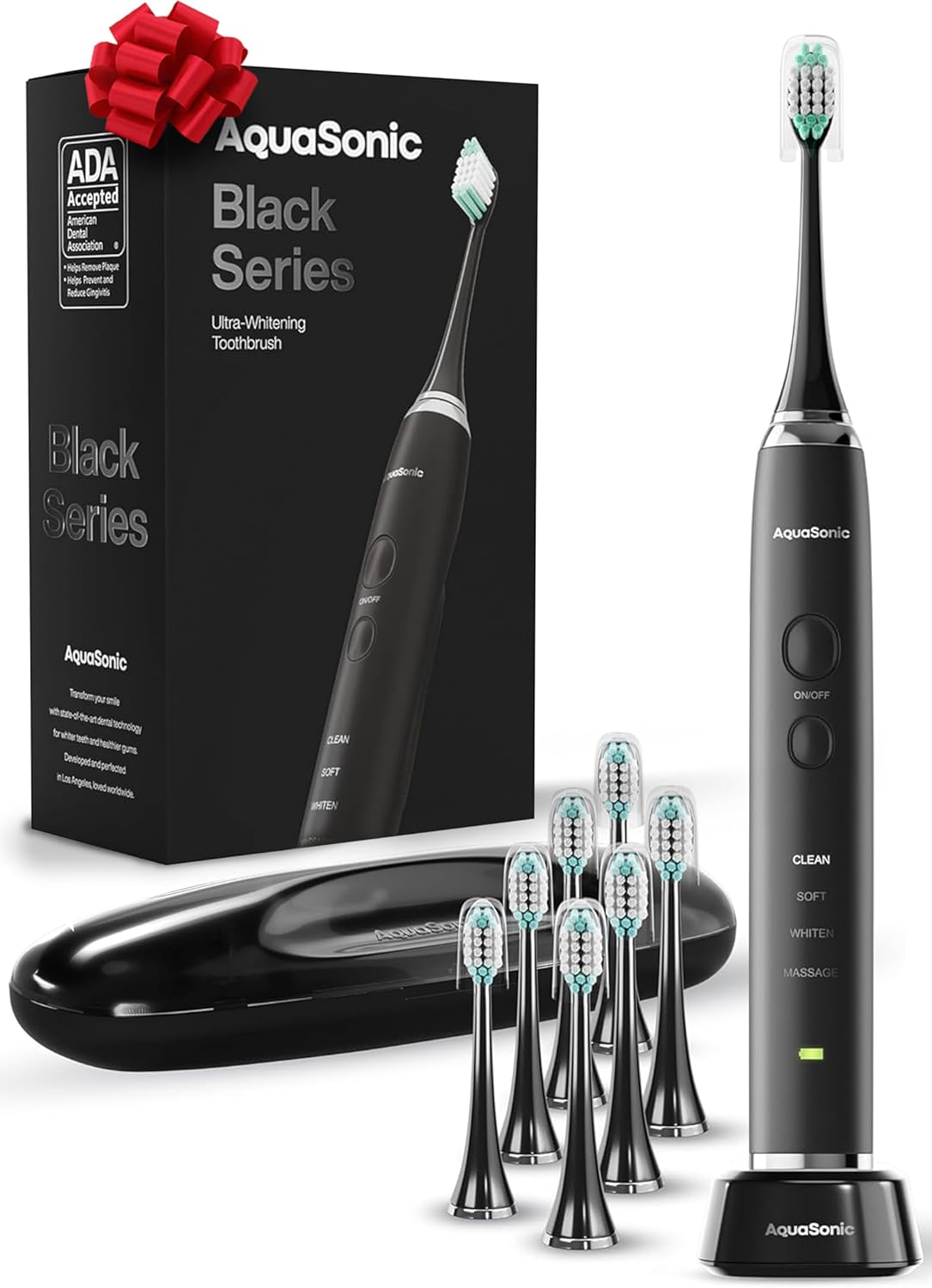
Black Series Ultra Whitening Toothbrush – ADA Accepted Electric Toothbrush- 8 Brush Heads & Travel Case – 40,000 VPM Electric Motor & Wireless Charging - 4 Modes w Smart Timer 1 Count (Pack of 1)

Aquasonic

Black Series Ultra Whitening Toothbrush – ADA Accepted Electric Toothbrush- 8 Brush Heads & Travel Case – 40,000 VPM Electric Motor & Wireless Charging - 4 Modes w Smart Timer 1 Count (Pack of 1)

⭐ Très bien noté 🔥 Populaire
  • Very good cleaning performance for the price, with strong sonic vibrations and a useful 2-minute timer
  • Comes with 8 brush heads and a hard travel case, so low ongoing cost and travel-friendly
  • Long battery life with simple wireless charging, so you rarely need to think about recharging
Overall, the Aquasonic Black Series Ultra Whitening toothbrush is a solid, no-nonsense electric toothbrush that focuses on cleaning performance and value rather than fancy extras. The strong sonic motor, small soft-bristle head, and built-in 2-minute timer with 30-second intervals all work together to give you a noticeably cleaner feel compared to a manual brush or a basic battery model. The fact that it’s ADA accepted is a nice reassurance that it’s not just marketing fluff.The downsides are mainly around comfort and refinement. The vibration is intense and a bit loud, the single-button control isn’t the most convenient, and the pauses every 30 seconds can be slightly annoying if you’re not into that. It doesn’t feel cheap, but it also doesn’t have the polished, premium feel of more expensive Sonicare or Oral-B models. Still, when you factor in the 8 included brush heads and the hard travel case, the price-to-performance ratio is hard to ignore.I’d recommend this to someone who wants a budget-friendly sonic toothbrush that actually cleans well, doesn’t mind a bit of extra vibration and noise, and likes the idea of not buying replacement heads for a couple of years. If you have very sensitive gums, want super quiet operation, or care a lot about brand ecosystem and advanced features, you’re probably better off spending more on a higher-end model. For most everyday users, though, this is a pretty solid, practical choice that gets the job done without draining your wallet.
8.5 /10
★★★★★ ★★★★★
🌟 Excellent See full review →
See offer Amazon
#3
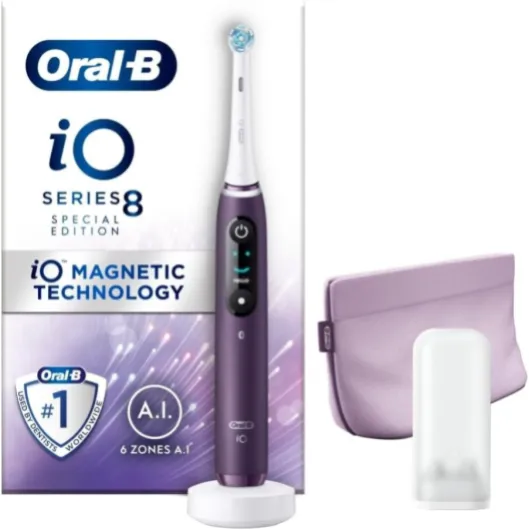
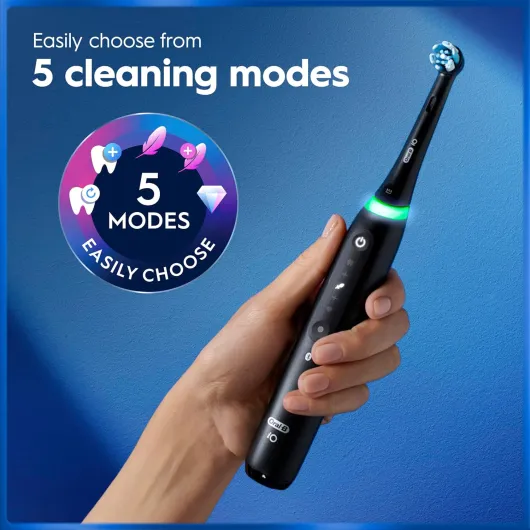
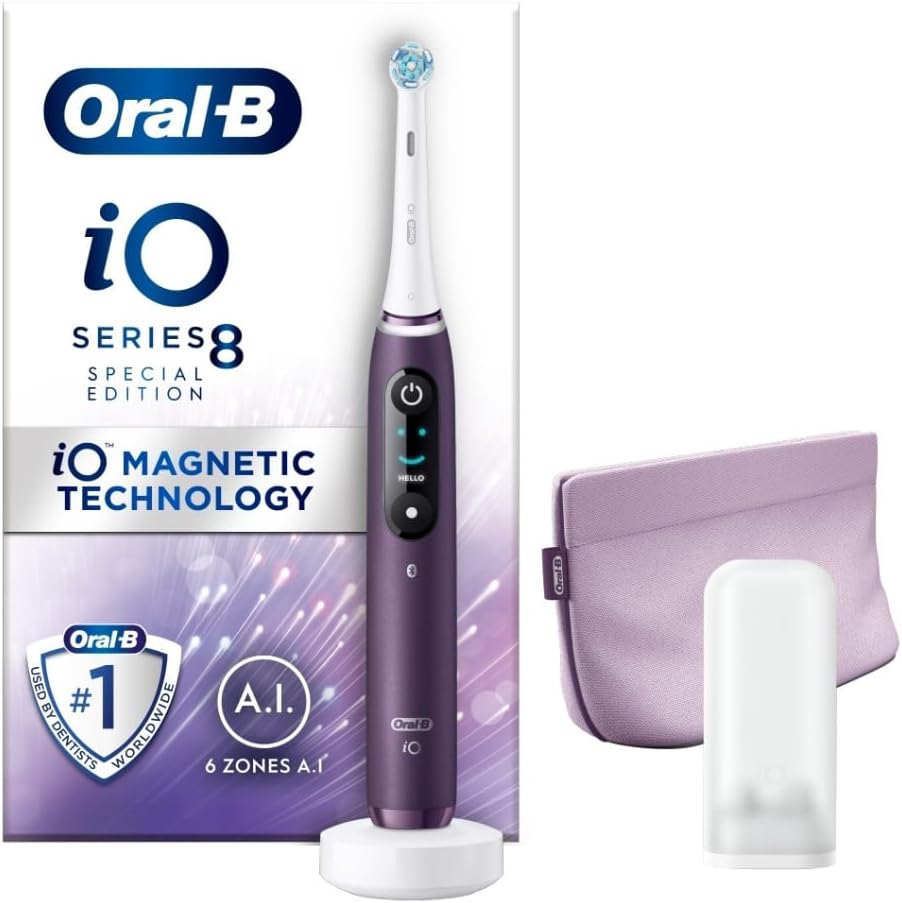
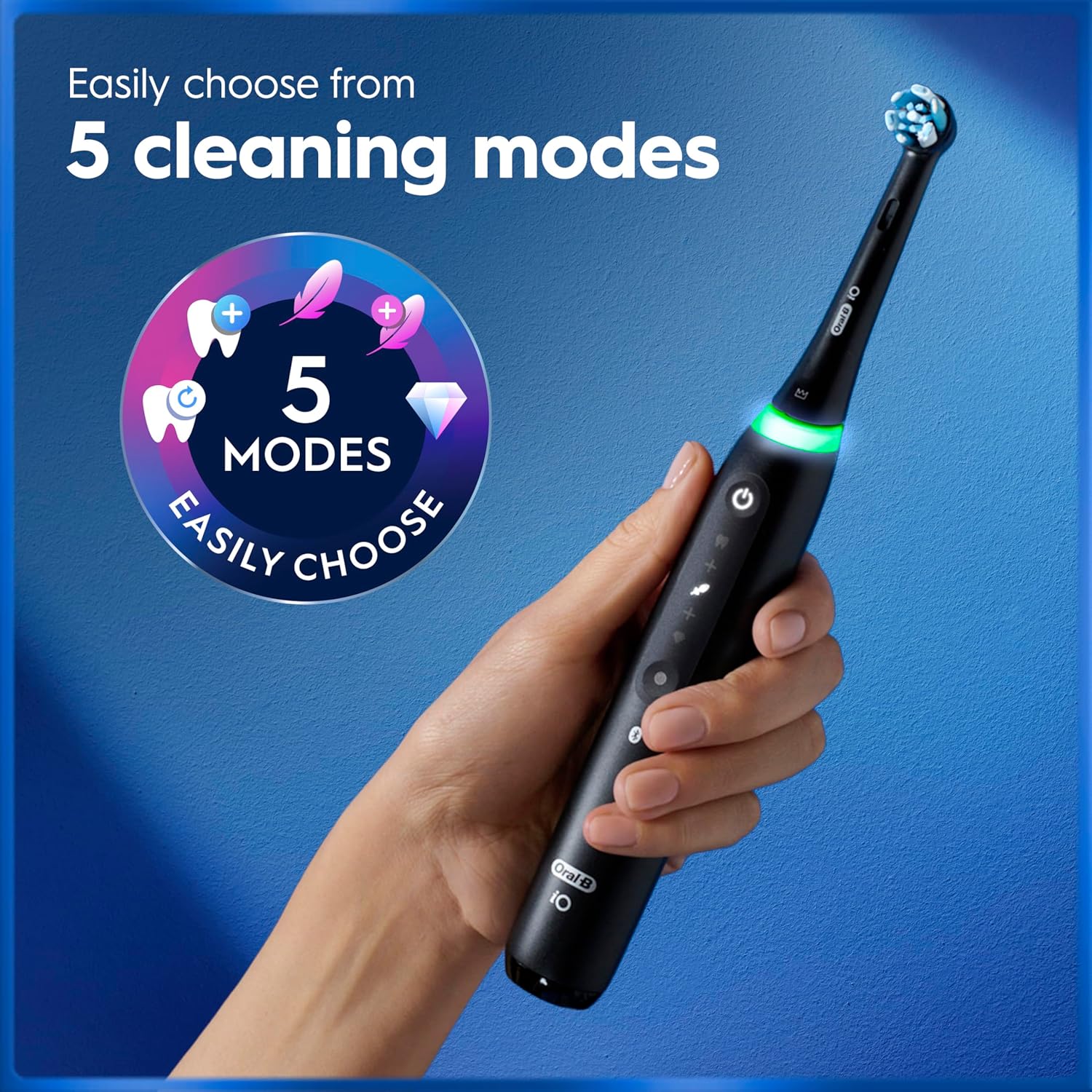
Oral-B iO6 Electric Toothbrush for Adults, Black, 5 Cleaning Modes with Teeth Whitening, Includes 3 Brush Heads, Long-Lasting Battery with Travel Case for Home and Travel, 2 Pin Plug iO6 Black Io6 Black

Oral-B

Oral-B iO6 Electric Toothbrush for Adults, Black, 5 Cleaning Modes with Teeth Whitening, Includes 3 Brush Heads, Long-Lasting Battery with Travel Case for Home and Travel, 2 Pin Plug iO6 Black Io6 Black

  • Cleans very thoroughly, especially around gum line and crooked teeth
  • Pressure sensor and timer genuinely help improve brushing habits
  • Multiple modes make it usable even for sensitive gums
After using the Oral-B iO6 twice a day for a few weeks, my overall feeling is pretty clear: it cleans very well and genuinely helps with gum health, but you pay for it in price and in battery compromises. The round head plus oscillation and micro‑vibrations do a better job than my old basic Oral-B and my manual brush, especially around crooked teeth and along the gum line. The pressure sensor stopped me from overbrushing, and my gums looked and felt better after about a week.On the flip side, the battery life is just okay, not great. A week to ten days on a charge is fine at home, but a bit annoying for travel, especially compared to brushes that last three weeks or more. The app is more of a novelty than a necessity, and the iO heads are definitely pricier than standard ones. You’re also paying partly for the little screen and smart features, which some people will barely use.If you have sensitive gums, tend to brush too hard, or have tricky areas to clean, the iO6 is a pretty solid choice – especially when it’s on discount. It’s also a good pick if your dentist has been nagging you about brushing technique, because the pressure ring and timer make it easier to stay on track. If your budget is tight, or you want long battery life above all else, you might be happier with a simpler Oral-B or a Sonicare instead. In short: strong cleaner, slightly needy on charging, and best bought on offer rather than at full price.
8.4 /10
★★★★★ ★★★★★
🌟 Excellent See full review →
See offer Amazon

Comparison table : Electric toothbrushes with whitening mode

Overall score Value for money Design Battery Comfort Performance Presentation Effectiveness
Vibe Series Ultra-Whitening Toothbrush – ADA Accepted Electric Toothbrush - 8 Brush Heads & Travel Case – 40,000 VPM Motor & Wireless Charging - 4 Modes w Smart Timer – Ruby
#1 Aquasonic
Vibe Series Ultra-Whitening Toothbrush –...
See offer Amazon
8.5/10 ★★★★★ ★★★★★ ★★★★★ ★★★★★ ★★★★★ ★★★★★ ★★★★★ ★★★★★ ★★★★★ ★★★★★ ★★★★★ ★★★★★ ★★★★★ ★★★★★
Black Series Ultra Whitening Toothbrush – ADA Accepted Electric Toothbrush- 8 Brush Heads & Travel Case – 40,000 VPM Electric Motor & Wireless Charging - 4 Modes w Smart Timer 1 Count (Pack of 1)
#2 Aquasonic
Black Series Ultra Whitening Toothbrush...
See offer Amazon
8.5/10 ★★★★★ ★★★★★ ★★★★★ ★★★★★ ★★★★★ ★★★★★ ★★★★★ ★★★★★ - ★★★★★ ★★★★★ ★★★★★ ★★★★★
Oral-B iO6 Electric Toothbrush for Adults, Black, 5 Cleaning Modes with Teeth Whitening, Includes 3 Brush Heads, Long-Lasting Battery with Travel Case for Home and Travel, 2 Pin Plug iO6 Black Io6 Black
#3 Oral-B
Oral-B iO6 Electric Toothbrush for Adult...
See offer Amazon
8.4/10 ★★★★★ ★★★★★ ★★★★★ ★★★★★ ★★★★★ ★★★★★ ★★★★★ ★★★★★ ★★★★★ ★★★★★ ★★★★★ ★★★★★ ★★★★★ ★★★★★

Key features that define the best electric toothbrushes with whitening mode

When you compare electric toothbrush models, start with the core features that directly influence whitening and cleaning efficiency. Look for multiple cleaning programs, including a specific whitening toothbrush setting, a gentle gum-care mode, and at least one standard daily clean program you can use twice per day. The best electric toothbrushes with whitening mode usually pair these settings with smart options such as a built-in two-minute timer that pulses every 30 seconds to guide you through each quadrant of the mouth and prevent you from rushing the visible front teeth.

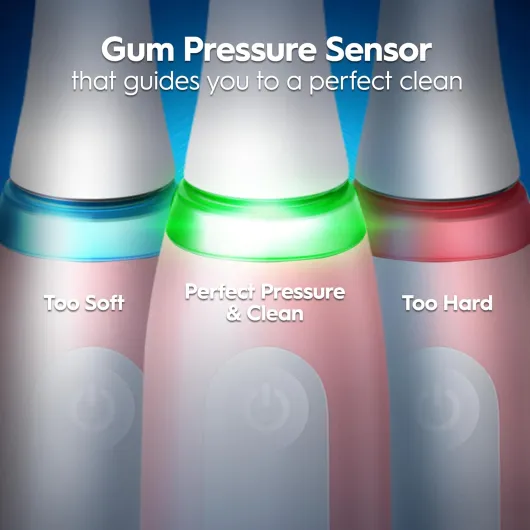
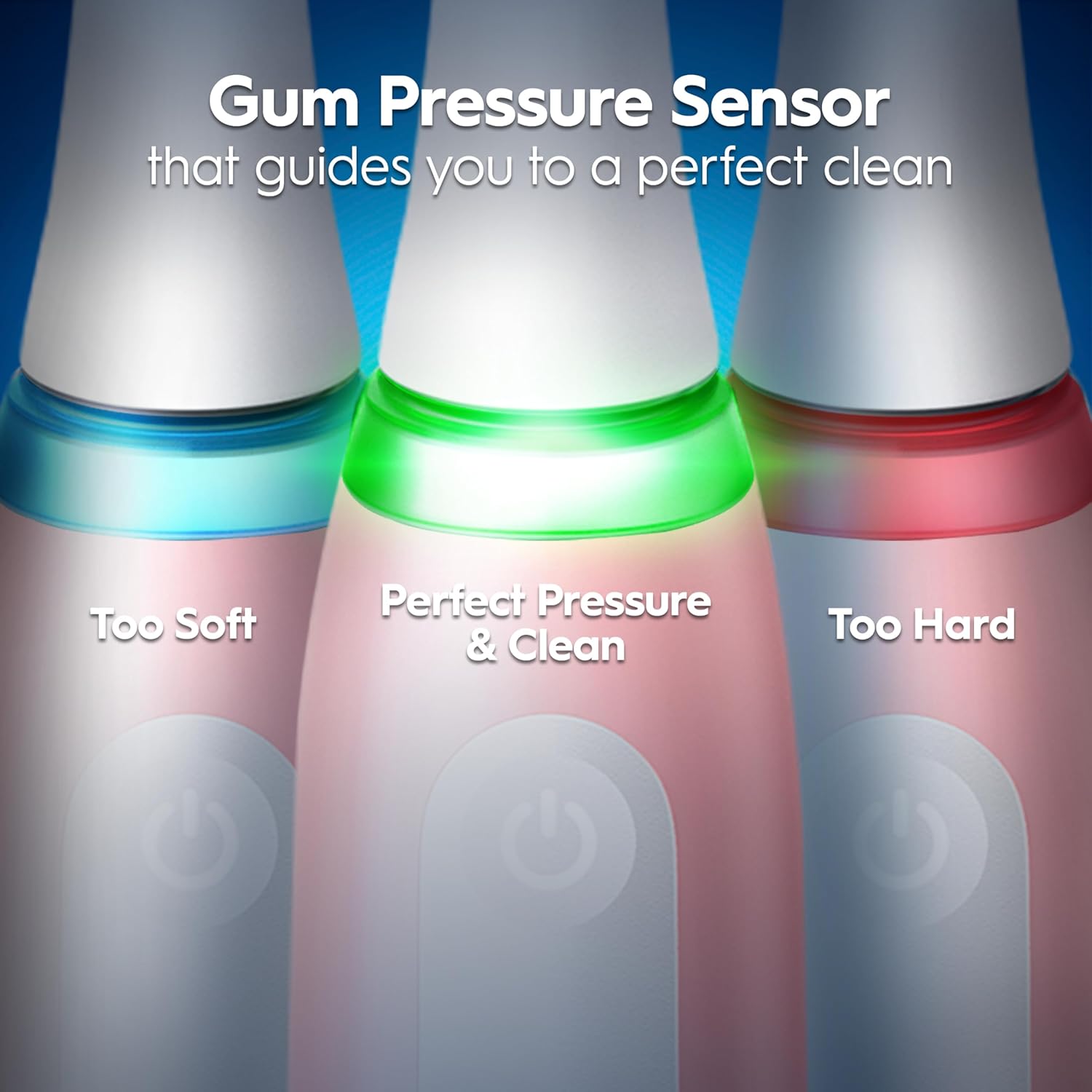
A reliable pressure sensor is essential because excessive force from any toothbrush, manual or powered, can wear enamel and irritate gums. Studies on powered brushes with pressure control have shown lower rates of abrasion and recession compared with models that lack feedback (see summaries in the Journal of the American Dental Association). Many smart electric toothbrushes use light rings, vibrations, or app alerts to warn you when the brush head presses too hard, which protects teeth while still allowing the sonic or oscillating motion to lift stains. If you have sensitive areas, orthodontic appliances, or crowns, prioritizing a product with a responsive pressure sensor and adjustable intensity levels will help you benefit from whitening electric modes without discomfort.

Battery life and charging convenience also separate average electric toothbrushes from the best options. A high-quality rechargeable electric toothbrush should last at least one to two weeks on a single charge—roughly 30–60 minutes of brushing time—even when you use whitening and other cleaning modes twice daily for two minutes. For frequent travelers, a compact travel case that protects the handle and extra brush heads is more than a luxury, because it keeps the toothbrush with whitening mode safe and hygienic in luggage or a work bag and makes it easier to maintain your routine away from home. As a rule of thumb, if you travel often, choose a model that combines a sturdy case with USB or universal-voltage charging so you are not forced back to a manual brush just when you want to maintain whitening results.

Philips Sonicare and other leading brands in whitening electric care

Among premium electric toothbrushes, Philips Sonicare has built a strong reputation for combining sonic technology with clinically tested whitening performance. For example, Philips reports that some Sonicare whitening toothbrush models, such as the ProtectiveClean and DiamondClean ranges, can remove significantly more plaque than a manual brush and visibly reduce surface stains in as little as one week when used twice daily (manufacturer data). Independent trials have also evaluated Sonicare devices: one study found that a sonic brush with a whitening mode produced greater reductions in extrinsic stain than a manual brush over six weeks (Goyal et al., 2014). A typical Philips Sonicare whitening toothbrush uses high-frequency sonic movements and specially shaped brush heads to polish stains from coffee, tea, and tobacco while remaining gentle on enamel. These are manufacturer and study-specific findings and should be interpreted alongside independent reviews and your dentist’s advice.

When you evaluate Philips products on Amazon or in pharmacies, pay attention to the rating stars and the details hidden behind them. Reviews often mention how long the battery life remains strong after a full charge, how comfortable the brush head feels against the gums, and whether the minute timer and pressure sensor actually change brushing habits. A Philips electric toothbrush with a protective travel case and ADA Accepted status usually indicates that the product has met independent standards for safety and effectiveness in oral care (American Dental Association), which is especially reassuring if you plan to use whitening modes every day.

Other brands also offer strong whitening electric toothbrush options, sometimes at a lower price point. For instance, Oral-B Pro and iO series models use oscillating-rotating technology and dedicated whitening or “Polish” modes, with starter kits often priced between $50 and $180 depending on features (Oral-B product listings). Some sonic toothbrushes from emerging manufacturers provide multiple cleaning modes, a built-in timer, and interchangeable brush heads that fit different preferences, such as softer bristles or smaller brush head sizes for crowded mouths. When comparing these products with Philips Sonicare or Oral-B, consider not only the initial price but also the availability and cost of replacement heads, warranty coverage, and whether the toothbrushes integrate with smart apps for coaching.

Quick comparison of popular whitening-focused electric toothbrushes

Model (example) Approx. price (handle) Whitening mode Battery life Replacement-head cost (per head)
Philips Sonicare ProtectiveClean 6100 $120–$150 “White” / “White+” intensity options Up to 2 weeks ~$5–$10 for genuine Sonicare heads in multipacks
Philips Sonicare DiamondClean Smart $200–$280 Multiple whitening and polish programs About 2–3 weeks ~$6–$12 depending on head type and pack size
Oral-B Pro 1000 (with whitening head) $50–$80 No dedicated mode, but whitening brush heads available Roughly 7–10 days ~$3–$7 for Oral-B heads in multipacks
Oral-B iO Series 6–8 $150–$250 “Whiten” or “Super Sensitive + Whiten” modes About 2 weeks ~$7–$12 per iO head, often cheaper in bundles

Prices and head costs vary by retailer and promotions, but this snapshot shows how whitening modes, battery life, and ongoing expenses differ between leading electric toothbrushes.

How smart features and apps enhance whitening results

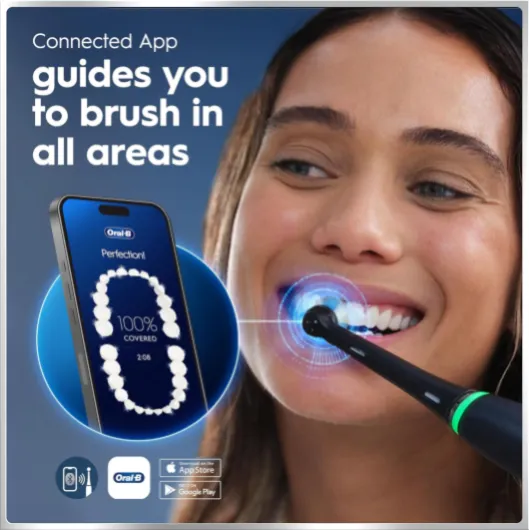
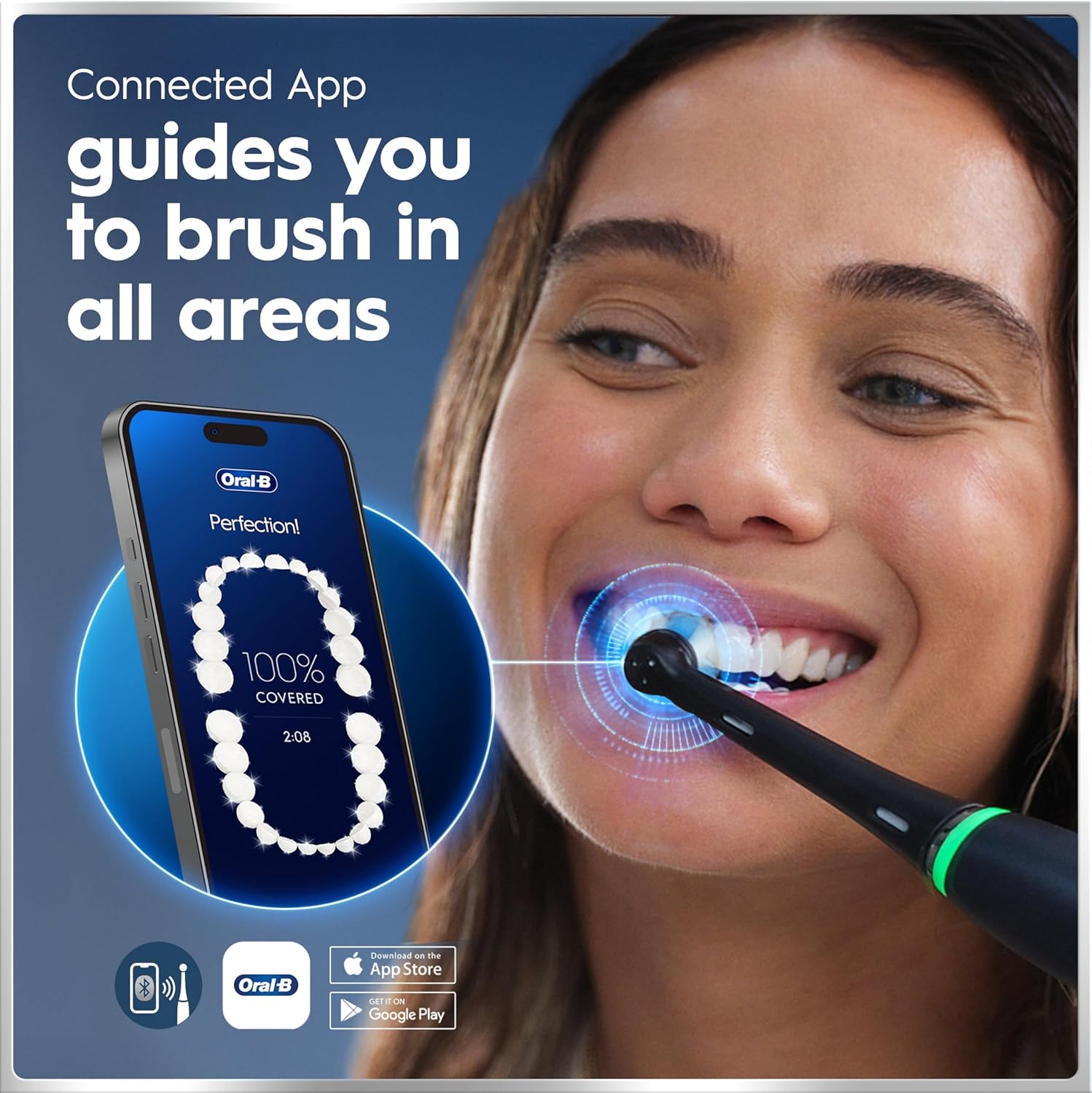
Modern electric toothbrushes increasingly include smart connectivity, using Bluetooth and companion apps to guide technique and track habits. A smart toothbrush with real-time feedback can show where you missed areas, whether you respected the two-minute timer, and how often you used the whitening toothbrush mode compared with standard cleaning. For users who struggle with consistency, these intelligent tools turn a simple brush into a personalized oral-care coach that helps you get more whitening benefit from the same two minutes.

Some smart electric toothbrush products map your mouth into zones and use sensors in the brush head to detect coverage. If you rush through the front teeth, the app may highlight those areas and suggest using the whitening electric mode there for a little longer while still respecting the total two-minute timer. Over several weeks, this data-driven approach helps you align your brushing routine with dentist recommendations, which is crucial when you want the best electric toothbrushes with whitening mode to deliver visible, even results across your smile.

Price can increase when you add smart features, yet not every person needs the most advanced app integration. If you already maintain excellent habits, a simpler rechargeable electric toothbrush with a pressure sensor, minute timer, and two or three cleaning modes may be sufficient. On the other hand, if you often forget to replace brush heads or ignore your oral health until problems appear, a smart product that sends reminders, tracks brush-head usage, and logs whitening-mode frequency can justify a higher purchase price over time by helping you avoid costly dental issues. A practical way to decide is to ask yourself whether you will actually open the app several times per week; if the honest answer is no, you are probably better served by a solid mid-range whitening toothbrush without premium connectivity.

Practical buying guide for whitening focused electric toothbrushes

Before you choose among the many electric toothbrushes on Amazon or in stores, clarify your priorities and oral health needs. If surface stains from coffee, tea, or red wine bother you, focus on a whitening toothbrush that offers at least one dedicated whitening mode plus a standard daily clean program. People with sensitive gums should pair these cleaning modes with a soft or extra-soft brush head and a responsive pressure sensor to avoid irritation while still benefiting from whitening electric technology.

Next, evaluate the total cost of ownership rather than only the headline price. Calculate how many replacement brush heads you will need each year—typically four if you change them every three months—and how much they cost per unit. For example, genuine Philips Sonicare or Oral-B heads often range from about $4 to $10 per head in multipacks, while compatible third-party options may cost less but vary in quality. A slightly higher initial price for a Philips Sonicare or similar electric toothbrush can become more economical if the brush heads last longer, the battery life remains strong for several years, and the handle includes a durable travel case that protects your investment.

Finally, check objective indicators of quality such as ADA Accepted seals, independent clinical data, and consistent rating stars across multiple retailers. A toothbrush with strong professional endorsements, clear documentation of its sonic or oscillating performance, and transparent warranty terms inspires more trust than a generic product with vague claims. When you weigh these factors carefully, you are more likely to select the best electric toothbrushes with whitening mode that match your budget, lifestyle, and long-term oral health goals.

Pros and cons of premium whitening electric toothbrushes

  • Pros: more refined whitening modes, better pressure control, longer battery life, stronger evidence base, and often ADA Accepted status.
  • Cons: higher upfront cost, more expensive replacement heads, and extra features you may not fully use if you prefer a simple routine.

Daily use tips to maximize whitening from your electric toothbrush

Owning a high-quality electric toothbrush is only half the equation, because technique and consistency determine how well whitening modes perform. Position the brush at a slight angle toward the gumline, let the sonic or oscillating motion do the work, and glide the brush head slowly over each tooth surface. Scrubbing aggressively or moving too quickly defeats the purpose of the pressure sensor and can reduce the benefits of whitening electric technology by causing abrasion or missed areas.

Use the built-in minute timer to complete the full two minutes, dividing time evenly between quadrants and giving extra attention to front teeth where stains show most. Many electric toothbrushes allow you to start with a standard cleaning mode and then switch to the whitening toothbrush setting for the final 30–60 seconds on visible teeth. This approach balances gentle plaque removal with targeted polishing, especially when combined with a low-abrasion whitening toothpaste approved for daily use and flossing or interdental brushes to prevent stain buildup between teeth.

Replace brush heads every three months or sooner if bristles splay, because worn bristles reduce both cleaning and whitening efficiency. Store your rechargeable electric toothbrush upright, keep the travel case clean and dry, and avoid leaving the handle permanently on the charger if the manufacturer advises against it to preserve battery health. With these habits, the best electric toothbrushes with whitening mode maintain their performance, protect your oral health, and justify their price over many years of reliable service.

Key statistics on electric toothbrushes and whitening performance

  • A Cochrane review found that powered toothbrushes removed about 21% more plaque and reduced gingivitis by around 11% after three months compared with manual brushes, which indirectly supports better whitening by reducing stain retention on rough, plaque-covered surfaces (Robinson et al., 2014).
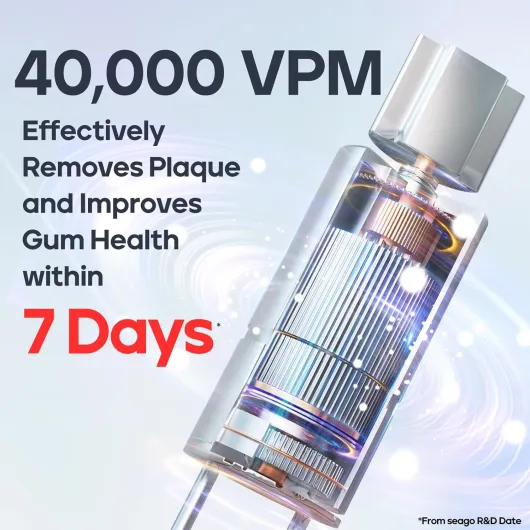
  • Many sonic electric toothbrushes operate at 31,000–62,000 brush movements per minute, creating fluid dynamics that help clean along the gumline and between teeth more effectively than the roughly 300–600 strokes per minute typical of manual brushing (ADA toothbrush overview).
  • Research comparing electric toothbrushes with pressure sensors to those without has reported lower rates of gum abrasion and recession, indicating that pressure control features protect oral tissues while users pursue cosmetic whitening goals (see clinical studies indexed on PubMed).
  • In a six-week clinical trial, a sonic toothbrush with a whitening mode and a silica-based whitening toothpaste produced significantly greater reductions in extrinsic stain scores than manual brushing with the same toothpaste, supporting the role of powered brushing in cosmetic brightening (Goyal et al., 2014).
  • Consumer surveys of people who switched from manual to rechargeable electric toothbrush models often report higher satisfaction with perceived tooth brightness, especially when using dedicated whitening modes at least once per day in combination with a whitening toothpaste (manufacturer and retailer survey summaries).
  • Market analyses indicate that premium electric toothbrush products with smart connectivity and multiple cleaning modes command higher price points, yet they also achieve stronger average rating stars and better long-term user retention than basic models (Statista oral care market reports).

Frequently asked questions

Whitening modes on electric toothbrushes primarily remove surface stains rather than changing the intrinsic color of enamel. The combination of high-frequency movements, specialized brush heads, and longer contact time on visible teeth can make them appear brighter over several weeks. Clinical studies on powered brushes with stain-removal settings have shown measurable reductions in extrinsic discoloration compared with manual brushing when both are paired with the same whitening toothpaste (Goyal et al., 2014). For deeper discoloration caused by aging, medication, or trauma, professional whitening treatments remain necessary, but a whitening toothbrush helps maintain and extend those results.

Most people can safely use the whitening mode once or twice daily, as long as they respect the built-in two-minute timer and avoid excessive pressure. If you experience sensitivity, alternate between the whitening setting and a gentler standard cleaning mode while monitoring how your teeth and gums respond. Consulting your dentist is wise if you have existing enamel erosion, gum recession, or a history of tooth sensitivity before increasing whitening intensity.

Sonic electric toothbrushes excel at creating fluid dynamics that help clean along the gumline and between teeth, which can support more uniform stain removal. Rotating-oscillating models may concentrate more mechanical action on each tooth surface, which some users prefer for polishing. The best choice depends on your comfort, technique, and whether the specific product offers effective whitening modes, suitable brush heads, and features like a timer and pressure sensor that you will actually use.

People with sensitive gums should prioritize a toothbrush with a responsive pressure sensor, multiple intensity levels, and soft or extra-soft brush heads. A model that combines a gentle gum-care mode with a moderate whitening setting allows you to adjust power without sacrificing stain removal. Checking for ADA Accepted status, reviewing clinical data when available, and discussing options with your dentist can further reduce the risk of irritation while you pursue a brighter smile.

Smart electric toothbrushes with apps, detailed feedback, and advanced mode options can improve consistency and technique, which indirectly enhances whitening results. If you struggle with motivation, often miss areas, or forget to replace brush heads, the coaching and tracking features may justify the higher price over time. However, a simpler rechargeable electric toothbrush with a reliable whitening mode, timer, and pressure control can be equally effective for disciplined users who already follow dentist-recommended brushing habits. My practical recommendation is to invest in smart features only if you know you will use the app regularly; otherwise, put your budget into a dependable mid-range whitening toothbrush and high-quality replacement heads.

According to our tests, the best electric toothbrushes with whitening mode is the Vibe Series Ultra-Whitening Toothbrush – ADA Accepted Electric Toothbrush - 8 Brush Heads & Travel Case – 40,000 VPM Motor & Wireless Charging - 4 Modes w Smart Timer – Ruby with a score of 8.5/10.

The cheapest electric toothbrushes with whitening mode in our comparison is the Vibe Series Ultra-Whitening Toothbrush – ADA Accepted Electric Toothbrush - 8 Brush Heads & Travel Case – 40,000 VPM Motor & Wireless Charging - 4 Modes w Smart Timer – Ruby.

The most popular electric toothbrushes with whitening mode is the Black Series Ultra Whitening Toothbrush – ADA Accepted Electric Toothbrush- 8 Brush Heads & Travel Case – 40,000 VPM Electric Motor & Wireless Charging - 4 Modes w Smart Timer 1 Count (Pack of 1) with 130 322 customer reviews.

To choose a electric toothbrushes with whitening mode, we recommend comparing performance, build quality, value for money and user reviews. Our comparison table above helps you make the right choice.

We have tested 3 Electric toothbrushes with whitening mode to establish this ranking.
#1 Vibe Series Ultra-Whitening Toothbrush – ADA Accepted Electric Toothbrush - 8 Brush Heads & Travel Case – 40,000 VPM Motor & Wireless Charging - 4 Modes w Smart Timer – Ruby
Aquasonic
Vibe Series Ultra-Whitening Toothbrush – ADA Accepted Electric Toothbrush - 8 Brush Heads & Travel Case – 40,000 VPM Motor & Wireless Charging - 4 Modes w Smart Timer – Ruby
8.5/10 Best choice
See offer Amazon
Published on