
Summary
Editor's rating
Value for money: worth it, but not the cheapest way to clean your teeth
Design: simple, decent, and a bit plasticky
Battery life and charging: good for travel, not wireless‑charging fancy
Comfort in the mouth and in the hand
Daily performance and the different modes in real life
What you actually get in the box
Cleaning effectiveness: does it actually make a difference?
Pros
- Cleans very well with gentle sonic action, especially along the gumline
- Pressure sensor and timer help prevent over‑brushing and under‑brushing
- Strong battery life (around two weeks or more) and useful travel case
Cons
- Replacement brush heads are relatively expensive over time
- Different modes don’t feel dramatically different from each other

Specifications
View full product page →| Brand | Philips Sonicare |
A toothbrush that actually changes your routine (a bit)
I’ve been using the Philips Sonicare ProtectiveClean 5300 for a few weeks now, after years of bouncing between manual brushes and cheaper electric ones. I didn’t buy it thinking it would change my life; I mostly wanted something that cleaned better and stopped me from grinding my gums to death. In that sense, this brush does what it says. My teeth feel smoother, especially near the gumline, and I’m not walking away with sore gums like I used to when I got carried away with a manual brush.
What stood out right away is how structured it makes the whole brushing routine. The built‑in timer and the little pauses every 30 seconds really push you to do the full two minutes instead of rushing through it in 45 seconds like most people secretly do. It’s a small thing, but in daily use it matters. You just follow the vibrations, move to the next quadrant, and you’re done. It’s kind of idiot‑proof in a good way.
I also noticed I’m thinking less about “am I brushing too hard?” because of the pressure sensor. With a manual brush I used to press like I was scrubbing a pan. Here, if I push too much, the brush basically tells me to calm down. That helped my gums feel less irritated after about a week. Nothing magical, just less redness and less sensitivity when I rinse.
It’s not perfect though. The extra modes feel a bit like marketing more than real added value, and the price is not pocket change when you factor in replacement heads. But if you’re moving up from a manual brush or a very basic electric one, this feels like a decent step up, mainly for the cleaning feel and the little “smart” touches that keep you from using it wrong.
Value for money: worth it, but not the cheapest way to clean your teeth
On price, the ProtectiveClean 5300 sits in that mid‑range zone: not budget, not top‑of‑the‑line. You’re paying for a known brand, sonic technology, and a few smart features like the pressure sensor, BrushSync, and multiple modes. For what it does, I’d say the value is pretty decent, but it depends where you’re coming from. If you’re switching from a manual brush, this will feel like a big step up in both comfort and cleaning. If you already own a cheaper Sonicare without the extra modes, the jump is smaller and maybe not worth a big upgrade unless your old one is dying.
One thing to factor in is the cost of replacement heads. Genuine Philips heads aren’t cheap, especially if you stick to the DiamondClean line. You can stretch each head to the recommended three months if you take care of them, but over a year that adds up. There are compatible third‑party heads that are cheaper, but quality is hit or miss, so you’re gambling a bit. If you’re on a tight budget, that ongoing cost matters more than the initial price of the handle.
Compared to Oral‑B models in the same price range, this Sonicare feels gentler and, in my case, better for gums. If you have gum issues or your dentist keeps telling you to “brush softer,” this model makes that easier. If you just want something that spins and cleans and don’t care about sonic vs oscillating, an Oral‑B or a cheaper Sonicare could save you money and still get the job done. The extra three modes here are nice, but like one Amazon reviewer said, they’re not life‑changing; a cheaper Sonicare with a single mode will clean almost as well.
So in terms of value: it’s good but not unbeatable. You’re paying a bit of a brand and feature premium, but you do get solid build, good battery, and a complete kit with three heads and a travel case. If you care about gum comfort and like the idea of the brush helping you not overdo it, the price is easier to justify. If you just want the cheapest electric brush that works, you can definitely spend less and still come out with clean teeth.
Design: simple, decent, and a bit plasticky
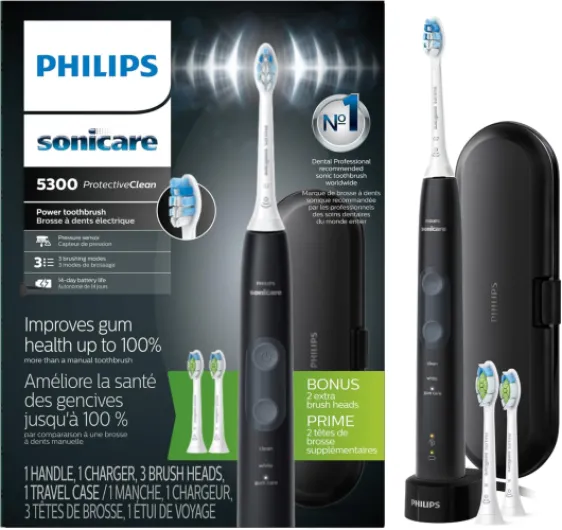
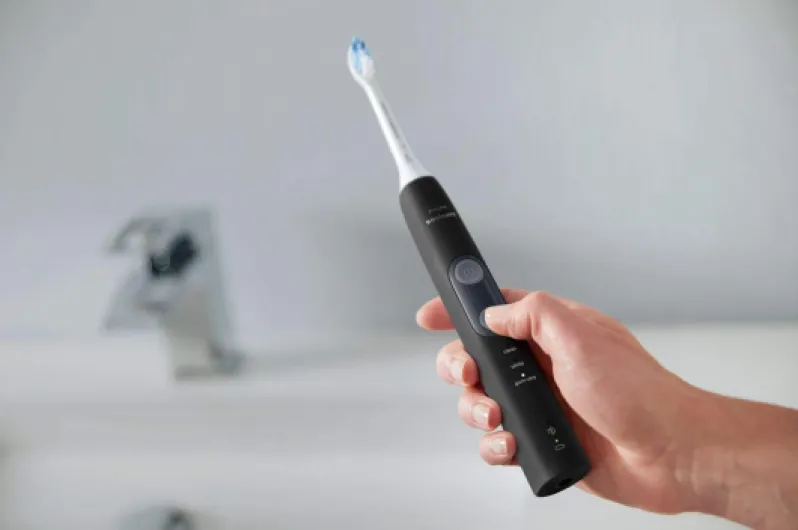
Design‑wise, the ProtectiveClean 5300 is pretty standard Sonicare. The black handle looks clean and low‑key on the sink, nothing flashy. It’s a slim cylinder with a slightly rubberized feel that makes it easier to hold with wet hands. I have medium‑sized hands and it sits well; my partner with smaller hands also found it comfortable, so it’s not huge or bulky. The weight is balanced toward the middle, so it doesn’t feel top‑heavy even with the head attached.
The button placement is mostly fine. The main power button is easy to hit, even when you’re half asleep. Under that you have the mode selection area, which you tap to cycle between Clean, White, and Gum Care. One thing I didn’t love: the pressure sensor feedback is mostly visual on the handle, and depending on how you grip it, you don’t always see it clearly in the mirror. After a while you start to feel it through the change in vibration, but at the beginning I had to consciously look for the indicator light.
The finish is full plastic. It doesn’t feel cheap, but it also doesn’t feel premium. Think “good appliance” level, not luxury gadget. The black color hides toothpaste splashes better than white handles I’ve had in the past, which is a small but real perk for lazy cleaners like me. The brush heads click on with a solid feel, no wobbling or weird play. Swapping heads takes two seconds, so sharing the handle or switching between DiamondClean and Gum Care is easy.
One practical detail: it stands up on its own without being too wobbly, even off the charger. On a narrow sink edge it’s still fairly stable. The only thing that bugged me slightly is that there’s no rubber foot on the bottom, so if your counter is wet it can slide a bit. Nothing dramatic, but I’ve nudged it over a couple of times. Overall, the design is functional and clean, just don’t expect anything fancy or super premium in hand.
Battery life and charging: good for travel, not wireless‑charging fancy
Battery life on this thing is one of its stronger points. Philips claims up to two weeks on a full charge, and in my use, that’s pretty accurate, sometimes even a bit more. Brushing twice a day on Clean mode, I easily got past the 14‑day mark before the battery indicator started blinking. I pushed it to around 16–17 days once just to see, and it still had enough juice to keep the same vibration strength. It didn’t slowly fade out like some cheaper brushes I’ve used.
The charging base is simple: you drop the handle on it and it charges inductively. No metal contacts you have to line up perfectly, and no USB directly on the handle, so there’s less chance of water getting somewhere it shouldn’t. It’s not fast charging, but since you only need to charge every couple of weeks, it’s not really an issue. I usually just leave it on the charger overnight when the battery light gets low, and by morning it’s good to go for another couple of weeks.
For travel, the combo of long battery life and the hard travel case is pretty handy. On a one‑week trip, I didn’t even bring the charger; I just charged it fully before leaving and it lasted without a problem. The case holds the handle and two heads, and it doesn’t rattle like crazy in a suitcase. The only minor downside: the charger is not super compact if you want to pack it, and it’s not USB‑C or anything modern, so you still have to deal with a separate cable and plug.
Overall, for an everyday toothbrush, the battery performance is solid enough that you rarely think about it, which is exactly what you want. If you’re the type who forgets to charge everything, this is forgiving. Just don’t expect high‑tech charging features or fancy docks; it’s old‑school but reliable.
Comfort in the mouth and in the hand
In terms of comfort, this brush is a clear step up from my old cheap oscillating one. The Sonicare vibration is more of a buzzing than a harsh mechanical movement, so it feels less aggressive on the teeth and gums. The first two or three days, if you’ve never used a sonic brush, it feels a bit weird and ticklish, especially on the front teeth and around the tongue. After about a week I stopped noticing it and it just became normal. I didn’t get any jaw fatigue or anything like that, even doing the full two‑minute routine twice a day.
The handle grip is pretty good. The surface has just enough texture that it doesn’t slip, even when you’ve got toothpaste foam on your fingers. I’ve used it in the shower a few times and it never felt like it was going to jump out of my hand. The size works for both my grip and my partner’s smaller hands, so it’s reasonably universal. The button is not too hard, not too soft. You can turn it off quickly if you need to spit or adjust, without pressing so hard that you move the brush around in your mouth.
For sensitive gums, this is where I noticed a difference. With a regular manual brush I used to sometimes finish with slightly bleeding gums if I brushed a bit too enthusiastically. After about a week with this, that stopped for me. The pressure sensor plus the sonic motion kind of forces you to let the brush do the work instead of scrubbing like crazy. On Gum Care mode, the power is slightly reduced and adds extra time; it feels gentler but still cleans well. If you already have gum problems, that mode is probably the one you’ll use most.
The only comfort downside for me is the noise and vibration if you brush right up near the back molars or close to your ear. It’s not super loud, but it’s not quiet either. You feel the vibration in your skull a bit, which is normal for sonic brushes but still noticeable. If you’re very sensitive to noise or vibration, that might annoy you. Overall though, for daily use, I’d say comfort is pretty solid, especially compared to cheaper electric models that feel more rough.
Daily performance and the different modes in real life
Using this twice a day, the overall performance is stable and consistent. The motor doesn’t randomly slow down or surge, and there’s no feeling that it’s struggling, even at the end of the battery cycle. Each session starts at full power and stays there. I’ve had cheaper electric brushes that clearly got weaker as the battery drained; this one keeps a steady vibration until it’s time to recharge. That’s important because you don’t want your brushing quality to depend on whether you charged last night or five days ago.
About the three modes, in practice I ended up with a clear pattern: Clean mode in the morning, White or Gum Care at night. Clean is the standard, medium‑intensity setting. White feels a bit stronger and slightly more focused on polishing the front surfaces—good if you drink coffee, tea, or red wine regularly and want to slow down staining. Gum Care is a bit softer and adds extra brushing time, which is nice when your gums are feeling sensitive. But I’ll be honest: the difference between the modes is not night and day. If you’re expecting three totally different experiences, you might be underwhelmed. They’re variations on the same baseline.
The pressure sensor kicks in if you push too hard. At first I barely noticed it because I wasn’t looking at the handle while brushing. After a few days, I started to feel the slight change in vibration and realized, okay, that’s the brush telling me to ease up. It’s not super intrusive, but it does train you over time. I used to scrub my teeth like I was sanding wood; now I let the brush glide and just guide it, which is exactly how you’re supposed to use these.
I also like the BrushSync head replacement reminder in theory. A little light tells you when it’s time to swap the head. In practice, it’s helpful if you’re forgetful, but you can also just look at the blue bristles fading. Still, it’s one less thing to think about. Overall, performance is solid and predictable. The extra features (modes, pressure sensor, reminders) are useful but not life‑changing. They just make it harder to use the brush badly, which is already something.
What you actually get in the box
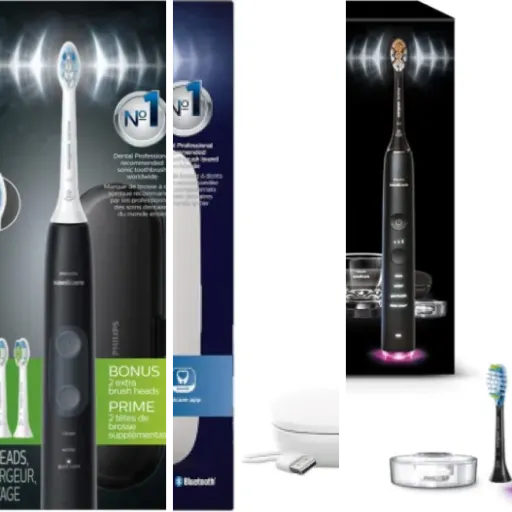
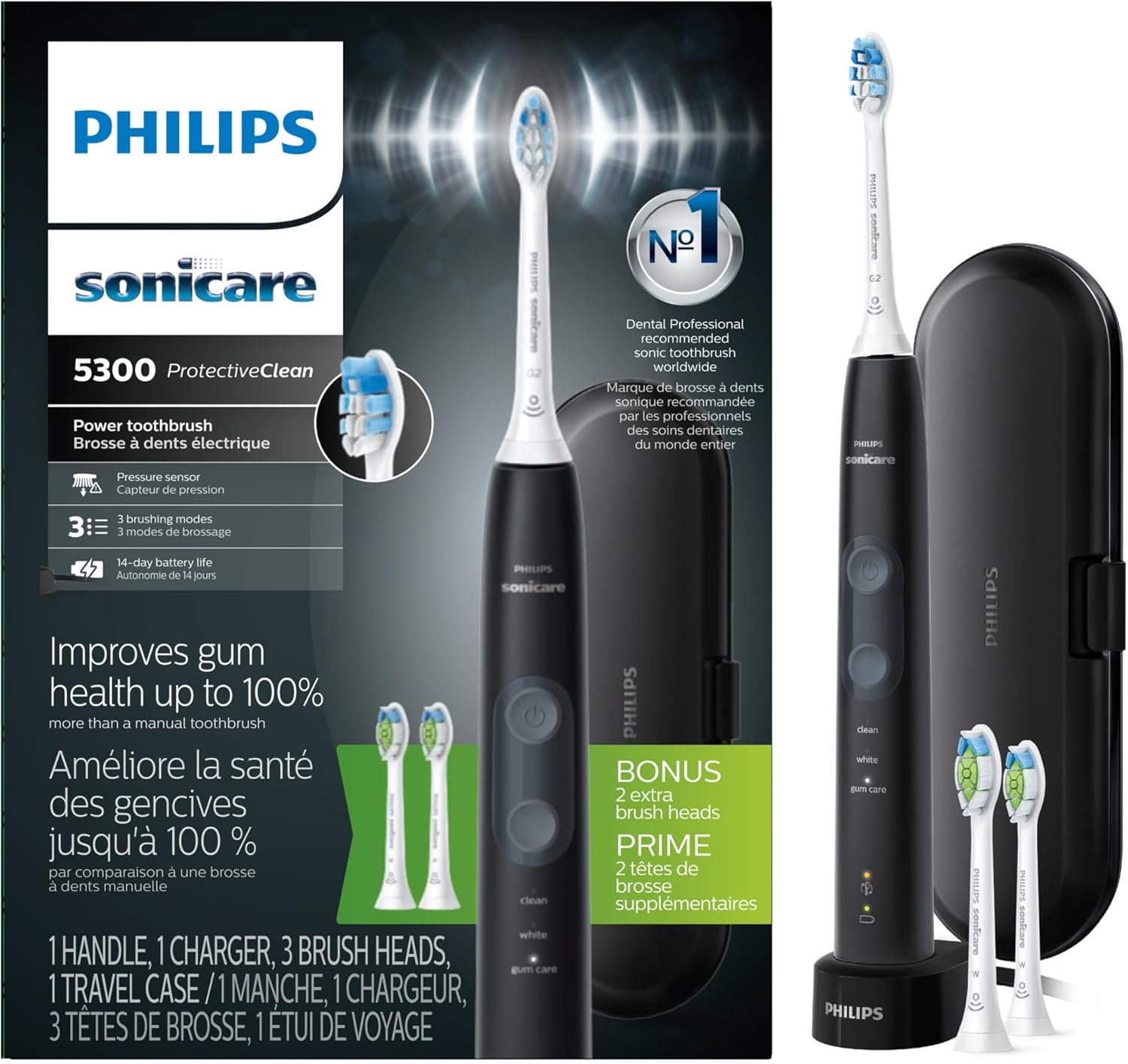
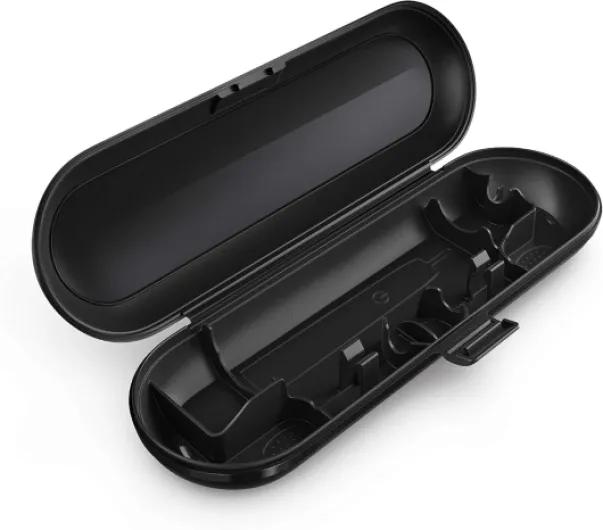
Out of the box, the Philips Sonicare ProtectiveClean 5300 is pretty straightforward. You get the handle, three brush heads (1x G2 Optimal Gum Care and 2x DiamondClean), a basic charging base, and a hard plastic travel case. No weird accessories, no app nonsense, just the stuff you’ll actually use. The three heads are nice because you can test what you prefer or share the handle with someone else if you buy extra rings or keep track of who uses what.
The handle itself has three buttons/areas: the main power button and a mode selector area under it. There are light indicators for battery, BrushSync (head replacement reminder), and the pressure sensor. The layout is simple enough that you can figure it out without reading the manual, which I appreciate. You cycle through the modes (Clean, White, Gum Care) with the button, and it remembers the last mode you used for next time, which is handy if you’re a creature of habit.
The travel case is pretty basic but useful. It’s hard plastic, fits the handle and two heads, and has ventilation holes. I tossed it in a backpack a few times; it didn’t pop open or get crushed, so for normal travel use it’s fine. It’s not fancy, but it keeps the brush from rolling around in a toiletry bag and collecting whatever is in there. The charger is one of those small Sonicare bases; it doesn’t take up much counter space, and the cable is long enough for most bathroom setups.
Overall, the presentation is practical more than flashy. You feel like you’re paying for the actual brushing system and not a bunch of decorative stuff. On the downside, the manual is pretty generic and doesn’t really explain the difference between modes in detail, so you end up testing them yourself to see what feels right. But in terms of what you physically get, it’s a pretty complete starter kit for someone switching to Sonicare.
Cleaning effectiveness: does it actually make a difference?
This is the part that matters: does it clean better than a manual brush or a basic electric one? For me, yes, there’s a clear difference. After the first use, my teeth felt smoother, especially on the inner surfaces that I usually rush. The sonic motion seems to reach along the gumline better than my old oscillating brush. When I run my tongue along my teeth after brushing, they feel closer to that “just left the dentist” smoothness. It’s not as perfect as a professional cleaning, obviously, but it’s a noticeable step up from manual brushing.
The 2‑minute timer with QuadPacer is actually more useful than I expected. Every 30 seconds it pauses briefly to tell you to move to the next section of your mouth. I used to brush mostly the front and forget the inside surfaces; with this, you’re kind of forced to give each part equal time. Over a couple of weeks, that routine becomes automatic. My plaque buildup between cleanings at the dentist has gone down a bit compared to when I was using only manual brushes.
About the modes: Clean is the one I use 90% of the time. It’s the standard, and it gets the job done. White ramps up the intensity a bit and focuses more on surface stains; I used it at night when I’d had coffee or tea. It doesn’t whiten your teeth like a whitening treatment, but it did help keep new stains from sticking as quickly. Gum Care adds an extra minute with lower power, which is nice if your gums are sensitive or if your dentist told you to baby them a bit. That said, the difference between modes is not huge. I wouldn’t buy this model only for the extra modes; they’re more of a nice‑to‑have.
Longer term, after a few weeks, my gums looked less inflamed and I had less bleeding when flossing. That’s obviously not 100% the brush’s doing—technique and flossing matter too—but the pressure sensor training me not to over‑press clearly helped. I’d say if you already have decent brushing habits, this will refine them and make things easier. If your habits are terrible, it won’t magically fix everything, but it does remove some user error by forcing good timing and lighter pressure.
Pros
- Cleans very well with gentle sonic action, especially along the gumline
- Pressure sensor and timer help prevent over‑brushing and under‑brushing
- Strong battery life (around two weeks or more) and useful travel case
Cons
- Replacement brush heads are relatively expensive over time
- Different modes don’t feel dramatically different from each other
Conclusion
Editor's rating
After using the Philips Sonicare ProtectiveClean 5300 regularly, my takeaway is pretty simple: it’s a solid, no‑nonsense electric toothbrush that cleans well, feels gentle on the gums, and doesn’t demand much effort from you. The sonic action plus the timer and QuadPacer make it easier to brush properly without thinking too much about time or technique. My teeth feel smoother, and my gums have been less irritated compared to when I was using a manual brush or a rougher electric model.
It’s not perfect though. The extra brushing modes are nice, but the differences between them are not huge, so I wouldn’t buy this model only for that. The long‑term cost of replacement heads is also something to keep in mind; this is not the cheapest setup to maintain. Design and materials are more “good appliance” than premium gadget, so if you’re expecting something fancy in the hand, you might be a bit underwhelmed.
I’d say this brush is well suited for people who have sensitive gums, tend to brush too hard, or want to move up from a manual brush to something more structured and efficient. The pressure sensor and gentle sonic motion help a lot in those cases. If you already have a working Sonicare without all the extra modes, or if you just want a basic electric brush for cheap, you might be better off with a lower model in the Sonicare range or a budget Oral‑B. For everyone else who’s okay paying a bit more for a reliable, comfortable daily brush, the ProtectiveClean 5300 gets the job done and feels like a reasonable upgrade.
![Sonicare 5500 Electric Toothbrush, Sonic Toothbrush with 2 Modes, Pressure Alert, EasyStart, SmarTimer and BrushPacer, Navy, Model HX7113/01 [New Technology] Sonicare 5500, Navy, Travel Case](https://www.electric-toothbrush-guru.com/storage/1025316/conversions/71vNjog50vL._AC_SL1500_-medium.webp)