
Summary
Editor's rating
Value for money: who should actually buy this
Design and ergonomics: feels premium, slightly heavy
Battery life and charging: the thing you forget about (in a good way)
Comfort, noise and everyday use
Build quality and how durable it feels
Cleaning performance: does it actually brush better?
What you actually get and how it works day to day
Pros
- Very good cleaning performance with strong vibration + oscillation combo
- Long battery life with convenient wireless charging dock
- Stainless steel body feels robust and more premium than plastic
- Smart pressure sensor helps protect gums from over‑brushing
Cons
- Heavier handle than most electric brushes, not ideal if you like very light devices
- No travel case included despite travel‑focused marketing
- App and smart features may feel unnecessary if you just want simple brushing

Specifications
View full product page →| Brand | Laifen |
A very techy toothbrush for a pretty basic job: brushing your teeth
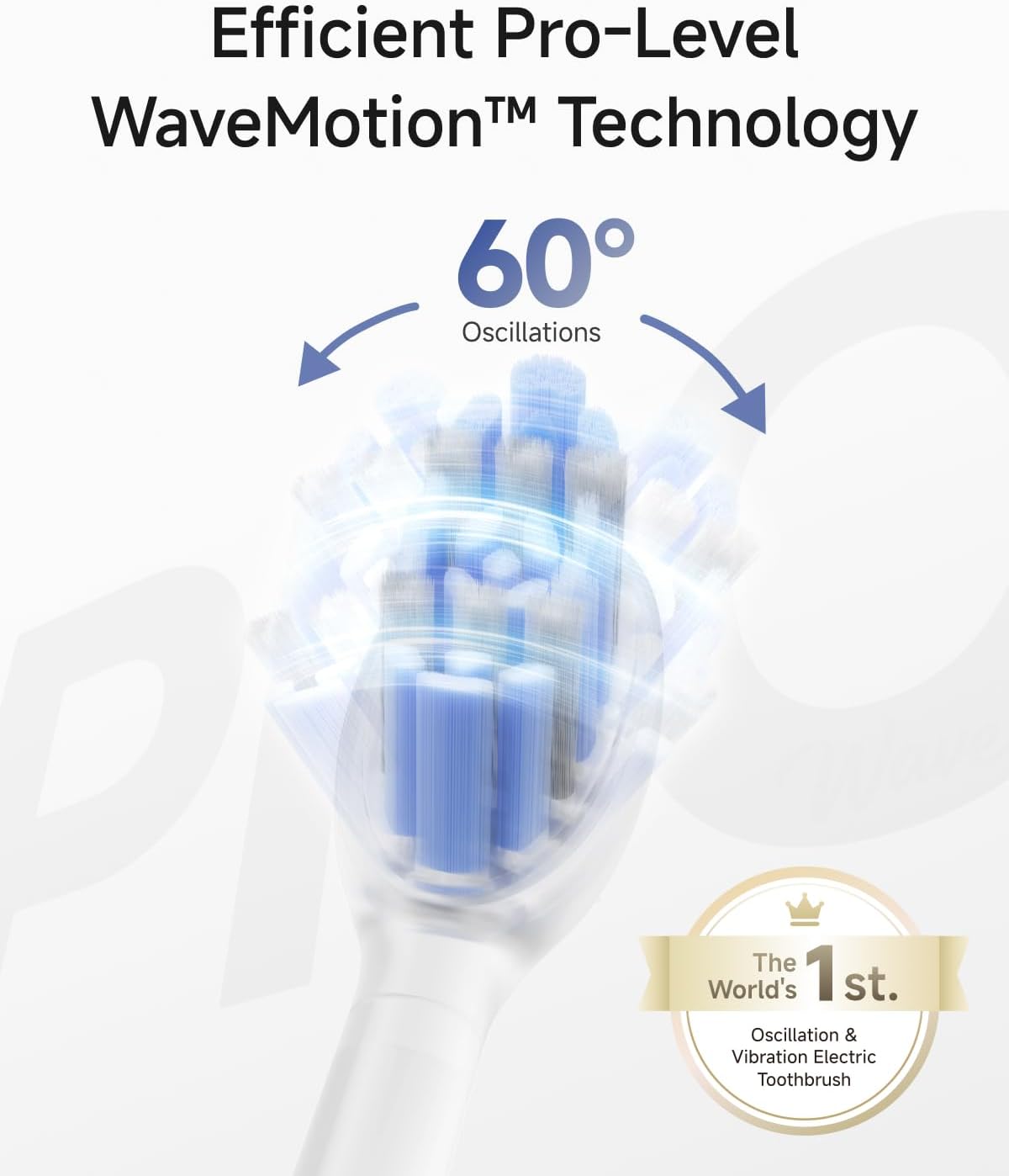
I’ve been using the Laifen Wave Pro for a few weeks now, morning and night, after years with more classic sonic brushes (Oral-B and Philips). On paper, this thing is packed with features: 66,000 vibrations per minute, 60° oscillations, smart app, pressure sensor, 70‑day battery, wireless charging, the whole lot. In reality, I wanted to see one simple thing: does it clean better and is it pleasant to use, or is it just another gadget with an app you open once and forget?
From the first days, what struck me was the brushing feel. It doesn’t feel like the usual buzzing stick. The head really moves differently, a bit like a mix between a sonic brush and a small rotary one, and you feel it scraping along the gum line more than a standard brush. Not painful, but more present. If you’re used to very soft manual brushing, the first two or three uses are a bit surprising.
Another thing I noticed quickly: the handle is heavier than most plastic models, because of the stainless steel body. In the beginning I thought it would be annoying, but in practice it actually helps me keep a more stable grip, especially when my hands are wet. It feels more like holding a small tool than a cheap plastic toothbrush. That said, if you like super light handles, this will feel chunky.
Overall, my first impression was: serious bit of kit, clearly thought through, but not magic either. It brushes your teeth, full stop. The difference is mostly in the comfort, the control you have over power and modes, and the fact you don’t have to charge it every five minutes. The rest is mostly details that some people will care about (app, pressure sensor) and others will ignore completely.
Value for money: who should actually buy this
Let’s be clear: the Laifen Wave Pro is not in the bargain bin category. You’re paying for a premium‑style handle, a big battery, and the whole smart feature set. For the price, you get two brush heads and a wireless dock, which is okay but not super generous. Some competing brands throw in a travel case and more heads at similar prices. So if you only look at what’s in the box, it’s decent, not outstanding.
Where the value starts to make sense is over time. The long battery life and the stainless steel body give the impression it will last longer than the typical plastic stick. If the motor and electronics hold up, you’re basically investing once and just changing heads. I obviously can’t judge long‑term durability after a few weeks, but nothing feels flimsy. No play in the button, no creaks, no weird noises. If it survives two or three years of daily use, the cost per year will be reasonable compared to constantly replacing cheaper brushes.
The app and pressure sensor are nice bonuses, but they’re not essential for everyone. If you’re the type who never opens companion apps and doesn’t care about stats, you’re partially paying for features you won’t use. In that case, a simpler electric brush might give you similar cleaning for less money. On the other hand, if you like to tune power levels, duration, and get feedback on your brushing, the Laifen offers more control than most mid‑range models.
So in terms of value, I’d say: good but not unbeatable. You’re paying for design, battery, and smart options. If those points matter to you, it’s a solid buy. If you just want your first electric toothbrush and don’t care about stainless steel or an app, you can find cheaper options that will also get the job done, even if they feel a bit more basic.
Design and ergonomics: feels premium, slightly heavy
The first thing you notice is the stainless steel handle. It looks more like a small grooming tool than a typical toothbrush. No glossy plastic, no flashy colors, just a metallic finish that looks pretty solid. On the sink, it clearly stands out compared to basic electric brushes. If you like clean, slightly industrial design, you’ll probably enjoy it. If you prefer light, colorful gadgets, this will feel a bit serious and cold.
In the hand, it’s thicker and heavier than my old Philips. The weight is around 700+ grams for the whole package according to the specs, and you do feel it. During brushing, though, it’s not tiring. It’s not like you’re lifting a dumbbell for 2 minutes. Actually, the weight helps keep the head steady; I find I press less with my wrist. The button is easy to reach with the thumb, but there’s only one physical button, so you have to cycle through modes rather than having dedicated buttons. It’s fine once you’ve set up your routine, but the first days you might accidentally switch intensity when you just wanted to turn it off.
The LED feedback is clear and practical. The pressure sensor light is especially useful: when you press too hard, you get a visible warning. For someone like me who tends to scrub like I’m cleaning a pan, this is not just a gimmick. You see the light, you feel the motor adjust, and you naturally ease off. It’s a simple but smart way to save your gums without having to think about it.
The charging dock is small, stable, and wireless. You just drop the handle on it and that’s it. No fiddly contacts, no cable straight into the brush. It’s the kind of design detail you appreciate after a few days, especially if your sink area is a mess like mine. Overall, the design is pretty solid: slightly heavier than average, but it feels robust and well thought out. Not ultra fancy, but clearly above a basic plastic brush in terms of build.
Battery life and charging: the thing you forget about (in a good way)
The brand claims up to 70 days of battery life with 2 minutes twice a day in default mode. I obviously didn’t wait 70 days to write this, but over a bit more than three weeks of use (2 to 3 brushings per day, often in higher intensity), the battery indicator barely moved. So even if the 70‑day figure is optimistic, it’s clear that you’re not going to be charging this thing every week. Compared to my old brush that needed juice every 10–14 days, the difference is pretty noticeable.
The wireless charging dock is very simple: you plug the dock in once, and then you just drop the brush on it when you feel like it. No need to perfectly align metal contacts, no port on the handle that might get gunk in it. For me, that’s one of the most practical aspects. I leave the dock on the corner of the sink, and once in a while I park the brush on it overnight. Because the battery is big, you don’t stress about topping it up all the time. It’s more like how you treat a shaver than a phone.
For travel, the long battery life is a clear plus. You can easily go away for a week or two without the dock and not even think about charging. There’s also a travel mode to avoid it turning on in your bag, which is a nice touch. On the other hand, since there’s no included travel case, you’ll probably end up wrapping it in a towel or using a generic case, which is a bit silly for a product that sells itself as travel‑friendly. But purely on the battery side, it’s hard to complain.
In short: the battery is one of the strong points. You charge rarely, the charging system is simple, and you don’t get stuck with a dead brush in the morning. Is it exactly 70 days? Probably not in real life with max intensity and app use, but it’s long enough that it just stops being an issue, and that’s what counts for me.

Comfort, noise and everyday use
In terms of comfort, I’d say the Laifen Wave Pro is more intense than average but still manageable for sensitive mouths if you tweak the settings. Out of the box, if you use the stronger mode and press hard, it can feel a bit harsh on the gums, especially the first days. The pressure sensor helps a lot here: as soon as you overdo it, the brush slows down and the light warns you. Once I got used to letting the brush do the work instead of scrubbing, the whole experience became much more pleasant.
The bristles on both supplied heads are medium firmness. They’re not super soft, so if you have very sensitive gums, you might want to start on the lowest intensity and see how it goes. After about a week, my gums actually felt better than with my old brush, probably because the pressure sensor forced me to stop attacking them. I didn’t have any bleeding, which I sometimes got when switching to a new brush head with other brands.
Noise‑wise, it’s not silent, but it’s less shrill than some sonic brushes I’ve used. It’s more of a low buzz than a high‑pitched whine. You can still hear it through a bathroom door, but it’s not obnoxious. If you brush while someone is sleeping nearby, they’ll probably hear something, but it’s not like a power drill. Vibration in the hand is also pretty contained; the stainless steel body doesn’t rattle.
Day to day, what I like is that the brush is IPX8 waterproof, so I don’t worry about rinsing it thoroughly under the tap. The grip with wet hands is decent, even though the body is metal; the shape and small ridges help. The only small annoyance: because the handle is heavier, if you drop it in the sink, it hits harder than a plastic one. Not a big deal, but something to keep in mind if you’re clumsy in the morning like me.
Build quality and how durable it feels
Obviously I haven’t had the Laifen Wave Pro for years, so I can’t pretend I know exactly how it will age, but there are a few indicators. The stainless steel handle is the first one: it feels much more solid than the usual plastic shells. No flex when you squeeze it, no creaking sounds, and it doesn’t pick up micro‑scratches as fast as shiny plastic. After several weeks of daily use and rinsing under water, it still looks basically new.
The IPX8 waterproof rating is also reassuring. I’m not the careful type; I rinse the whole brush under the tap and sometimes leave a bit of water on the handle. So far, no fogging under any window, no weird behavior with the button. The wireless charging also means there’s no exposed charging port that can rust or fill with toothpaste gunk, which is a common failure point on cheaper devices.
As for the brush heads, the bristles haven’t splayed out yet, which is normal over a few weeks, but at least they don’t look tired after 3–4 weeks. The head clicks firmly onto the handle, no wobble, and there’s no visible gap where water could accumulate. We’ll see after a few months, but the basic construction seems sound. The only thing I’d keep an eye on is the finish of the metal body if you’re the type to drop things on hard floors; metal dents instead of cracking, but it will still show marks.
Laifen offers a 2‑year warranty, which is pretty standard for this kind of product but at least shows they’re not expecting it to die in six months. If you’re rough with your gear, the Wave Pro seems better equipped to handle daily abuse than a super light, thin‑shell plastic brush. Again, I can’t guarantee anything long term, but based on the materials and feel, I’d rate the durability potential as clearly above average.
Cleaning performance: does it actually brush better?
On the performance side, Laifen pushes big numbers: 66,000 vibrations per minute, 60° oscillations, “13x more plaque removal” than a manual brush. I can’t check the exact numbers, but in the mouth, you do feel that the brush is more aggressive (in a good way) than a classic sonic. The head doesn’t just vibrate; it also swings, and you feel it follow the gum line. The first few days, I had a slight tingling sensation on the gums after brushing, not pain, more like after a good scaling at the dentist. After a week, my mouth got used to it and that feeling disappeared.
Compared to my old electric brush, I noticed two concrete things. First, my teeth feel smoother longer, especially between the teeth and behind the lower incisors, where tartar builds up fast for me. When I pass my tongue on them at the end of the day, they still feel relatively clean, where before I often had a rough feeling. Second, I need less manual "scrubbing" back and forth; I let the brush sit and do its work, and it seems enough. That’s partly thanks to the oscillation angle: you can cover a bit more surface with each movement.
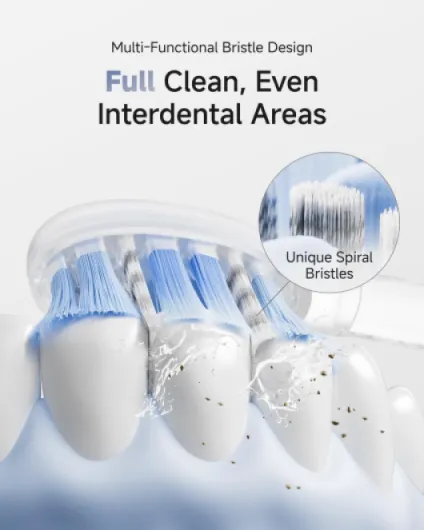
The two included heads also play a role. The “Pro Plaque Removal” head feels a bit stiffer, more oriented toward deep cleaning, while the “Pro Whitening” is slightly gentler but still not fluffy soft. I alternated them and ended up using the plaque head at night and the whitening one in the morning. It’s not revolutionary, but it’s a nice way to adjust the feel without diving into the app every time. The spiral bristles help get between teeth, but don’t expect them to replace flossing; that’s wishful thinking with any brush.
Overall, in terms of pure cleaning, I’d say it’s clearly above manual and a notch above the mid‑range electrics I’ve used. Not a miracle machine that will fix ten years of bad habits, but for daily maintenance, it does a very solid job. If you already have a high‑end Philips or Oral‑B, the difference is there but not massive. If you’re coming from manual or a cheap electric, you’ll feel a real step up.
What you actually get and how it works day to day
In the box, you get the Wave Pro handle, two brush heads (one “Pro Whitening” and one “Pro Plaque Removal”), the wireless charging dock, and a short quick start guide. No travel case in my package, which for this price point is a bit cheap in my opinion, especially for a product that advertises itself as ideal for travel. Everything comes in a fairly compact cardboard box, nothing fancy but functional, and at least there’s not a ton of useless plastic.
Setup is simple: you clip a head on, put it on the dock to top up the battery, and if you want to go further, you download the Laifen app. The brush works perfectly fine without the app: there are built‑in modes (Daily and Deep Clean) and three intensity levels you can cycle through directly on the handle. The app is more for people who like to fiddle with settings: you can change duration, intensity by zone, and create custom programs. Personally, I played with it for two evenings, saved a custom routine, and then I stopped opening the app. The brush remembers your settings, so it’s not like you’re forced to use your phone every time.
In daily use, the main thing is the vibration + oscillation combo. Compared to my old Philips sonic brush, the Laifen gives a more mechanical feel, like it’s really scrubbing. I noticed less plaque on the back of my lower front teeth, which is usually my weak spot. Is it 13x better than a manual brush? I’m not going to pretend I measured that, but compared to manual brushing, the difference in smoothness when I pass my tongue over my teeth is clear. Versus other electric brushes, it’s an improvement, but not a night‑and‑day revolution.
So in terms of presentation: it’s a fairly complete package with two heads right away, a decent app for geeks, and a brush that works fine without needing to be constantly connected. Nothing mind‑blowing, but solid and coherent. The only real miss for me is the lack of a basic travel case and spare head storage, which would have made more sense for a product sold as travel‑friendly.
Pros
- Very good cleaning performance with strong vibration + oscillation combo
- Long battery life with convenient wireless charging dock
- Stainless steel body feels robust and more premium than plastic
- Smart pressure sensor helps protect gums from over‑brushing
Cons
- Heavier handle than most electric brushes, not ideal if you like very light devices
- No travel case included despite travel‑focused marketing
- App and smart features may feel unnecessary if you just want simple brushing
Conclusion
Editor's rating
After a few weeks with the Laifen Wave Pro, my opinion is pretty clear: it’s a solid, tech‑heavy electric toothbrush that actually cleans very well and feels serious in the hand. The mix of strong vibrations and 60° oscillations gives a real sense of deep cleaning, especially along the gum line and behind the front teeth. Add to that the long battery life, wireless charging, and the pressure sensor that stops you from attacking your gums, and you get a brush that’s practical to live with, not just flashy on the box.
It’s not perfect though. The handle is heavier than average, there’s no travel case in the box, and if you never touch the app, you’re paying for features you might ignore. Also, if you already own a high‑end electric toothbrush from a big brand, the jump in performance is there but not huge. The real target here is people who want something that feels more robust and configurable than the usual plastic sticks, and who like the idea of charging only every month or two.
If you’re coming from manual brushing or a cheap electric, and you want something that feels like a proper tool with some smart safety features, the Wave Pro is a good choice. If you just want a basic electric brush to save money and don’t care about design, app, or metal body, there are cheaper options that will do the job. For me, it lands in the “pretty solid, slightly premium” category: not flawless, not hype, but a well‑built toothbrush that I’m happy to keep using.
![Sonicare 5500 Electric Toothbrush, Sonic Toothbrush with 2 Modes, Pressure Alert, EasyStart, SmarTimer and BrushPacer, Navy, Model HX7113/01 [New Technology] Sonicare 5500, Navy, Travel Case](https://www.electric-toothbrush-guru.com/storage/1025316/conversions/71vNjog50vL._AC_SL1500_-medium.webp)