
Summary
Editor's rating
Value for money: good brush, but the extras are a bit light
Design: light, simple, and slightly plasticky
Battery life and charging: good, but not the longest out there
Comfort and daily use: gentle enough for sensitive mouths
Durability and build: feels reliable, but some long-term questions
What you actually get and how it’s set up
Effectiveness: does it actually clean better?
Pros
- Very comfortable for sensitive teeth and gums thanks to S2 Sensitive head and multiple intensity levels
- Cleans effectively with clear timer and pressure sensor to improve brushing habits
- Simple, no-app operation with decent battery life and a handy travel case
Cons
- Only one brush head included in the box, which feels stingy for the price
- Old-school charging base with no USB option and limited accessories
- Replacement heads are relatively expensive, raising long-term ownership cost

Specifications
View full product page →| Brand | Philips |
A mid-range Sonicare that actually feels like an upgrade?
I’ve been using Philips Sonicare brushes on and off for years, bouncing between cheaper models and whatever was on offer. I picked up the Philips Sonicare 6100 (HX7406/02, light blue) to replace an older basic Sonicare that was on its last legs. I’ve been using it twice a day for a bit over two weeks now, enough to see what’s good, what’s just marketing, and what’s slightly annoying.
The pitch here is pretty clear: gentle on sensitive teeth and gums, but still strong on plaque. You get 2 modes (Clean and Sensitive), 3 intensity levels, a pressure sensor, timer, and one S2 Sensitive brush head in the box. On paper it looks like a decent step up from the entry-level Sonicare models, without going into the silly expensive connected stuff.
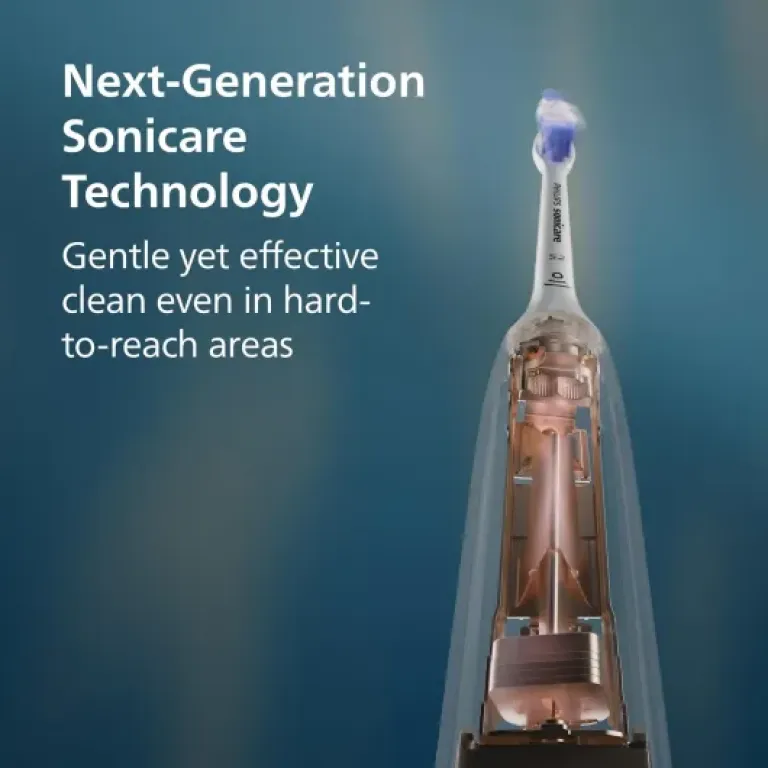
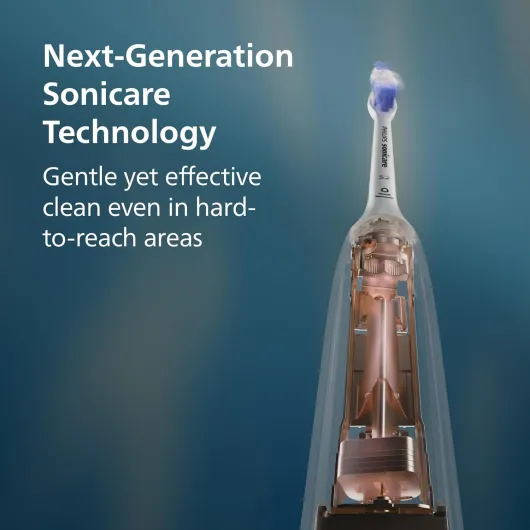
In day-to-day use, it feels like a classic Sonicare: high-frequency vibration (they claim 62,000 movements per minute), the usual buzzing sound, and that very polished, smooth feeling on the teeth after brushing. The difference is mostly in how soft the default head feels and how the pressure alert kicks in when you push too hard. If you’ve got sore gums or you’re a bit heavy-handed with brushing, that’s pretty handy.
Overall, my first impression after a few days was: it’s not mind-blowing, but it does feel like a clear upgrade from a basic manual or a cheap oscillating brush. It’s not perfect and there are a couple of cost-cutting choices that bug me, but it cleans well and is comfortable to use. The real question is whether the price lines up with what you actually get in the box.
Value for money: good brush, but the extras are a bit light
On the money side, the Sonicare 6100 sits in that mid-range price bracket where you expect more than a basic electric toothbrush, but you’re not paying for Wi-Fi and pointless features. For what it offers – 2 modes, 3 intensity levels, pressure sensor, timer, travel case – it’s a solid package, but not jaw-dropping. The cleaning performance and comfort are definitely above entry-level, especially if you’ve got sensitive gums, so you do feel like you’re getting a real upgrade in the mouth.
Where the value feels a bit weaker is in the contents of the box. You only get one S2 Sensitive head, and no spare. Considering the price, they could easily have thrown in at least one extra head. On top of that, the power adapter situation is a bit basic: you get the charging base but no separate wall plug in some regions, so depending on where you live you might have to use your own. Not a huge problem, but it adds to the feeling that they’ve cut corners a bit on accessories.
Running costs also matter. Genuine Philips Sonicare heads are not cheap, and you’ll be replacing them every few months if you follow dentist advice. Over a couple of years, you’ll probably spend as much or more on heads as you did on the handle. If you’re okay with that, then the overall value is decent because the brush itself performs well and should last several years. If you hate ongoing costs, you might find it a bit painful in the long run.
So, in plain terms: this is good value if you specifically want a gentle but effective Sonicare and don’t care about smart features. If you just want any electric toothbrush and don’t have sensitive gums, you can probably find cheaper models (even from Philips) that will clean almost as well for less. You’re paying here for extra comfort, pressure control, and a slightly more polished experience, not for radical extra cleaning power.
Design: light, simple, and slightly plasticky
Design-wise, the Sonicare 6100 sits in that middle ground: it looks clean and modern, but you can tell it’s plastic. The light blue colour is nice if you’re bored of plain white or black, and it does help it stand out in a bathroom. The handle is fairly slim and not too heavy (around 0.31 kg for the whole thing with packaging), so it doesn’t feel like holding a power tool. I have medium-sized hands and it’s comfortable to grip with one hand without feeling bulky.
The finish is a mix of matte and slightly glossy plastic. It doesn’t scream high-end, but it also doesn’t look cheap like some no-name electric brushes. The buttons are rubbery and easy to press, even with wet hands. I never had issues changing the intensity or mode mid-brush. The LEDs are small but visible enough, though you don’t really stare at your toothbrush handle while brushing, so it’s more about checking settings quickly before you start.
One thing I noticed: the handle doesn’t have a big rubber grip area, just a few textured bits. It’s still okay, but if you’ve got very soapy hands or you’re brushing in the shower (not officially recommended, but people do it), it can feel a bit slippery compared to models with full rubber grips. On the positive side, the overall shape is well balanced, so it doesn’t want to tilt out of your hand. It stands upright on the charger and on a flat surface without wobbling.
Visually, it’s pretty neutral. If you like flashy designs, this will feel a bit boring. If you prefer something discreet that just blends into the bathroom, it ticks that box. The design is practical rather than fancy: easy to clean, no weird grooves where toothpaste gunk gets stuck, and the head clicks on and off smoothly. For the price bracket, I’d call the design solid but not special – it looks like exactly what it is: a mid-range Philips toothbrush, nothing more, nothing less.
Battery life and charging: good, but not the longest out there
The battery performance on the Sonicare 6100 is good enough for normal use, but it’s not the kind of device you’ll ignore the charger for weeks. With two 2-minute brushes per day (one on Clean/medium, one on Sensitive/low), I got roughly two weeks before the battery indicator started dipping into the low zone. That’s decent: you can go on holiday for a week or so without packing the charger, especially with the included travel case.
Charging is done via the small AC-powered charging base. You just drop the brush on it and it sits upright. No USB-C, no travel-friendly plug on the handle itself. For home use, that’s fine; the base is small and doesn’t take much space on the sink. For travel, it’s slightly annoying that there’s no direct USB charging, because it means one more specific cable and base to remember. Not a deal-breaker, but at this price I would have liked a more modern charging option.
The battery indicator is a simple LED that gives you a rough idea of the remaining charge. It’s not super precise, but it’s enough to know when you’re getting close to empty. One thing I liked is that the brush doesn’t instantly die the moment the light goes red; you still get a few brushes out of it before it completely shuts off. So you’re not stuck with a dead brush unexpectedly in the middle of the morning rush.
Overall, I’d rate the battery as solid but not outstanding. It’s totally fine for everyday use and short trips, but if you’re someone who travels for weeks and hates carrying chargers, this won’t blow you away. Compared to some newer brushes with super long battery life or USB charging, it feels a bit old-school. But if your main use is at home with the base sitting on the sink, it does the job without any real hassle.
Comfort and daily use: gentle enough for sensitive mouths
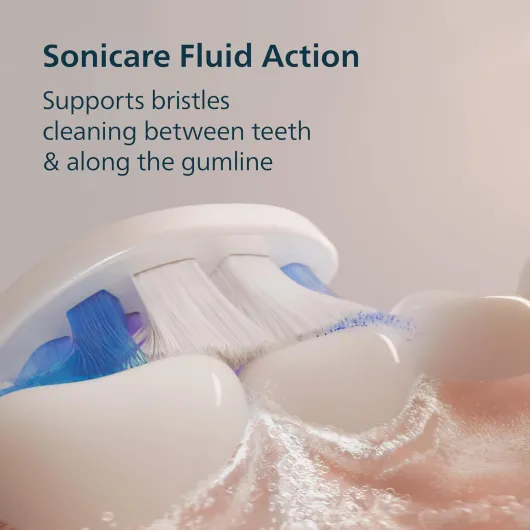
Comfort is where this brush actually stands out a bit. The combo of the S2 Sensitive brush head and the Sensitive mode with lower intensity makes it much easier on the gums than a lot of older Sonicare models I’ve used. I tend to get irritated gums if I push too hard or if the bristles are stiff, and with this one I didn’t get that sore feeling even on days when I brushed a bit longer than 2 minutes. The bristles are soft, and the vibration feels more like a strong buzz than a harsh hammering on the teeth.
The 3 intensity levels are genuinely useful. I started on the lowest setting with Sensitive mode for the first few days, just to get used to it. Then I moved up to medium intensity on Clean mode for the evening brush. That mix worked well: gentle in the morning when I’m half asleep, more punch in the evening after eating. If you have very sensitive teeth, you can just stick to Sensitive mode on low and it’s still effective enough for daily cleaning without feeling too aggressive.
The pressure sensor is also a plus for comfort. When you press too hard, it flashes purple and reduces vibration. At first, it’s a bit annoying when it kicks in, but it does make you realise how much you’re overdoing it. After a few days, I naturally eased up and the sensor barely triggered anymore. That probably helps prevent gum recession in the long run, so it’s not just a gimmick. The vibration noise is noticeable but not crazy loud; if someone is sleeping in the next room with the door closed, it’s unlikely to wake them.
In everyday use, the handle is light enough that your hand doesn’t get tired, and the SmarTimer and BrushPacer (30-second intervals with a pause to tell you to move to the next quadrant) make the whole routine simple. You don’t feel lost about how long to brush each area. Overall, in terms of comfort, this brush is pretty solid for sensitive mouths. It’s not magic, but compared to cheaper, harsher heads or older models, I definitely feel less irritation and more control over how strong the brushing is.
Durability and build: feels reliable, but some long-term questions
In terms of build, the Sonicare 6100 feels sturdy enough for daily use. The handle doesn’t creak when you squeeze it, the head clicks on firmly, and there’s no weird rattling when it’s running. I’ve rinsed it under the tap after every use, and so far there’s no sign of water sneaking into seams or the button area. Philips has been making these for years, so the overall construction feels tried and tested rather than experimental.
The big unknown with any electric toothbrush is battery and motor life over a couple of years. I can’t fast-forward time, but I’ve owned previous Sonicare models and, in my experience, they usually last several years before the battery starts fading noticeably. This one comes with a 2-year warranty and a 30-day money-back guarantee, which gives a bit of reassurance. If something is wrong out of the box or in the first months, you’re covered. That said, once the battery does eventually wear out, you’re basically buying a new handle; you’re not going to be replacing the battery yourself easily.
The brush heads are the usual Sonicare clip-on style and feel solid. They don’t wobble, and after multiple removals and reattachments, nothing feels loose. The downside is the ongoing cost: genuine Philips heads aren’t cheap, and you’re supposed to replace them roughly every 3 months. So over time, the real cost isn’t just the handle, it’s the heads. That’s not unique to this model, but it’s worth factoring into the durability/ownership equation.
Overall, the 6100 gives the impression of reliable mid-range durability. It’s not flimsy, but it also doesn’t feel like a tank that will survive being thrown around. Treat it like normal bathroom electronics – don’t drop it regularly, don’t leave it soaking in water – and it should last a few years without drama. The warranty is decent, the build feels consistent, and nothing in the design makes me think it will fall apart quickly, but long-term battery health will be the usual weak point like with most rechargeable brushes.
What you actually get and how it’s set up
Out of the box, the Philips Sonicare 6100 package is pretty straightforward. You get: one handle, one S2 Sensitive brush head, one basic charger, and a travel case. That’s it. No spare heads, no wall plug adapter (just the charging base cable), and no fancy extras. For a mid-range brush, I would have liked at least a second head, because these things aren’t cheap to replace. So just be aware that what you see is what you get, and you’ll probably be buying extra heads fairly soon.
Setting it up is simple. You clip the brush head on, put it on the charger, and it’s basically ready to go. Mine had some charge out of the box, but I still let it sit on the charger for a couple of hours before the first real use. There are two buttons: one main power button and one smaller button to switch between modes and intensity. You cycle through Clean/Sensitive and the three intensity levels using that second button. No app, no Bluetooth, no nonsense – which I actually like. It’s just a toothbrush, not a social network.
On the handle you’ve got small LEDs that indicate the mode and intensity, plus a battery indicator. The battery light is pretty basic: it shows you roughly how much is left, not a precise percentage, but that’s fine for this type of product. There’s also a small icon that flashes when you press too hard, linked to the pressure sensor. The manual is short and clear; you don’t need to dig through it for half an hour to understand how to use it.
In practice, the presentation is functional but a bit stingy. The travel case is decent and does its job if you move around a lot, but it’s plastic and feels more on the simple side than premium. The brush itself looks like a mid-range device, not cheap, not fancy. Overall, it’s the kind of product you unbox in five minutes, understand immediately, and just start using. Zero learning curve, but don’t expect lots of extras for the money.
Effectiveness: does it actually clean better?
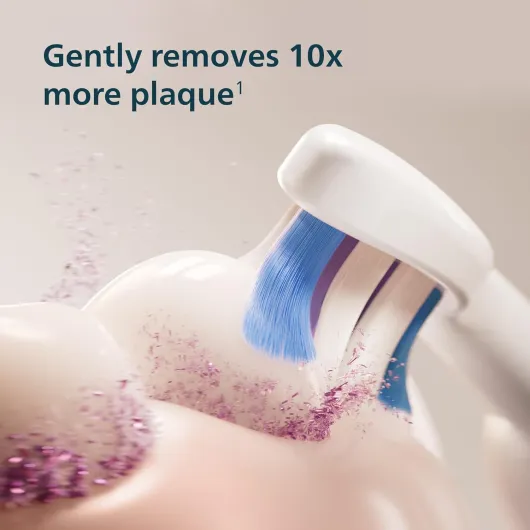
Let’s be honest: you buy a Sonicare mainly to get a better clean than with a manual brush. On that front, the 6100 does the job well. Philips claims up to 10x more plaque removal and up to 5x healthier gums in hard-to-reach areas. I can’t measure that precisely at home, but I can say this: after brushing, my teeth feel noticeably smoother, especially along the gum line and between teeth. That polished feeling lasts a good part of the day, more than with a basic electric brush I used before.
Using it twice a day on Clean mode with medium intensity, I noticed less plaque buildup around the lower front teeth, which is usually where tartar builds up fastest for me. After about 10–12 days, my gums also looked a bit less red in some spots that were often irritated. I’m not going to pretend it’s a miracle cure, but for a realistic user, the difference compared to a manual brush is clear. You still need to floss, obviously, but this helps reduce the gunk that sticks between dentist visits.
The BrushPacer (the 30-second intervals) is actually more helpful than it sounds. It pushes you to cover all four quadrants of the mouth evenly instead of overdoing the front teeth and rushing the rest. Two minutes feels just right: not too long, not too short. If you want to go longer, you can just start it again, but I rarely felt the need. The Sensitive mode is slightly less effective in terms of that “super smooth” finish, but it’s still way better than a soft manual brush, so it’s a good compromise if your mouth is sore.
Overall, in terms of cleaning performance, I’d say: it works very well, but it’s not night and day compared to other Sonicare models in the same range. If you already have a working mid-range Sonicare, upgrading just for the 6100 might not change your life. But if you’re coming from manual or a cheap oscillating brush, you’ll notice a real step up in how clean your teeth feel and how evenly you brush.
Pros
- Very comfortable for sensitive teeth and gums thanks to S2 Sensitive head and multiple intensity levels
- Cleans effectively with clear timer and pressure sensor to improve brushing habits
- Simple, no-app operation with decent battery life and a handy travel case
Cons
- Only one brush head included in the box, which feels stingy for the price
- Old-school charging base with no USB option and limited accessories
- Replacement heads are relatively expensive, raising long-term ownership cost
Conclusion
Editor's rating
The Philips Sonicare 6100 is a solid mid-range electric toothbrush, especially if you’ve got sensitive teeth or gums and find a lot of other brushes too harsh. The combination of the S2 Sensitive head, the Sensitive mode, and the 3 intensity levels makes it easy to tune the brushing strength to what you can handle. The pressure sensor and timers actually help you brush better without overdoing it, and day to day the cleaning results are clearly better than a manual brush and on par with other decent electric models.
It’s not perfect though. The box is a bit bare with just one head included, and the charging system is still the old-school base with no USB option. Battery life is good but not standout, and the ongoing cost of replacement heads adds up over time. Design and materials are fine but nothing special – functional, slightly plasticky, and clearly positioned as mid-range rather than premium.
If you’re coming from a manual brush or a cheap oscillating model and you want gentle but effective cleaning with some useful features (pressure alert, SmarTimer, BrushPacer) without messing with apps, this is a good fit. If you already own a working mid-range Sonicare, the upgrade isn’t huge unless you really want the softer head and extra sensitivity options. People on a tight budget or those who don’t care about sensitive gums will probably be happier with a cheaper model. Overall, it’s a good, practical choice – just not a bargain or a revolution.
![Sonicare 5500 Electric Toothbrush, Sonic Toothbrush with 2 Modes, Pressure Alert, EasyStart, SmarTimer and BrushPacer, Navy, Model HX7113/01 [New Technology] Sonicare 5500, Navy, Travel Case](https://www.electric-toothbrush-guru.com/storage/1025316/conversions/71vNjog50vL._AC_SL1500_-medium.webp)

![Sonicare 6100 Electric Toothbrush, Sonic Toothbrush with 2 Brushing Modes and 3 Intensity Levels, Pressure Alert, EasyStart, SmarTimer, Light Blue, Model HX7406/02 [New Technology] [New] Sonicare 6100, Light Blue, 1 Brush Head](https://www.electric-toothbrush-guru.com/storage/879930/716cWACgncL._AC_SL1500_.jpg)