
Summary
Editor's rating
Value for money: strong brush, steep price
Design: modern, nice in the hand, but a bit overdesigned
Battery life: decent, not mind-blowing, but reliable
Durability and build: feels solid, but long-term cost adds up
Performance and app: smart features that are half useful, half gimmick
What you actually get in the box
Effectiveness: does it actually clean better?
Pros
- Very comfortable and thorough clean with smooth, quiet motor
- Helpful pressure sensor and timer that actually improve brushing habits
- Modern design with clear display and simple controls
Cons
- High purchase price compared to mid-range electric brushes
- Replacement iO brush heads are expensive over time
- Many smart/app features feel gimmicky after the first few weeks

Specifications
View full product page →| Brand | Oral-B |
A fancy toothbrush for people who like gadgets
I’ve been using the Oral-B iO8 for a few weeks now, after years with a basic Oral-B Pro model that cost a fraction of the price. I picked it up because my old one was dying and I was curious if all the AI, app stuff and the colour screen were actually useful or just marketing. Short version: it cleans really well, feels nicer in the mouth than my old one, but you absolutely pay for the privilege.
From day one, the thing that stood out was the smooth vibration and how quiet it is compared to older Oral-B brushes. My old handle sounded like a small drill; this one is more of a hum. The brushing experience itself is more comfortable, especially around the gums. I did notice my teeth feeling smoother after the first couple of uses, similar to that “just back from the hygienist” feel, but not on the level of a real professional cleaning obviously.
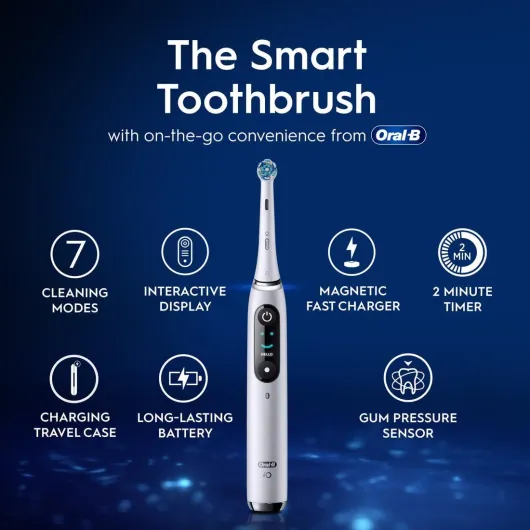
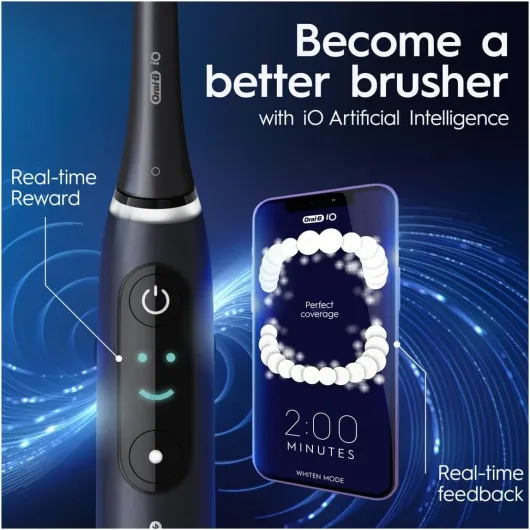
All the tech stuff – AI coaching, Bluetooth, pressure sensor with colours, tiny display – looks a bit over the top for something that just brushes teeth. Once you start using it though, some of it is actually handy, and some of it is just gimmicky. The app map that shows where you’ve brushed is kind of cool the first week, then you start ignoring it unless you’re very disciplined or a bit obsessed with stats.
If you’re coming from a manual toothbrush, this will feel like a huge step up. If you already have a decent mid-range Oral-B or Philips brush, the jump is more about comfort and nerdy features than raw cleaning power. It’s not perfect, and for the price I expected a bit more in the box, but it does its main job well: it gets your teeth clean with minimal effort.
Value for money: strong brush, steep price
Let’s be blunt: this thing is expensive for a toothbrush. The cleaning performance is good, the comfort is better than average, and the tech is fun, but you’re paying a serious premium for features that you might stop using after the initial novelty wears off. If you’re on a tight budget, this is not the smartest place to put your money. A mid-range Oral-B or Philips will still clean your teeth very well for much less.
Where the iO8 makes more sense is if you’re the type who actually uses features like the app, the multiple modes, the pressure coaching, and you care about how the brush looks and feels. In that case, you do get a more pleasant daily experience and some extra guidance that might genuinely improve your brushing habits, at least at the start. But you have to be honest with yourself: are you really going to open the app every day in six months?
Another thing that drags down the value is the ongoing cost of the brush heads. The iO series uses its own style of heads, and they’re pricier than the older Oral-B ones. If you stick to the recommended three-month replacement schedule, that’s four heads a year. Over several years, that adds up quickly. So the true cost isn’t just the handle, it’s the whole ecosystem.
Overall, I’d say the value is okay if you catch it on sale and you want the premium feel, but at full price it’s more of a luxury gadget than a sensible buy. It gets the job done very well, but there are cheaper options that get 80–90% of the way there for a lot less money. So good product, pricey package.
Design: modern, nice in the hand, but a bit overdesigned
The design is clearly aiming at the “posh gadget” vibe rather than a basic bathroom tool. The black finish looks good, the lines are clean, and the handle is slightly slimmer and smoother than older Oral-B models I’ve used. On the sink it looks more like a high-end shaver than a toothbrush. If you care about how your stuff looks in the bathroom, you’ll probably like it. If you don’t, it’s just a black electric toothbrush that costs more than it looks like it should.
The interactive colour display is the main design party trick. It’s small but sharp enough to read easily. It shows a little greeting when you turn it on, a timer while you brush, and a face at the end depending on how long you brushed. It also warns you when it’s time to change the brush head. Functionally, it could all be done with simple LEDs, but the screen gives it a more “smart device” feel. Personally, after a week, I mostly used it for the timer and battery level and stopped paying attention to the other animations.
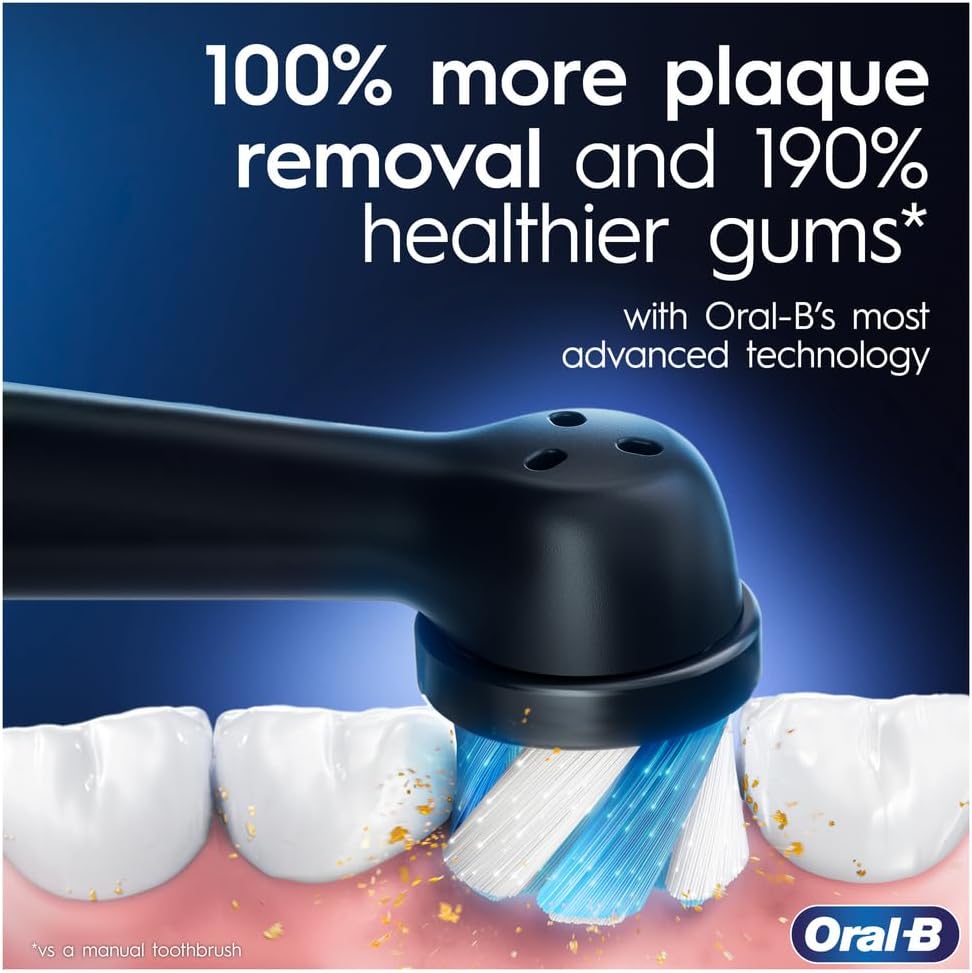
The pressure ring around the neck that changes colour (green for good pressure, red for too hard, white for too soft) is actually one of the better design ideas. You can see it clearly in the mirror while brushing, no need to check the app or screen. It’s much more obvious than the small red light on older Oral-B handles. This helped me realise how often I used to press too hard, especially on the front teeth.
One thing I’m not a fan of is the smooth body finish. It looks sleek, but when your hand is wet, it can get a bit slippery, especially with toothpaste foam. It’s not terrible, but my older brush with more rubber grip felt a bit more secure. The buttons are fine, with a clear click, but the top mode button is small and not the easiest to press with soapy fingers. Overall, the design is pretty solid and modern, but you can feel some of the choices were made for looks rather than pure practicality.
Battery life: decent, not mind-blowing, but reliable
The battery life is decent, but not the longest I’ve seen. With two 2-minute brushes per day, I was getting roughly 10–12 days on a full charge, sometimes a bit more, depending on how much I played with the app and extra modes. That’s fine for everyday use and short trips, but it’s not a “charge once a month and forget about it” kind of device. If you’re used to some Sonicare models that last three weeks or more, this will feel a bit shorter.
The charging base is small and doesn’t take much space on the sink. The brush attaches magnetically, which is actually pretty nice – you don’t have to fiddle with a tiny peg, it just snaps into place. It’s a standard plug-in charger, so no USB, which is a bit annoying for travel if you try to minimise bulky plugs. On the plus side, the base is stable and the brush doesn’t wobble around.
The battery indicator on the colour display is clear. You get a proper percentage-style bar, not just a vague light, so you know when you’re down to the last few days. I never had it die mid-brush because the warnings are obvious enough. When the battery gets low, performance doesn’t drop off suddenly; it stays consistent until the end and then just needs a charge.
For travel, if you’re going away for a week, you can probably skip the charger and rely on a full battery, as long as you don’t use it ten times a day. For anything longer, you’ll need to bring the base. Overall, battery is solid but not outstanding. It does the job, doesn’t stress you out, but at this price I would have liked a bit more endurance or at least a more travel-friendly charging solution like USB-C.
Durability and build: feels solid, but long-term cost adds up
In terms of build quality, the handle feels sturdy. There are no creaks when you squeeze it, the buttons are firm, and after a few weeks of twice-daily use with water and toothpaste all over it, I haven’t seen any weird marks or water getting under the screen. The finish wipes clean easily; toothpaste doesn’t stick too badly. The head clicks on firmly and doesn’t wobble during use. So from a physical point of view, it feels like it should last several years if you don’t drop it constantly.
The weak spot with these brushes is usually not the handle dying on day one, but the long-term cost of heads and the internal battery after a few years. The Ultimate Clean heads are not cheap, especially the iO-specific ones. You’re supposed to change them every three months. If you actually do that, the yearly cost of heads climbs quickly. This is something to factor in, because over three or four years you’ll easily spend the price of the handle again on refills.
So far, I haven’t noticed any loosening of the head connection or fading of the pressure light ring. The screen still looks sharp. The only minor annoyance is that the glossy-ish surface shows water spots and fingerprints a bit, so if you care about it always looking pristine, you’ll be wiping it more often. But that’s cosmetic, not structural.
Durability-wise, I’d say the iO8 feels well-built and ready for long-term use, but ownership isn’t cheap over time. If you’re okay with that and you plan to actually keep it for 4–5 years, the investment is easier to justify. If you tend to drop or lose things, or you’re rough with your gadgets, you might be better off with a cheaper model that you won’t mind replacing sooner.
Performance and app: smart features that are half useful, half gimmick
Performance-wise, the motor is strong but smooth. The brush head doesn’t feel like it’s rattling your skull like some older models. The movement is more of a controlled vibration with rotation, and it glides along the teeth without too much noise. I could brush early in the morning without feeling like I was waking the whole house, which was an improvement over my old noisy handle.
The AI and app part is where it gets a bit mixed. The app tracks where you’re brushing in real time and gives you a map of your mouth with zones. When you miss an area or rush it, the app shows it in a lighter colour. The first week, I’ll admit I followed it closely and it did highlight some spots I always glossed over, especially the back molars on one side. Over time though, it becomes a bit of a chore to always have your phone open just to brush your teeth. After two weeks, I mostly used the app once a day or every few days to check my average coverage and not every single session.
The brushing timer on the handle is enough for daily use, so the app is more of a coaching tool. If you’re the kind of person who likes closing “rings” on a smartwatch or checking stats, you’ll probably like the daily scores and streaks. If you just want to clean your teeth and go to bed, you’ll find it a bit over the top. The good thing is you don’t have to use the app at all; the brush works fine on its own and still remembers your habits somewhat.
In practice, the smart features helped me build a more consistent routine in the first couple of weeks. I started actually doing the full two minutes every time instead of the lazy 45-second rush I was doing before. After that, I didn’t need the app as much. So the performance is strong, and the smart stuff is nice to have at the start but not essential long term, at least for me.
What you actually get in the box
In the box you get: one iO8 handle, one Ultimate Clean brush head, a charger, a magnetic pouch, and a small refill holder. That’s it. For a premium model, it feels a bit stingy to only include one head. My cheaper older Oral-B came with two heads and a basic stand. So first impression when opening: nice-looking handle, but the rest is pretty barebones.
The handle itself feels solid in the hand. It’s not heavy, but it doesn’t feel cheap either. The black colour looks clean and more discreet on the sink than the usual white/blue plastic. The little colour screen on the handle is the thing that instantly screams “this is the expensive one”. It shows you brushing mode, a timer, battery level, and even a little smiley face when you hit the two minutes. Is that essential? No. Is it kind of fun the first days? Yes. After a while you just glance at the timer and that’s it.
The magnetic pouch is basically a travel case, but softer and lighter. It’s fine if you travel now and then and want something that doesn’t take much space. It’s not rigid, so it won’t protect the brush from being crushed in a suitcase, but for tossing it in a backpack for a weekend it does the job. I would have preferred a hard case at this price, but at least you get something.
Setup is simple: charge it, pair with the app (optional but easy), pick a mode on the handle, and you’re good. There’s no complicated menu, you cycle through modes with the button and the display shows what you’re on. Overall, presentation is clean and modern, but the content of the box doesn’t really match the premium price tag. You’re mostly paying for the tech inside the handle, not a bunch of extras.
Effectiveness: does it actually clean better?
Let’s talk about the main thing: does this clean better than cheaper brushes? Compared to my old mid-range Oral-B, I’d say yes, but not in a mind-blowing way. The round head with the new motor and micro-vibrations feels smoother on the teeth, and after each session my teeth feel very polished, especially along the gum line and behind the front teeth where plaque tends to build. After about a week, I noticed less gunk when flossing, which is a good sign.
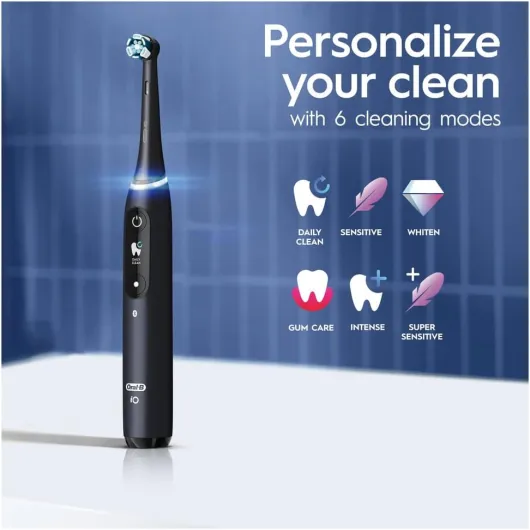
The different modes are fine but a bit overkill. I mainly used Daily Clean and Sensitive. The whitening and intense modes are stronger and I found them a bit too much for everyday use, especially on the gums. The tongue/extra modes are there if you want to play with them, but honestly, after the initial curiosity, I stuck to one or two modes and ignored the rest. If you have sensitive gums, the softer modes are useful, and the brush still cleans well without feeling harsh.
The pressure sensor actually changed how I brush. The red light kicks in quickly when you push too hard, and you also feel the motor adjust. I realised I’d been scrubbing like crazy with my old brush, which probably didn’t help my gums. With this one, I’ve learned to just let the head glide and do the work. After about two weeks, my gums felt less irritated, especially in the areas where I used to see a bit of redness after brushing.
Compared to a manual brush, the difference is huge: timing, consistency, and the way it gets around each tooth is just better. Compared to another decent electric brush, the iO8 feels more comfortable and a bit more thorough, especially with the AI guidance making sure you don’t keep missing the same spots. But you’re not going from dirty to dentist-level clean overnight. It’s a solid upgrade in feeling and comfort more than a massive jump in raw cleaning power.
Pros
- Very comfortable and thorough clean with smooth, quiet motor
- Helpful pressure sensor and timer that actually improve brushing habits
- Modern design with clear display and simple controls
Cons
- High purchase price compared to mid-range electric brushes
- Replacement iO brush heads are expensive over time
- Many smart/app features feel gimmicky after the first few weeks
Conclusion
Editor's rating
The Oral-B iO8 is a very capable electric toothbrush that leans heavily into the gadget side of things. It cleans well, feels comfortable on teeth and gums, and the motor is smooth and quieter than older Oral-B models I’ve used. The pressure sensor and simple on-handle timer actually help you brush better, and the AI/app coaching is useful at the beginning to show you the spots you always miss. The colour display and greeting faces are more fun than necessary, but they don’t get in the way.
Where it stumbles a bit is on price and long-term cost. You’re paying a lot for the fancy tech and design, while the basic job – cleaning teeth – is also done pretty well by cheaper brushes. The iO-specific heads are not cheap either, so if you follow the recommended replacement schedule, the yearly cost adds up. For people who like tech, care about design, and are willing to spend more for a nicer daily experience, it’s a solid pick. If you just want clean teeth and don’t care about apps or screens, you can save quite a bit with a simpler model and still get very good results.
![Sonicare 5500 Electric Toothbrush, Sonic Toothbrush with 2 Modes, Pressure Alert, EasyStart, SmarTimer and BrushPacer, Navy, Model HX7113/01 [New Technology] Sonicare 5500, Navy, Travel Case](https://www.electric-toothbrush-guru.com/storage/1025316/conversions/71vNjog50vL._AC_SL1500_-medium.webp)