Summary
Editor's rating
Is it actually worth the price?
Looks and ergonomics: sleek, but not flawless
In-mouth feel and noise: nicer than Oral-B, with a learning curve
Build quality and long-term concerns
What you actually get in the box
Does it actually clean better?
Battery life and daily performance
Pros
- Very comfortable, powerful clean with quieter operation than many Oral-B brushes
- Premium design with Midnight Blue finish and practical travel charging case
- Pressure sensing and automatic intensity adjustment help protect gums from over-brushing
Cons
- Very expensive at full price, with high ongoing cost for replacement heads
- Smart app features are basic and often inaccurate, add little real value
- Durability concerns around the 2-year mark and only one brush head included in the box

Specifications
View full product page →| Brand | Philips |
A £300 toothbrush… seriously?
I’ve been using electric toothbrushes for years, mostly mid-range Oral-B and a couple of cheaper Sonicare models. When I saw the price of the Philips Sonicare DiamondClean Prestige 9900, my first reaction was basically: “no way a toothbrush is worth that”. But I ended up grabbing it on a big discount, mostly out of curiosity, to see what a so-called ‘top of the line’ brush actually changes in day-to-day life.
I’ve used it twice a day for a few weeks, with the standard A3 Premium All-in-One head that comes in the box. I didn’t baby it: normal bathroom use, some splashes, sometimes I rinse it quickly and throw it on the charger, sometimes it stays on the sink. I also paired it with the Philips Sonicare app to test all the “smart” stuff they push in the marketing.
To be clear: I’m not a dentist, just someone who’s had a few lectures from the hygienist about plaque and brushing too hard. So my view is simple: does it clean well, is it annoying to use, and does it feel like money well spent or just a tech toy. Compared to my old Oral-B, I was expecting at least better comfort and less noise, and hopefully fewer complaints at my next check-up.
Overall, I’d say it’s a very good toothbrush that feels premium in the hand and leaves teeth feeling really clean, but the price, the app gimmicks, and some question marks about durability keep it far from perfect. If you’re thinking of buying it full price, you really want to know what you’re getting into.
Is it actually worth the price?
This is where things get tricky. At full retail price, the Philips Sonicare 9900 Prestige is very expensive for a toothbrush. Yes, it looks premium, cleans well, and has some smart features. But once you strip away the fancy app and the nice travel case, you’re basically paying a big premium for marginal gains over cheaper electric brushes. If you can find it at around half price during a sale, it starts to feel more reasonable, but still far from a bargain.
There are also the ongoing costs. The A3 Premium All-in-One heads are not cheap at all. If you follow the recommended replacement schedule (about every 3 months), that adds up quickly over a couple of years. The app can even remind you and help you reorder, which is convenient but also a constant reminder that you’re spending a lot just to keep the thing going. Several users mentioned needing to “take a personal loan” for heads, and while that’s exaggerated, the point stands: consumables on this brush are pricey.
Compared to a mid-range Oral-B or a standard Sonicare model, the main extra things you get here are: nicer design, quieter and smoother operation, travel case with charging, and some smart tracking that’s honestly average at best. If you don’t care about the app and you just want clean teeth, a cheaper model will already do a very good job. The 9900 Prestige makes sense only if you really enjoy premium gadgets, travel often, or you’re getting a heavy discount that brings the price closer to the rest of the high-end market.
So in terms of value, I’d call it good but only at the right price. Full price? I’d pass. On a solid discount, and if you’re okay with the cost of replacement heads and possible 2–3 year lifespan, it’s a nice upgrade. Just don’t expect the smart features to justify the price on their own, because they really don’t.
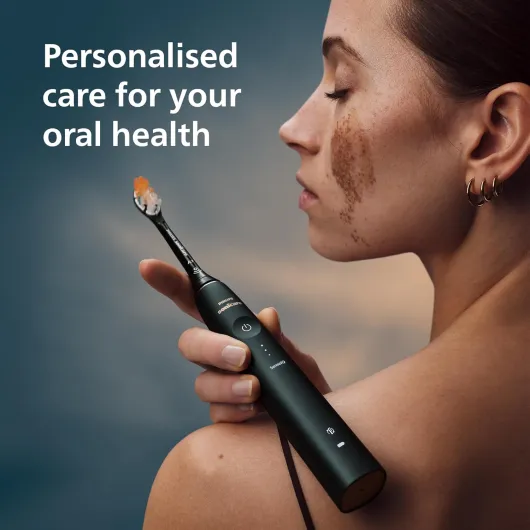
Looks and ergonomics: sleek, but not flawless
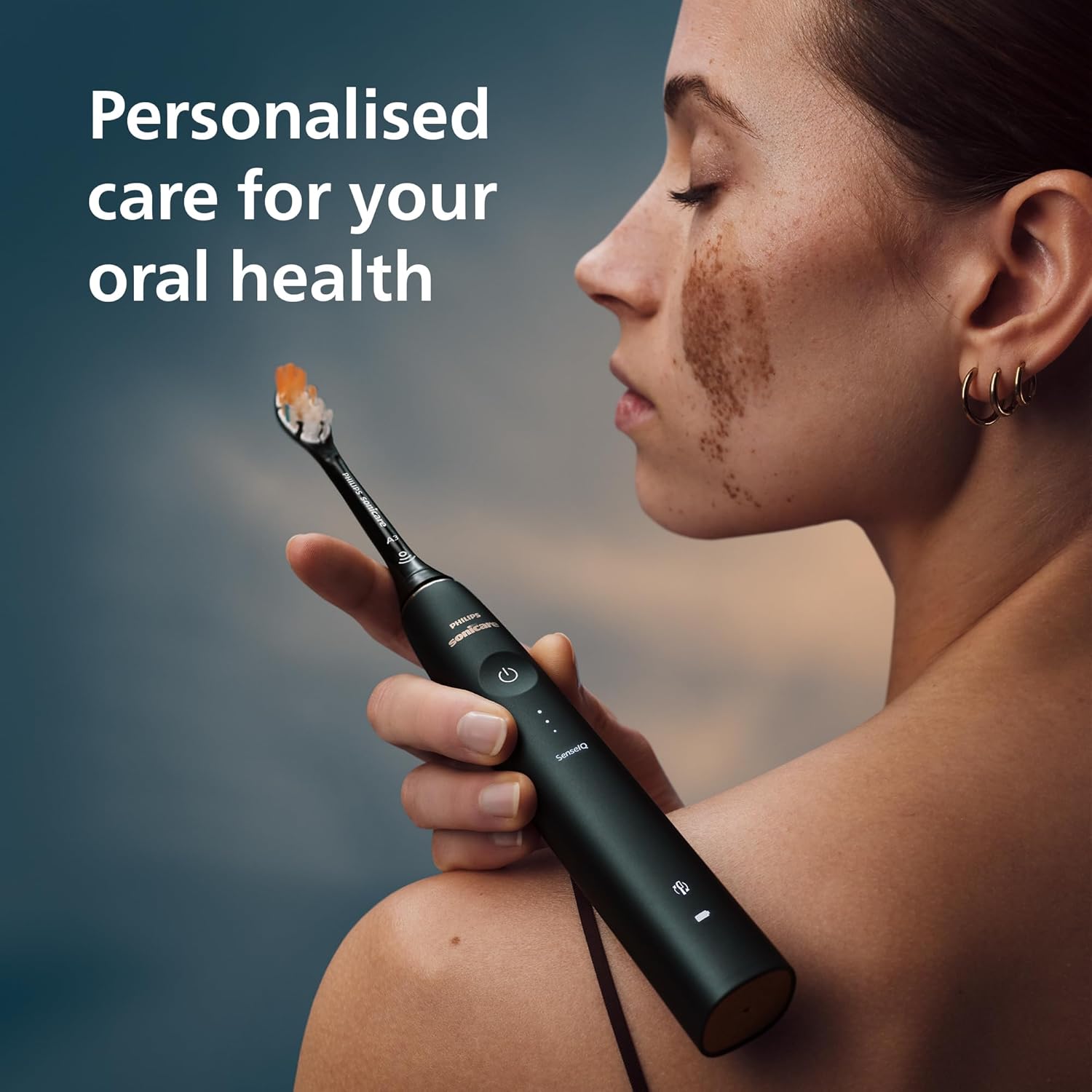
The design is clearly one of the selling points. The Midnight Blue colour looks nice and more grown-up than the usual white plastic sticks. The finish is matte, with a smooth, almost soft-touch feel, but without that rubbery coating that can peel after a while. I liked that because I’m not a fan of rubber grips that get grimy. The handle is fairly slim and light considering all the tech inside, so it doesn’t feel like swinging a heavy tool around your mouth.
The minimalistic design has pros and cons. On the plus side, only one button means it looks clean, and it’s easy to wipe down and keep free of toothpaste gunk. On the downside, it’s a bit too easy to press that button by accident while brushing. A couple of times I changed the intensity or turned it off mid-brush without meaning to. It’s not a deal-breaker, but for this price you’d expect slightly better ergonomics around that main control.
The charging base is the usual Sonicare round stand. It works, but the plastic cover on mine feels a bit cheap compared to the handle and the travel case. It does the job, but next to the brush it looks like the weaker link in terms of design. The travel case, on the other hand, feels much more premium: faux leather, same Midnight Blue colour, and it doubles as a USB charging case. It’s slim enough to fit in a bag easily, which is handy if you travel a lot.
One small annoyance: when the brush head is attached, there’s a visible gap between the head and the handle. That gap tends to collect a bit of toothpaste and water, so you have to rinse it properly or it looks dirty fast. It’s not tragic, but again, for the top-tier model I expected a tighter, cleaner fit. Overall, the design is good and looks expensive, but not perfect in the details.
In-mouth feel and noise: nicer than Oral-B, with a learning curve
Using the 9900 twice a day, the main thing I noticed compared to my old Oral-B is the noise and vibration feel. The Sonicare style is more of a high-pitched buzz than a loud mechanical grinding. It’s not silent, but it’s definitely quieter and less harsh. Early in the morning or late at night, that’s actually pretty nice. It doesn’t feel like the whole bathroom is vibrating. If you’ve got someone sleeping nearby, they’ll probably appreciate that.
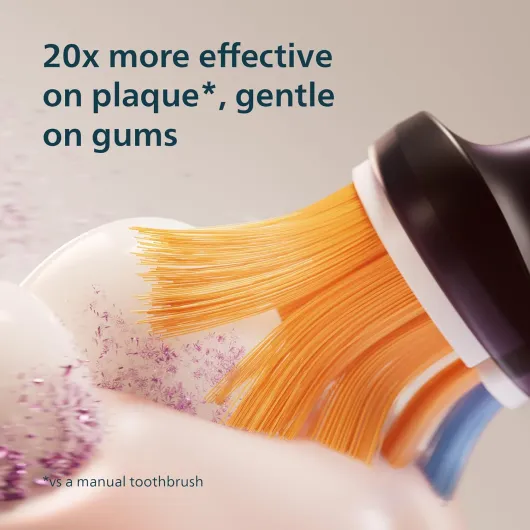
In terms of comfort on the teeth and gums, I found it pretty good once I learned to let the brush do the work. The first few days, I pressed too hard, like I’m used to with manual brushing. When that happens, the brush automatically lowers the intensity thanks to the SenseIQ feature. You can feel it backing off a bit. At first I thought it was a gimmick, but it did make me more aware of how much pressure I was applying, and after a week or so I stopped forcing it. My gums felt fine, no bleeding, and there was no soreness after brushing.
The A3 Premium All-in-One head has medium firmness bristles. I’d call it firm enough to feel like it’s doing something, but not scratchy. The head is slightly larger than some Oral-B ones, so getting behind the very back molars took a bit of adjusting. Once I got the angle right, it was manageable. If you have a very small mouth or sensitive gag reflex, you might find the head a touch big at first, but I got used to it after a few days.
The app-guided sessions are a mixed bag for comfort. On one hand, having a timer and zones can help you slow down and not rush. On the other hand, when the app insists you missed areas even after a careful 3-minute brush, it just feels annoying and not very accurate. So in practice, I ended up relying on the built-in timer and my own routine more than the app’s coaching. Comfort-wise, though, the brushing experience itself is pretty solid, and I prefer it to my older, noisier brushes.
Build quality and long-term concerns
In the first few weeks, the build quality feels solid. The handle doesn’t creak, the finish looks good, and the button has a firm click. It feels like a premium device in the hand. The faux leather travel case also feels sturdy enough to survive being thrown into a backpack. The only part that feels cheaper is the plastic cover on the charger base, which doesn’t quite match the rest of the product in terms of feel.
However, when you start reading user reviews, a pattern shows up: several people report the brush developing issues around the two-year mark. Things like the internal mechanism getting very noisy, the head wobbling, or the whole thing “shaking itself apart”. That lines up with one of the reviews that mentioned it sounding like a mini tractor and the head not staying firmly attached anymore. For a top-priced product, that’s not very reassuring, especially with only a 2-year warranty by default.
Personally, I haven’t hit that time frame yet with this model, but I did have an older Sonicare die just after the warranty period a few years back, so I’m not ignoring those comments. Philips does offer extended warranty if you register within a certain period (90 days), and based on those reports, I’d strongly recommend doing that if you buy this brush. It feels like one of those products where you should mentally assume a lifespan of around 2–3 years, not something that will last 7–10 years.
So in terms of durability, my take is: it feels well built at first, but the track record and warranty choices make me cautious. If you’re okay with the idea that this very expensive toothbrush might realistically give you around two to three years of use, fine. If you’re expecting a decade of daily use from it, you might be disappointed. For this kind of money, that’s a real downside.
What you actually get in the box
Out of the box, the Philips Sonicare 9900 Prestige feels like a fancy gadget more than a simple toothbrush. You get: the handle in Midnight Blue, one single A3 Premium All-in-One brush head, the wireless charging base, a USB wall adapter with cable, and the travel charging case. That’s it. For the UK version, it’s worth noting: only one head in the box, while in other regions they often get more. For this price point, that’s honestly stingy.
The setup is straightforward. You charge it on the base (standard Sonicare puck-style charger), download the Philips Sonicare app, and pair it via Bluetooth. Pairing was quick on my phone, no weird bugs. The app immediately tries to push you into all the coaching features, tracking, and head reordering. If you like data and charts, you’ll probably poke around for a bit. If you just want your teeth clean, you can ignore almost everything and just brush.
In daily use, the brush basically has one physical button. All the extra modes and intensity adjustments are handled either automatically (SenseIQ changing intensity when you press too hard) or through the app. I actually like that it’s not covered in buttons and LEDs. You press once to start, again to stop. There is a learning curve if you’re used to having clear physical mode buttons, but after a few days it becomes normal.
The first brush with it is a bit surprising if you’ve never used Sonicare-style vibrations. It’s more of a high-frequency buzz than a rotation. If you’re coming from an Oral-B oscillating head, it feels less aggressive but still strong. After a few days, I got used to it and going back to my old brush felt rough and noisy in comparison. So the presentation is: premium package, simple interface, but you definitely pay a lot for that combination.
Does it actually clean better?
Let’s talk about the main point: does this thing actually clean better than a cheaper electric toothbrush. From my experience over a few weeks, I’d say yes, it cleans very well, but it’s hard to say it’s dramatically better than a decent mid-range model if you already have good brushing habits. After each use, my teeth feel really smooth, especially along the gumline and behind the front teeth where plaque usually hangs around. Running my tongue along the teeth after brushing, they feel properly polished.
The combination of the Sonicare motion and the A3 All-in-One head seems to do a good job at reaching in between teeth and along the edges. I noticed less fuzzy feeling on my teeth throughout the day, compared to my old brush. I also feel like coffee and tea stains on the front teeth reduced a bit after about 10 days, without changing toothpaste. Not a miracle whitening, just a slightly brighter look because surface stains weren’t building up as much.
Now, about the smart features: the app tracks coverage, pressure, and duration. In theory, it should help you improve your technique. In practice, the tracking is hit and miss. Several times it told me I hadn’t brushed certain zones properly even though I’d just spent extra time there. There’s no easy way to “go back” to a missed area during the session; you basically have to restart, which is annoying. So while the feedback is interesting for a few days, I quickly stopped relying on it and focused on my usual method and the built-in timer.
So yes, it’s effective. My mouth feels cleaner than with a manual brush and slightly better than with my old Oral-B. But the big marketing numbers like “20x plaque removal” don’t really mean much day to day. The real difference comes down to consistency and technique. If you already use any decent electric brush properly for two minutes, twice a day, the jump in cleaning performance here is noticeable but not life-changing. It gets the job done very well, but the “smart” part didn’t add much to the actual cleaning for me.
Battery life and daily performance
Battery-wise, the 9900 Prestige is decent but not mind-blowing. With two 2-minute brushes per day plus a few longer sessions when testing the app guidance, I got around a week to ten days before needing to recharge. That lines up with what some other users mention. It’s not bad at all, but considering the price and the size of the handle, I expected a bit more. Still, charging is simple: just drop it on the base or plug it in via the travel case if you’re away from home.
The USB charging is actually handy. The base uses a standard wall adapter with a USB lead, so if you travel, you don’t need a special proprietary plug beyond the base or case itself. The travel case having charging built in is nice if you’re away for more than a week. One minor downside: the case doesn’t have a built-in cable; you need to remember to pack the USB cable separately. Not a huge issue, but easy to forget when you’re in a rush.
In terms of raw performance during brushing, the power is there. The vibrations feel strong even on lower intensities, and the brush doesn’t suddenly weaken as the battery drops, at least not in a way I could notice. The pressure sensor and automatic intensity adjustment kick in pretty reliably when you push too hard. You can feel the brush tone change slightly and the buzz softens. That’s actually one of the more useful “smart” features in daily life, because it quietly stops you from overdoing it.
Overall, performance and battery are solid: it cleans well every time, doesn’t struggle when the battery is low, and charges reasonably fast. But you’re not getting some magical month-long battery life or anything like that. It’s just good, steady performance that matches other high-end electric brushes, not miles ahead of them.
Pros
- Very comfortable, powerful clean with quieter operation than many Oral-B brushes
- Premium design with Midnight Blue finish and practical travel charging case
- Pressure sensing and automatic intensity adjustment help protect gums from over-brushing
Cons
- Very expensive at full price, with high ongoing cost for replacement heads
- Smart app features are basic and often inaccurate, add little real value
- Durability concerns around the 2-year mark and only one brush head included in the box
Conclusion
Editor's rating
The Philips Sonicare DiamondClean Prestige 9900 is a very capable electric toothbrush that feels premium in the hand and delivers a thorough, comfortable clean. It’s quieter and smoother than many Oral-B models I’ve used, and the pressure sensing plus automatic intensity adjustment do help avoid over-brushing. The Midnight Blue design and travel charging case are nice touches if you like your bathroom gadgets to look good and you travel regularly.
But the downsides are real. The smart features are pretty basic and often inaccurate, so they end up feeling like a gimmick rather than a real benefit. Replacement heads are expensive, and user reports about the brush getting noisy or failing around the two-year mark raise questions about long-term value, especially with only a standard 2-year warranty unless you register for an extension. Add the fact that you only get one brush head in the UK box, and the overall package feels overpriced at full RRP.
If you’re into tech, want a premium-feeling brush, and can grab it at a big discount, this is a solid choice that will leave your teeth feeling very clean and your bathroom looking a bit more stylish. If you just want effective brushing for a reasonable cost, or you’re worried about longevity, you’re probably better off with a mid-range Sonicare or Oral-B and spending the difference on regular dental check-ups instead.
![Sonicare 3100 Series Electric Toothbrush - Sonic Toothbrush with Pressure Sensor, 3 Intensity Levels, EasyStart, SmarTimer, 14-Day Runtime, Travel Case, Forest Green, HX4033/26, [New] Forest Green, [New Generation]](https://www.electric-toothbrush-guru.com/storage/941349/conversions/71VD84fKEOL._AC_SL1500_-medium.webp)