
Summary
Editor's rating
Value for money: fair price, but heads add up
Design: simple, light, and not trying too hard
Battery life and charging: slow to charge, but lasts ages
Comfort in the mouth: weird at first, then pretty nice
Build quality and durability: feels decent, but some doubts
Daily cleaning performance: does it actually clean better?
What you actually get in the box
Pros
- Cleans very well with effective timer and QuadPacer for even brushing
- Excellent battery life (around 2–3 weeks) and compact USB charging base
- Lightweight, simple design with useful pressure sensor and travel case
Cons
- Replacement brush heads are relatively expensive over time
- Charging is quite slow and no wall adapter is included in the box

Specifications
View full product page →| Brand | PHILIPS |
A basic Sonicare that actually feels like a step up
I’ve been using the Philips Sonicare 4100 for a bit now, after years with a basic Oral‑B oscillating brush. I’m not a dentist or a tech geek, I just wanted something that cleans well, doesn’t die every three days, and isn’t full of pointless modes I’ll never touch. This one sits in that middle ground: not the fancy top model, but not the bargain-bin version either.
The first thing I noticed was the difference in feeling compared to my old round-head brush. The Sonicare doesn’t “scrub” in circles, it just vibrates like mad and you basically guide it along your teeth. The first two or three uses felt a bit odd, almost ticklish along the gums, but after a week it just felt normal and my teeth felt smoother than with my old brush.
I went for this specific package because it came with the W2 Optimal White head, a travel case, and a USB charger. I travel fairly often and I’m tired of carrying bulky chargers or weird bathroom bases that only fit one socket. The USB cable and slim case are simple, but honestly that’s what I wanted: something that fits in a wash bag and doesn’t need its own shrine in the bathroom.
Overall, my first impression is that it’s a practical, no-frills brush. It’s not perfect – the charging is a bit slow and the replacement heads aren’t cheap – but in daily use it feels like a decent upgrade from a basic manual or entry-level electric brush. If you want fireworks and fifteen brushing modes, this isn’t it. If you just want your teeth to feel properly clean with minimal faff, it’s already looking pretty solid.
Value for money: fair price, but heads add up
In terms of value, the Sonicare 4100 sits in that mid-range where you’re paying more than for a basic manual or bargain electric, but you’re not going all-in on the premium models. For what you get – sonic technology, pressure sensor, timer, travel case, and USB charger – the price feels reasonable. It actually does improve the cleaning experience compared to a cheap brush, so you’re not just paying for a brand name.
Where the cost sneaks up on you is the replacement heads. The W2 Optimal White heads are not the cheapest on the market. If you replace them every 3 months as recommended, that’s four heads a year, and the cost adds up. There are often multipacks or deals, and you can technically use other compatible Sonicare heads if you don’t care about the whitening aspect, but it’s still not a low-cost system in the long term. If you’re on a tight budget, that’s something to keep in mind.
Compared to my old Oral‑B, the running cost feels similar or slightly higher, but the experience is nicer: better battery life, quieter operation, and a cleaner feel. For me, the trade-off is worth it. You’re not paying for a ton of useless modes; you’re paying for a solid core feature set that you’ll actually use: good cleaning, timer, pressure sensor, and travel-friendly charging.
Overall, I’d say the Sonicare 4100 offers good value for someone who wants a serious cleaning upgrade without going to the top of the range. If you’re fine with a basic electric brush and don’t care about sonic vibration or travel cases, you can spend less. If you’re willing to invest a bit in your oral care but don’t want to overpay for gimmicks, this hits a decent sweet spot. Just budget for the replacement heads and you’ll have a clear idea of the real cost.
Design: simple, light, and not trying too hard
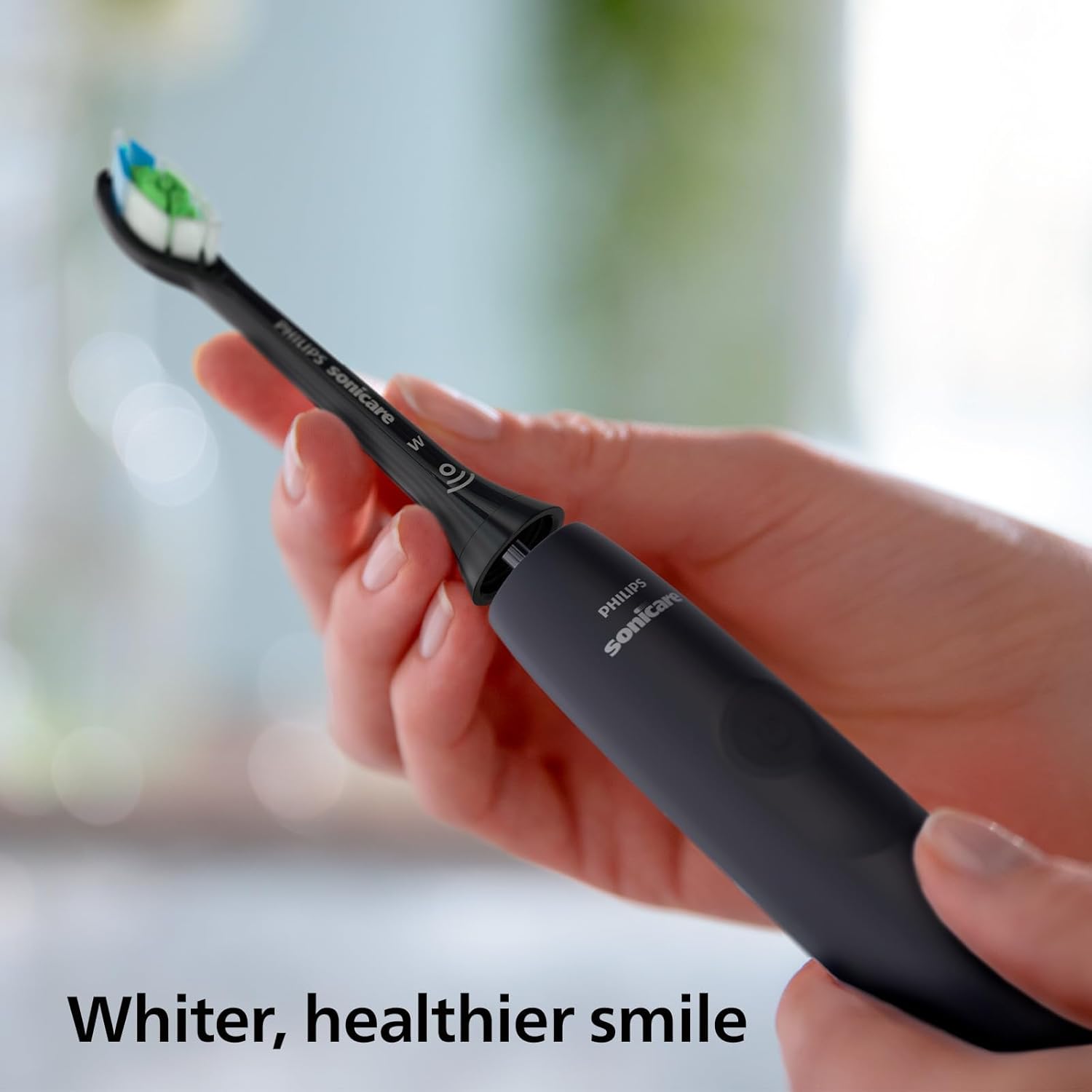
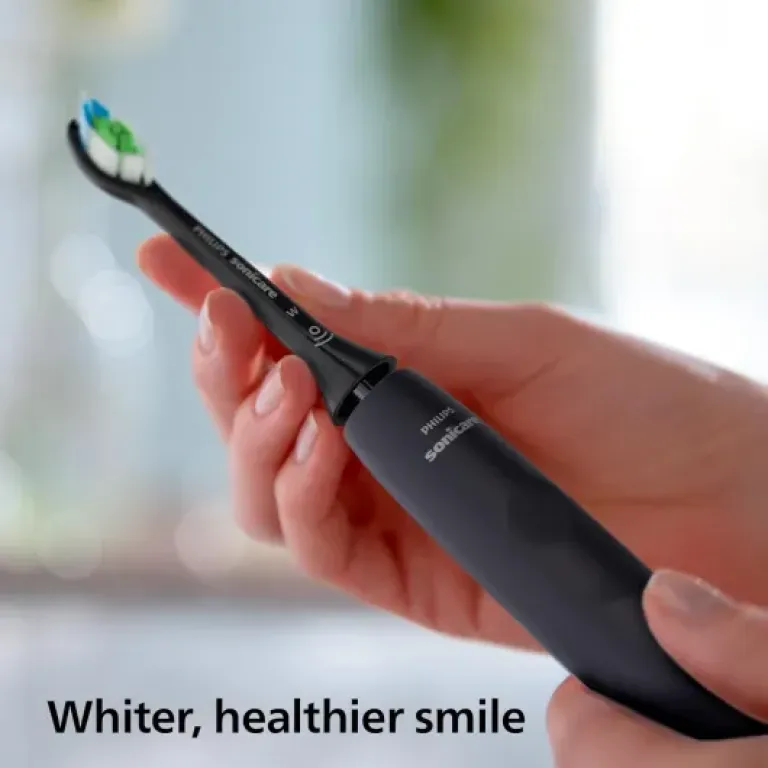
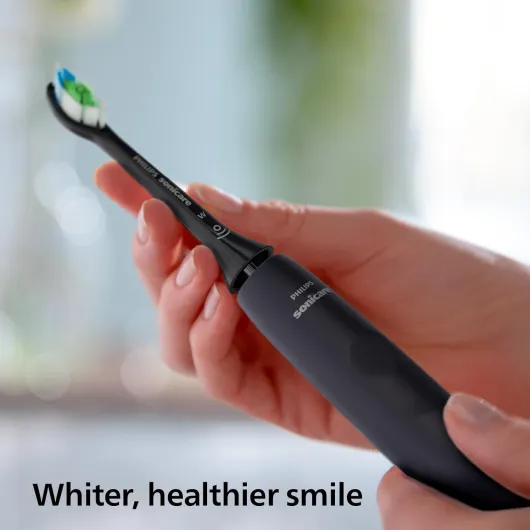
The design is pretty straightforward: matte black handle, single button, a few LEDs, and that’s it. No shiny chrome bits, no fake metal ring that peels off after a year. In the hand, it feels light and balanced, not top-heavy like some older brushes I’ve used. The grip is mostly smooth plastic with a slightly rubbery feel around the button area, so even with wet hands it doesn’t slip much.
You’ve got two main indicators: one for battery and one for pressure. There’s also an indicator for the brush-head replacement reminder. They’re small LEDs, not a massive display, but you can see them clearly enough in a normal bathroom. The pressure sensor is handled through haptic feedback: if you press too hard, the brush changes vibration pattern a bit and warns you. It’s not super loud or dramatic, but you do notice it and it nudges you to ease off.
From a practical angle, the handle stands upright on its own, which is handy if you don’t want to use the charger as a stand all the time. The base is a small USB puck, so it doesn’t take much space on the sink or shelf. The head clicks on and off easily; no wobble, no weird play in the neck. After a few weeks, there’s no water trapped inside or strange squeaks, which is usually a good sign for long-term use.
Design-wise, I’d call it minimal and functional. If you like flashy screens or colorful accents, this will feel a bit boring. But if you prefer something that blends into a bathroom and just works, this hits the mark. My only small complaint: the finish does show toothpaste marks and water spots a bit, so you end up wiping it down every few days if you want it to look clean.
Battery life and charging: slow to charge, but lasts ages
Battery-wise, this is one of the strong points. Philips says you get about two weeks of use on a full charge, and in real life I’ve been getting closer to three weeks brushing twice a day on Clean mode. I’m not timing it with a stopwatch, but I charged it fully, tossed the charger in a drawer, and basically forgot about it for most of the month. The battery indicator finally dropped after about 2.5 weeks, which is more than enough for a normal trip or just to avoid constant charging.
The flip side is charging speed. Like one of the Amazon reviewers said, it’s not the fastest. When the battery is low and you slap it on the USB base, it takes several hours to get back to full. This isn’t a brush you quickly top up in 20 minutes before a trip. You have to think a bit ahead: if the LED is flashing low and you’re traveling tomorrow, plug it in the night before and you’re safe. It’s fine for me because I usually charge overnight, but it’s something to know.
The USB charger itself is practical. It’s small, light, and uses a standard USB plug, so you can connect it to a phone charger or even a laptop if you’re desperate. No weird bathroom-only socket, no bulky base. This also means less stuff to carry when traveling – just the case, the brush, and the small base. The lack of a wall adapter is slightly annoying if you literally don’t have any spare USB plugs, but most people do, so in practice it’s not a big problem.
In daily life, I’d say the battery is reliable and low-maintenance. Charge it fully, forget it for weeks, and keep an eye on the small LED every now and then. The only people who might find it limiting are those who constantly forget to charge things and expect a quick boost right before leaving. Otherwise, for this price range, the battery life is one of the best points of the Sonicare 4100.
Comfort in the mouth: weird at first, then pretty nice
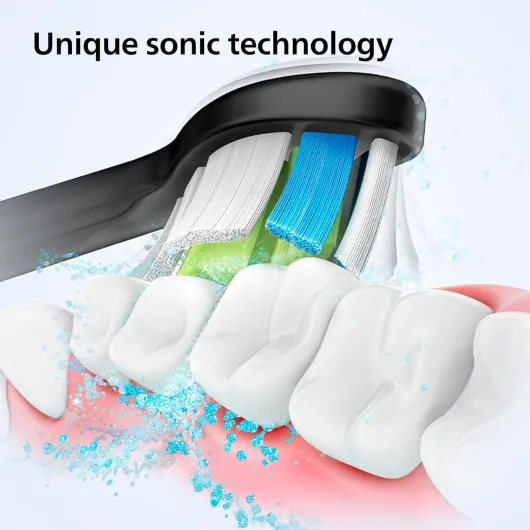
Comfort-wise, switching from a round Oral‑B head to this Sonicare was a bit of a shock. The vibration is very different – instead of feeling like the brush is scrubbing each tooth, it feels like a strong buzzing along your gum line. The first two or three brushes almost felt too ticklish on the front teeth and near the gums. After a week, though, my mouth got used to it and it actually felt gentler than the old oscillating brush, especially around sensitive areas.
The W2 Optimal White head is on the slimmer side, not a big chunky head, so it fits easily behind the back molars. The bristles are on the firmer side of medium in my opinion. They’re not super soft like some “sensitive” heads, but they’re not harsh either. If your gums are already irritated or you tend to brush like you’re sanding wood, you’ll probably appreciate the Sensitive mode plus the pressure sensor, because it clearly tells you when you’re overdoing it.
In daily use, the handle is light enough that your wrist doesn’t get tired, even if you actually respect the full 2 minutes with the QuadPacer. The 30-second pauses to tell you to move to another quadrant are clear but not jarring. You feel a short change in the vibration rhythm, and that’s your cue to switch areas. It makes it easier to actually brush evenly instead of rushing the last teeth like we all secretly do.
For people with very sensitive gums, I’d say: start directly on Sensitive mode and give it a good week before judging. The sonic feel is different, and your mouth needs a bit of time to adapt. For me, after that adjustment period, I find it comfortable enough to use twice a day without any soreness or bleeding, which is what matters. It’s not spa-like or anything, but it’s definitely not rough either.
Build quality and durability: feels decent, but some doubts
On the build quality side, the Sonicare 4100 feels solid enough for daily use. The plastic doesn’t creak, the head fits tightly, and after getting splashed, rinsed, and left on a wet sink, nothing has started peeling or rusting. The single button still clicks properly, and there’s no random rattling when it’s off. It definitely doesn’t feel like a super cheap throwaway brush.
That said, you can tell this is not the most premium model in the Sonicare line. The finish is more basic, and the charging system is quite simple, which is fine but doesn’t scream “built like a tank”. One Amazon reviewer mentioned they bought this as a quick replacement after another Sonicare broke, and I get that feeling a bit. It works well, but you’re always slightly aware that it’s plastic and electronics that might not last 10 years. I haven’t had it long enough to judge long-term durability, but I wouldn’t be shocked if it needs replacing after a few years of daily use.
The travel case does its job but doesn’t feel ultra-tough. If you step on it, it’ll probably crack. For normal use – throwing it in a backpack, suitcase, or bathroom drawer – it’s fine. The hinge and clips haven’t loosened up yet, and the brush stays in place inside. The USB base also seems sturdy enough; it doesn’t wobble or feel like it’s going to fall apart if you drop it once.
Overall, I’d say durability looks acceptable for the price, but I wouldn’t call it bulletproof. If you treat your stuff halfway decently – not dropping it constantly, not leaving it soaking in water – I think it’ll hold up well for a few years. If you want something that survives heavy abuse, maybe look higher up the range or accept that you’ll replace it more often. For normal adult use, it’s good enough, just don’t expect miracles.
Daily cleaning performance: does it actually clean better?
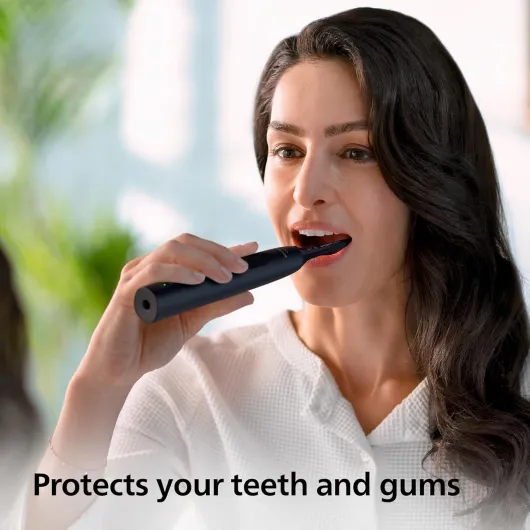
Let’s talk about the main point: does it clean well? In my experience, yes. After the first few brushes, my teeth had that smooth “just-left-the-dentist” feel, especially on the front surfaces and along the gum line. The 31,000 vibrations per minute thing is just marketing numbers to me, but in practice, plaque around the gum edges and between teeth seems to clear out better than with my old brush. I still floss (when I remember…), but even on lazy days my teeth don’t feel as rough as they used to.
The built-in 2-minute SmartTimer and 30-second QuadPacer are actually useful. They force you to stick to a proper brushing routine without checking your phone. You start at the top right, it buzzes after 30 seconds, you move to the top left, and so on. It sounds basic, but it stops you from doing the classic 10 seconds on the front teeth and 5 seconds on everything else. Over a couple of weeks, that adds up to more even cleaning.
The pressure sensor is another thing that affects performance. I tend to press too hard with manual brushes, and with this one, when I push down like that, it gives a small warning through the handle. That made me adjust and let the brush do the work instead of scrubbing. Less pressure plus consistent vibrations seems to be kinder to my gums while still getting rid of plaque. I haven’t noticed any extra sensitivity, which is good because whitening heads sometimes cause that.
Compared to cheaper brushes or manual brushing, the Sonicare 4100 feels like a solid step up in terms of how clean your mouth feels afterwards. It’s not magic – if you don’t angle it right along the gum line or skip flossing completely, you’ll still miss areas. But if you use it properly with the timer and don’t rush, it definitely gets the job done and then some. For the average person who just wants cleaner teeth without studying dentistry, this level of performance is perfectly decent.
What you actually get in the box
Out of the box, you get the Sonicare 4100 handle in black, one W2 Optimal White brush head, a slim plastic travel case, and a USB charging base. No wall adapter, which is clearly on purpose: Philips is pushing the “less electronic waste” angle. In real life, that just means you need to use an existing USB plug from your phone, laptop, or a multi-port charger. For me it’s fine because I already have too many, but if you expected a full plug, you might be annoyed.
The handle itself is pretty light, around 380 g for the whole package, and it doesn’t feel bulky in the hand. There are two modes only: Clean and Sensitive. No whitening mode, gum massage, tongue spa, or anything like that. You switch modes with the same button you use to turn it on, and the brush remembers the last mode you used, so you don’t have to toggle every single time.
The travel case is basic but useful. It fits the handle and one head, closes securely, and doesn’t open by itself in a bag. It’s not padded or fancy, but it keeps the brush from getting dusty or pressing on the power button in your luggage. I’ve tossed it in a backpack and a suitcase and it held up fine, no scratches on the brush, no accidental activation.
Overall, the presentation is simple and functional. You don’t get lots of extras – no spare heads, no stand with storage, no wall plug. But you do get the essentials: brush, one decent head, case, USB charger. For the price point, I’d have liked at least a second head in the box, especially since the W2 heads aren’t the cheapest, but it’s not a deal-breaker if you’re used to buying refills anyway.
Pros
- Cleans very well with effective timer and QuadPacer for even brushing
- Excellent battery life (around 2–3 weeks) and compact USB charging base
- Lightweight, simple design with useful pressure sensor and travel case
Cons
- Replacement brush heads are relatively expensive over time
- Charging is quite slow and no wall adapter is included in the box
Conclusion
Editor's rating
The Philips Sonicare 4100 is a straightforward, effective electric toothbrush that focuses on the basics: strong cleaning, a proper timer, a pressure sensor, and a battery that doesn’t give up after a few days. It’s not packed with fancy modes or a big display, but in daily use it makes your teeth feel noticeably cleaner than with a manual brush or a very entry-level electric one. The sonic vibration style takes a few days to get used to, but once your mouth adapts, it feels gentle on the gums while still dealing well with plaque.
The big strengths are the battery life, the practical USB charger, and the fact that the brush is light and easy to use. The included travel case makes it simple to throw into a bag without worrying about hygiene or accidental activation. On the downside, charging is a bit slow, there’s no wall adapter in the box, and the replacement heads aren’t cheap, so the running costs are something to think about. Build quality feels decent but not bombproof, so I’d treat it as a solid mid-range tool, not an heirloom.
Who is it for? People who want a reliable daily brush, travel now and then, and care more about clean teeth than extra features will be happy with this. If you’re upgrading from a manual or a very old electric brush, you’ll probably feel the difference right away. Who should skip it? If you’re on a very tight budget, don’t want to deal with pricier heads, or crave lots of modes and smart features, you might want either a cheaper basic brush or a higher-end Sonicare. For most adults who just want something that works well without drama, the Sonicare 4100 is a pretty solid choice.
![Sonicare 5500 Electric Toothbrush, Sonic Toothbrush with 2 Modes, Pressure Alert, EasyStart, SmarTimer and BrushPacer, Navy, Model HX7113/01 [New Technology] Sonicare 5500, Navy, Travel Case](https://www.electric-toothbrush-guru.com/storage/1025316/conversions/71vNjog50vL._AC_SL1500_-medium.webp)