
Summary
Editor's rating
Value for money: strong clean, weak value
Design: looks expensive, behaves mostly fine
Battery life and charging: solid, but the glass is mostly a gimmick
Durability: the big question mark for this model
Cleaning performance: very good, but not magic
What you actually get in this dual pack
Pros
- Very good cleaning performance with noticeable smoothness and reduced plaque
- Multiple modes and intensities make it easy to adapt to sensitive gums or deeper cleans
- Strong battery life and comfortable, grippy handle that’s easy to use daily
Cons
- High purchase price plus expensive official replacement heads
- Recurring reports of stem/drive issues and early failures for a premium product
- Charging glass and app add cost and space but don’t really improve core cleaning

Specifications
View full product page →| Brand | Philips |
A £200 toothbrush… seriously?
I’ve been using the Philips Sonicare DiamondClean 9000 (this dual pack, black/rosegold) for a while now, and I’ll be honest: at this price, I was expecting something close to perfect. Before this, I used a basic Oral-B rotating brush for years, plus an older Sonicare that finally gave up after about 5–6 years. So I didn’t come to this blind – I already know what a decent electric toothbrush should feel like day to day.
First impression: it cleans really well. After the first brush, my teeth felt smoother than with my old Oral-B, especially around the gumline and between teeth. You really get that “just left the hygienist” feel, at least in the first weeks. The different modes (Clean, White+, Gum Health, Deep Clean+) are not just marketing names; you can feel a real difference in vibration and timing between them, which is nice if you swap between a quick morning clean and a longer evening routine.
But once you get past the initial “ooh, fancy charging glass” phase, a few things start to bug you. Replacement heads cost a lot, the app is borderline overkill after the first few uses, and the long-term durability is a bit worrying given the number of reviews mentioning rattling or dead handles after 9–24 months. For something that costs around the same as a budget phone, that’s not great.
So overall, my mindset with this brush is: fantastic clean, premium look, but you’re paying a big premium for design and features that don’t always matter in daily life. If you just want clean teeth and don’t care about apps and glasses, there are cheaper options that will do 80–90% of the job. If you’re okay paying for the extra comfort and the look, then it can still make sense – but it’s definitely not a no-brainer purchase.
Value for money: strong clean, weak value
Let’s talk about money, because that’s the sticking point with this brush. The dual pack price is high, and that’s before you even factor in the cost of replacement heads. The official Philips Sonicare heads with BrushSync are pricey – you’re basically paying the cost of a cheap manual toothbrush for every new head, sometimes more. If two people use this set and replace heads every 3 months, the running cost adds up fast over a couple of years.
Yes, you can buy third-party compatible heads without the chip, and they’re much cheaper. I’ve tried non-Philips heads on older Sonicare models and they were fine. The downside here is that the brush will nag you with the BrushSync indicator once it thinks the head is “expired,” which is based on time, not actual wear. Some people literally break the little connector in the head to stop the nagging, which says a lot about how annoying that feature can be when you’re trying to save money.
So is the DiamondClean 9000 worth the price? For me, it’s a mixed bag. The cleaning performance is very good, the battery is solid, and the design is pleasant. But the extra cost compared to mid-range Sonicare or Oral-B models is mainly for the look, the modes, the app, and the glass. None of those are essential to getting clean teeth. And when you add the risk of durability issues on top, the value equation gets weaker.
If you catch it on a good discount and you specifically want two premium handles that look nice and have all the features, then it can be justified. But at full price, I think it’s hard to call it good value. There are brushes half the price that will get you 80–90% of the performance, with cheaper heads and fewer gimmicks. So I’d rate the value as average at best: good product, but the price and long-term costs drag the score down.
Design: looks expensive, behaves mostly fine
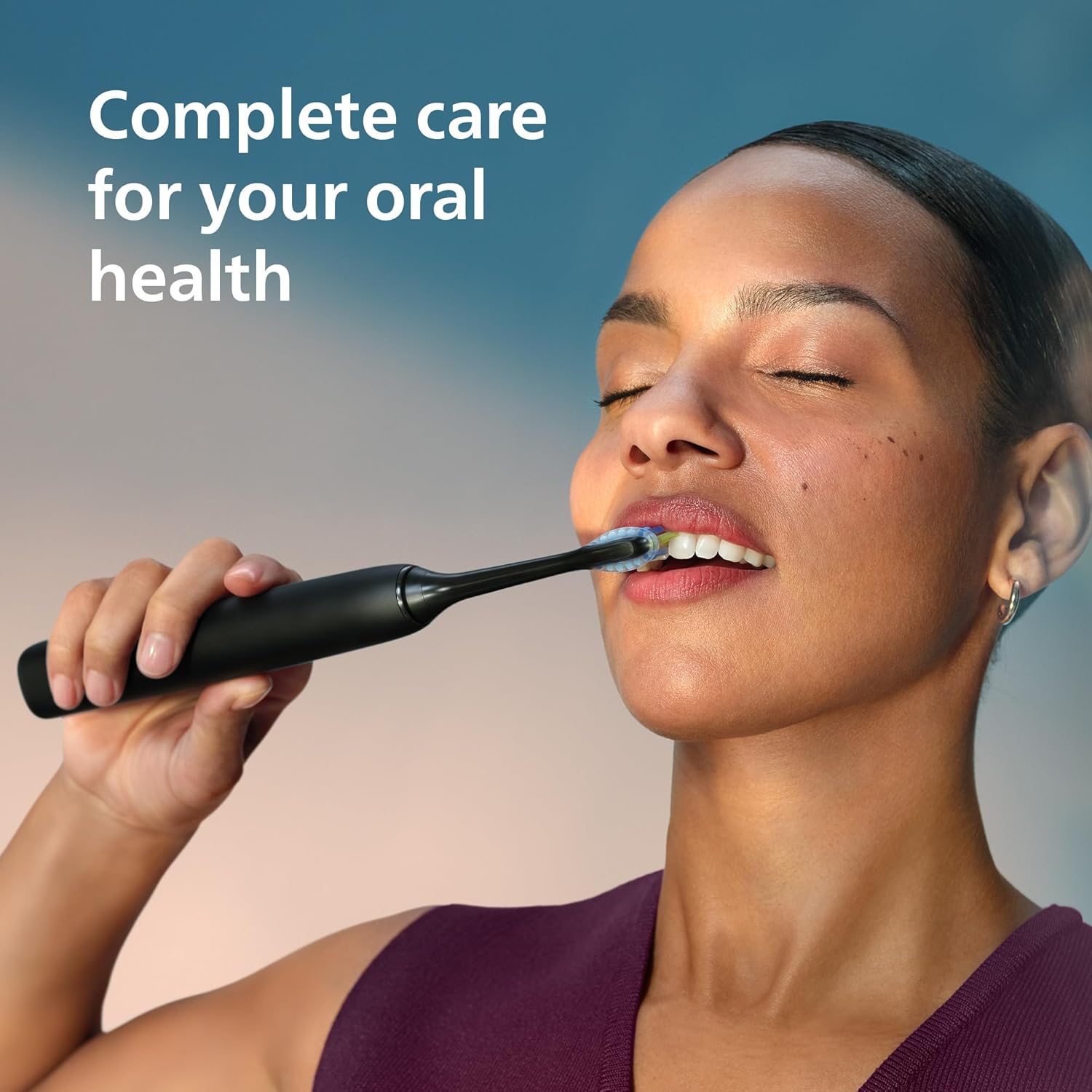
Design-wise, this thing is clearly meant to look high-end. The black and rosegold combo actually looks pretty solid on the sink – not cheap, not plasticky in a bad way. The handle has a matte finish that doesn’t show fingerprints too much, and it’s slim enough to hold comfortably, even with wet hands. The button layout is simple: one power button, one mode/intensity button, and some LEDs to show which mode and intensity you’re on.
The charging glass is the main “design flex” here. You drop the handle in the glass, and it charges inductively via the base. It looks nice, but in practice, it’s just a glorified stand that takes up more space than a basic charging dock. If your bathroom counter is small, it’s not super practical. I also find that if you throw the brush in quickly when you’re half-asleep, it doesn’t always sit perfectly in the right spot, so you end up adjusting it to make sure it’s actually charging.
On the functional side of design, I do have concerns. A recurring complaint you see in reviews – and I’ve had a milder version of it myself – is that the stem near the brush head can start to feel loose over time. It starts as a slight rattle or a change in sound, then in some cases it apparently stops transferring vibration properly to the head. That seems to be a weak point in the design. For a brush at this price level, that’s the kind of thing that really shouldn’t happen within the first couple of years, yet several people reported issues under two years, some even under one year.
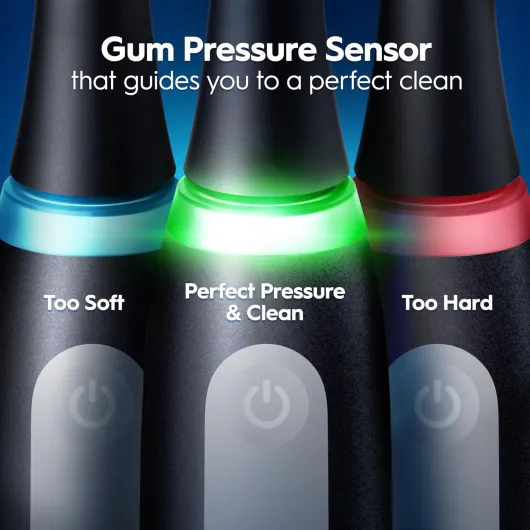
So for me, the design is a mix: visually, it looks good and feels nice in hand, the interface is clear, and the pressure sensor feedback (a small pulsing change) is subtle but effective. But there’s a sense that they focused a bit too much on making it look premium and not enough on making the mechanical part bulletproof. If they fixed that stem issue and offered a simpler charger in the box, I’d be a lot happier with the overall design.
Battery life and charging: solid, but the glass is mostly a gimmick
The battery life on the DiamondClean 9000 is one of the parts I’m actually pretty satisfied with. On a full charge, brushing twice a day for 2 minutes (sometimes using Deep Clean+ which runs longer), I’m getting roughly 2–3 weeks before the battery indicator drops into the last bar. That’s with the intensity usually on medium. If you use the highest intensity and longer modes all the time, you’ll probably land closer to the 2-week mark, but it’s still decent.
The charging glass looks nice on the counter, but functionally it’s just an inductive charger with a fancy container. You put the glass on the base, then drop the handle into the glass. It charges fine, but if you’re someone who likes to rinse your mouth and also keep the glass clean, it’s a bit annoying having it permanently tied to the charger. I ended up using a separate normal glass for rinsing and leaving this one just as a dock, which kind of defeats the purpose of the “2-in-1” vibe they were probably going for.
One thing to note: the brush doesn’t charge particularly fast. If you completely drain it, you’re looking at a few hours to get it back up to full. Not a big deal if you just leave it overnight, but don’t expect a quick top-up like a phone. The good thing is that the battery indicator is clear enough that you won’t be caught off guard unless you completely ignore it for days.
Overall, the battery and charging system are reliable but not life-changing. It holds a charge long enough for travel, so even without a travel case in this pack, you can throw it in your bag for a week away and not worry too much. I just wish they offered a simple, compact charging stand as an alternative to the glass, especially in a dual pack where counter space is shared. Functionally, the battery is one of the least problematic parts of this toothbrush – it does what it should and doesn’t get in the way.
Durability: the big question mark for this model
This is where the DiamondClean 9000 starts to lose points for me: long-term durability. My older Sonicare (a previous DiamondClean generation) lasted around 5–6 years before the battery started fading and the vibration got weaker. That felt fair for the price at the time. With this 9000 model, I’m not as confident. Personally, mine is still working fine so far, but I’m extra cautious after reading a lot of reviews mentioning problems after less than 2 years, sometimes even under a year.
The main issue people describe is the internal mechanism near the head getting loose. It starts with a rattling sound or a wobble at the stem, and in some cases it gets to the point where the head barely moves, making the brush useless. A few users had this happen twice within the warranty period. That lines up with one or two times where I’ve noticed a slightly harsher noise from mine when I press at a weird angle, which makes me a bit nervous about how solid the internal rod really is.
For something that costs this much, you’d expect it to easily last the full length of the warranty and ideally quite a bit longer. Instead, you’ve got people reporting total failure around the 9–24 month mark and then getting bounced between seller and manufacturer. That’s not what you want to deal with for a toothbrush. It’s not that every unit will fail – plenty of people, like me so far, have no issue. But the pattern of similar complaints suggests a design weakness.
So in terms of durability, I’d say: it’s a bit of a gamble. If you get a good unit, it will feel solid and probably last a few years. If you’re unlucky, you might run into that stem problem earlier than expected. At this price range, I’d honestly like to see better build consistency and a more straightforward support process. Right now, I can’t confidently say “buy it, it’ll last you ages” – it’s more like “buy it if you’re okay with the risk and keep your receipt handy.”
Cleaning performance: very good, but not magic
In terms of pure cleaning performance, this is where the DiamondClean 9000 is actually strong. Compared to my old basic Oral-B rotating brush, the difference on the first day was obvious. My teeth felt smoother, especially around the back molars and close to the gumline. The sonic action (62,000 movements per minute, according to Philips) gives a more “buzzing” feel than a rotating head, and it pushes water and toothpaste between teeth in a way you can actually feel.
The four modes are not just for show. Here’s how I ended up using them in practice:
- Clean: default daily mode, 2 minutes, does the job without being too harsh.
- White+: a bit more intense, longer cycle, good if you drink a lot of coffee/tea and want to focus on front teeth stains.
- Gum Health: gentler pulses, slightly longer, I use it when my gums feel a bit sensitive.
- Deep Clean+: for when you’ve been lazy and want a long, thorough clean – more intense but not painful.
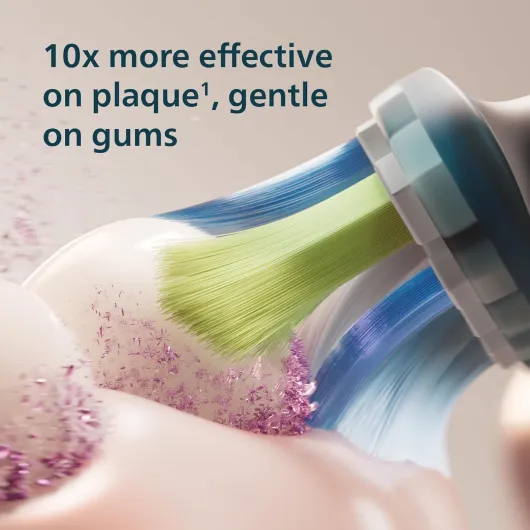
Is it really “10x more plaque removal” compared to a manual brush? Hard to measure at home. What I can say is: when I go for dental check-ups, my hygienist has commented that there’s generally less plaque around the usual problem zones since switching to Sonicare. That matches what I feel – less roughness between teeth and at the gum edges. But it’s not a miracle device. If you don’t floss or use interdental brushes, no electric toothbrush is going to fully fix that.
So performance-wise, I’m happy. It definitely cleans better than a cheap manual brush and better than the low-end electric models I’ve used. But once you get to this level, the difference between this and a mid-range Sonicare or Oral-B is not as dramatic as the price suggests. You’re paying a lot for small gains and extra modes, not for a completely different level of hygiene.
What you actually get in this dual pack
In the box, you get two DiamondClean 9000 handles (both black with rosegold accents), two C3 Premium Plaque Defence heads, one glass charger, and one charging base for the glass. That’s it. No travel case in this specific dual pack, which I honestly found a bit stingy for the price. It comes with a UK 2-pin bathroom plug, so it’s ready to sit on a shaver socket. The whole thing feels like it’s designed to look premium on the sink more than anything else.
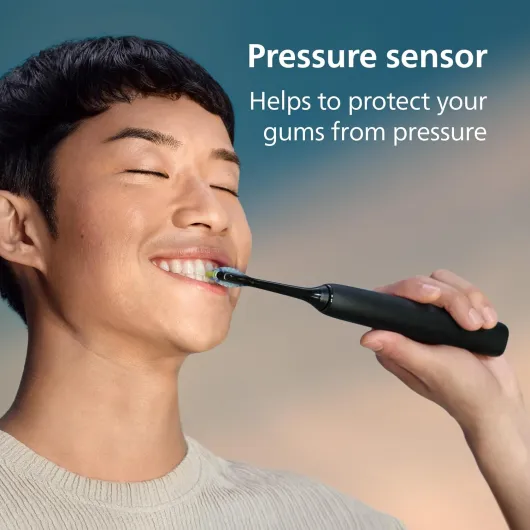
The two handles are identical in terms of features: 4 modes (Clean, White+, Gum Health, Deep Clean+), 3 intensity settings, pressure sensor, and BrushSync to tell you when to change the head. You don’t get extra heads, which means you basically have one head per handle out of the box. If two people are using this set, you’ll be buying new heads fairly quickly. Given how expensive the official Philips heads are, that hits you right away in the wallet.
Setup is straightforward: charge it in the glass for a few hours, pair the handle with the Philips Sonicare app if you want the coaching, and off you go. The app tries to walk you through zones in your mouth and gives you feedback if you miss areas or press too hard. It’s handy the first week as a reminder of good technique, but after that I found myself ignoring it. I don’t want my phone in the bathroom every time I brush.
In day-to-day use, the product is clearly targeted at people who like gadgets and design. The glass charger looks nice, the rosegold ring gives it that “premium” vibe, and the handle lights and modes are clear enough. But behind the presentation, it’s still just a sonic toothbrush. The main value is in the cleaning performance and comfort, not in the fancy glass or app. Personally, I’d have preferred less packaging theatrics and one or two extra heads instead.
Pros
- Very good cleaning performance with noticeable smoothness and reduced plaque
- Multiple modes and intensities make it easy to adapt to sensitive gums or deeper cleans
- Strong battery life and comfortable, grippy handle that’s easy to use daily
Cons
- High purchase price plus expensive official replacement heads
- Recurring reports of stem/drive issues and early failures for a premium product
- Charging glass and app add cost and space but don’t really improve core cleaning
Conclusion
Editor's rating
Overall, the Philips Sonicare DiamondClean 9000 dual pack is a very capable electric toothbrush wrapped in a premium-looking package, with a price tag to match. The cleaning performance is genuinely strong: teeth feel smooth, plaque build-up is reduced, and the different modes let you tweak your routine depending on whether you want a quick daily clean, gentler gum care, or a more intense deep clean. Battery life is solid, the pressure sensor helps you avoid over-scrubbing, and the brush is comfortable to hold and use.
Where it stumbles is on durability and value. There are too many reports of stems coming loose or units dying within 1–2 years for a brush at this price, and replacement heads are expensive unless you switch to third-party ones and live with the BrushSync nagging. The app and the charging glass are nice extras, but they don’t change your oral health in a big way – they’re more about convenience and aesthetics than real necessity.
I’d say this brush is for people who want a premium-feeling product, care about design, and are okay paying extra for small comfort upgrades and features. It’s also decent if two adults want matching high-end handles in one go. If your main goal is just clean teeth at a sensible cost, or you’re worried about long-term reliability, you’re probably better off with a cheaper Sonicare or Oral-B model and spending the savings on regular hygienist visits and decent floss. Good toothbrush, but not great value, and the build quality question mark stops me from fully recommending it at full price.
![Sonicare 3100 Series Electric Toothbrush - Sonic Toothbrush with Pressure Sensor, 3 Intensity Levels, EasyStart, SmarTimer, 14-Day Runtime, Travel Case, Forest Green, HX4033/26, [New] Forest Green, [New Generation]](https://www.electric-toothbrush-guru.com/storage/941349/conversions/71VD84fKEOL._AC_SL1500_-medium.webp)