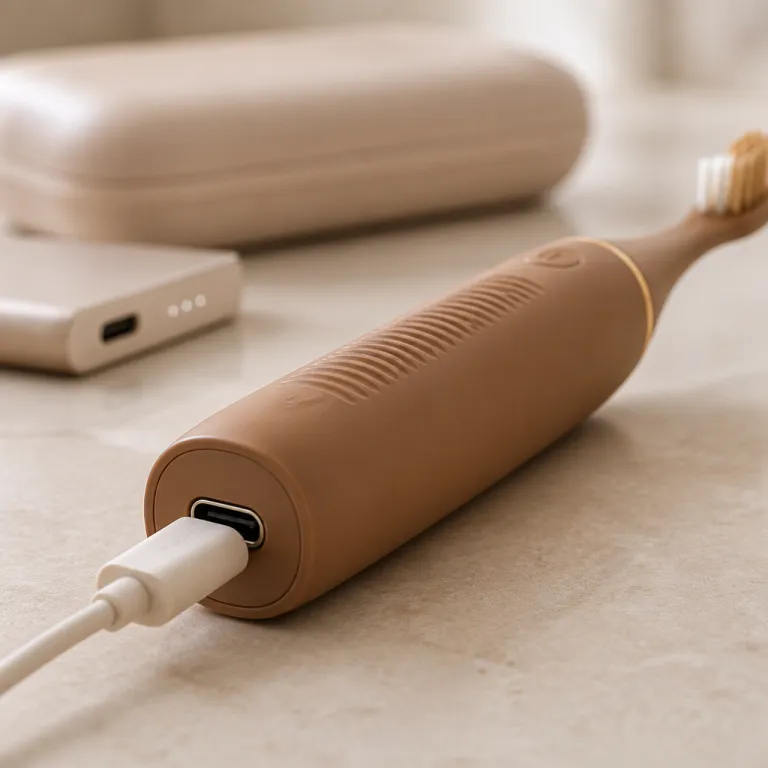
Why electric toothbrush USB-C charging took so long to arrive
Electric toothbrush makers moved slowly toward USB-C charging because water and electricity are uneasy partners. A typical rechargeable electric toothbrush uses a sealed handle with no exposed metal contacts, so brands leaned on induction and wireless charging stands that kept every internal component safely buried. That legacy design made it easier for each brand to lock in its own charging ecosystem, but it also kept you tied to one fragile plastic puck.
Most early sonic toothbrushes borrowed technology from shavers, not smartphones. The result was a forest of proprietary charging stands, each product using a slightly different peg, base, or USB power adapter that only worked with that family of brushes. For adults upgrading from a manual brush, this meant that a simple weekend away required packing a dedicated stand, plus maybe a travel case and spare brush heads, instead of one slim USB cable.
Waterproofing was the other major brake on change. A sonic toothbrush lives in steam, toothpaste foam, and the occasional drop into a full sink, so engineers preferred fully sealed wireless charging coils over open USB ports. That choice kept failure rates low and helped some models reach excellent battery life, but it also meant that every handle demanded its own dock, which cluttered bathroom shelves with items that could not charge anything else.
Who already offers USB-C, and who still clings to proprietary stands
USB-C electric toothbrush charging is no longer a curiosity; it is a clear design trend. Xiaomi’s Mijia Sonic Electric Toothbrush T700, for example, uses a standard USB-C port on the base of the handle, pairing a long battery life claim with a quick top up that delivers one brushing session after only a short burst of power, according to Xiaomi’s published specifications for the T700. SURI’s 2.0 Sustainable Sonic Toothbrush goes further by eliminating the bulky wireless charging stand entirely, relying on a simple USB-C cable that drops into a slim travel case for adults who hate packing extra hardware, as described in SURI’s product documentation for the 2.0 model.
By contrast, Oral-B’s iO series still relies on proprietary magnetic stands, and many Philips Sonicare toothbrushes keep their familiar induction pads. The Sonicare 5000 to 7300 series focuses on a drivetrain upgrade for better sonic performance, but these products stay with the existing charger design instead of adopting USB-C ports, based on Philips Sonicare user manuals for those ranges. If you have ever wondered why your Oral-B toothbrush might not be charging reliably, the answer often lies in that brand-specific base rather than in the brush itself, as explained in troubleshooting guides about an Oral-B toothbrush not charging that highlight how sensitive some stands are to bathroom grime and misalignment.
For buyers comparing electric toothbrushes on Amazon or in pharmacies, this split creates a practical choice. USB-C toothbrushes and sonic models with wired charging let you share cables with phones and earbuds, while legacy wireless stands lock you into one brand and one set of accessories. When you weigh the price of a new electric toothbrush against its long term convenience, the type of charging system it uses matters almost as much as the number of modes or the promise of a smart timer.
- Xiaomi Mijia T700: USB-C cable, no dock required, advertised weeks of runtime, IPX7 water resistance, typical full charge in a few hours per Xiaomi’s spec sheet.
- SURI 2.0: USB-C cable with travel case, no stand, long-life battery claims, IPX7-rated handle, approximate full recharge in a few hours according to SURI’s documentation.
- Oral-B iO: Magnetic proprietary base, no USB-C, multi-week battery claims, fully sealed handle, charging time of several hours as stated in Oral-B iO manuals.
- Philips Sonicare 5000–7300: Induction stand, no USB-C, multi-week runtime claims, waterproof handle, typical overnight charge duration reported in Philips Sonicare guides.
The real travel advantage: one cable, fewer chargers, calmer packing
For frequent travel, electric toothbrush USB-C charging changes the packing list more than the brushing feel. A brush you can charge with the same USB cable as a phone or tablet means one less tangle of plastic in the bag, and it also means fewer items to forget in a hotel bathroom. When a USB rechargeable handle slips into a compact travel case alongside two brush heads, you suddenly have a neat kit instead of a nest of proprietary parts.
Models like the Xiaomi sonic brush or SURI 2.0 show how this plays out in daily life. You plug the toothbrush’s USB-C port into any compatible charger, from a laptop to a multi-port wall brick, and the handle quietly tops up while you answer emails or scroll through maps for your next travel day. Families can even rotate heads on a single handle, using color coded brush heads for different adults while sharing the same USB cable and avoiding a row of wireless charging stands on a cramped hotel sink.
Induction based wireless charging still has one advantage for travel, which is full sealing against splashes. Yet the latest USB-C toothbrushes use rubber gaskets and internal drainage channels that keep the electronics protected, so real world failure rates are low when users close the port cover properly, according to manufacturer IP ratings and durability testing reported in product literature. For most adults who already trust their phones around the pool, a USB-C handle feels like a familiar, low risk device rather than a fragile experiment, especially when backed by a clear warranty and published information about expected battery life between charges.
Battery life, charge cycles, and what USB-C really changes at home
USB-C does not magically extend battery life, but it changes how you use that battery. A modern rechargeable electric toothbrush uses lithium ion cells whose total charge cycles depend more on depth of discharge and heat than on whether you use induction or wired charging. What USB-C brings is faster, more flexible top ups, so you can plug in a handle for a few minutes while you shower instead of leaving it on a wireless stand all week.
Some sonic models now advertise extreme runtimes, such as claims of many weeks or even months between full charges under standard brushing routines in their spec sheets. Those numbers assume you use a basic clean mode twice a day with a built in timer, not the most intense whitening or gum care programs that draw more power. In practice, adults who experiment with multiple modes and higher intensities will see shorter gaps between charges, but the convenience of any nearby USB charger means that topping up becomes a quick habit rather than a chore tied to a single bathroom socket.
From a technical standpoint, induction based wireless charging can generate more heat in the base and handle, which is not ideal for long term cell health, as battery engineering references on lithium-ion chemistry explain. USB-C charging designs can run cooler if the brand limits current sensibly, and that may help maintain capacity over hundreds of cycles, though the difference is modest for most toothbrushes. If you want a deeper dive into how chargers affect handle longevity, resources that explain the importance of a Sonicare toothbrush charger show how even small design choices in the charging system can influence both safety and the lifespan of the product.
Accessories, families, and whether USB-C will push big brands to change
Once you shift to electric toothbrush USB-C charging, accessories start to look different. Instead of buying multiple proprietary charging stands as separate items, families can share a few high quality USB chargers and cables that serve phones, earbuds, and toothbrushes together. Bathroom counters lose the clutter of mismatched hardware, and a single multi-port USB hub can quietly power several brushes overnight without a tangle of brand specific plastic.
For adults managing several toothbrushes for children and partners, this shared ecosystem matters. A family might keep one sonic handle with multiple brush heads for guests, plus individual models with their own smart timer and preset modes, all charging from the same USB block. That setup reduces replacement cost when a stand fails, because you can swap in any compatible cable instead of hunting down an exact brand accessory at a premium price.
Big brands are watching these shifts closely, especially as regulations and consumer habits favor universal connectors. Oral-B and Philips Sonicare still lean on wireless charging for waterproof simplicity, but the rise of USB-C toothbrush models on Amazon and in specialist shops will increase pressure to offer at least one ADA-accepted line with standard ports, based on current industry commentary and regulatory discussions about universal charging standards. For buyers weighing delivery times, price brackets, and long term flexibility, the winning product will not just be the one with the most modes or the flashiest smart app; it will be the one that fits into a simple, shared charging setup where a lost cable is a minor annoyance, not a reason to replace the whole brush.
FAQ
Does USB-C make an electric toothbrush charge faster than induction stands ?
USB-C allows higher and more controlled power delivery, so many toothbrushes do charge faster than on traditional induction stands. The exact time still depends on the brand’s chosen current, battery size, and safety limits, not just the connector. For most adults, the practical gain is the ability to top up quickly from any nearby USB charger rather than waiting on a single bathroom base.
Is a USB-C toothbrush safe to use around water in the bathroom ?
Modern USB-C electric toothbrushes are designed with sealed ports, gaskets, and internal drainage paths to maintain water resistance, as reflected in their IP ratings from the manufacturer. As long as you keep the port cover closed while brushing and avoid submerging the open connector, the risk to the internal electronics remains low. In everyday use, they are no more fragile than a smartphone you already charge near a sink.
Can one USB-C cable charge multiple toothbrushes for a family ?
Yes, a single USB-C cable or multi-port charger can serve several toothbrush handles, as long as each handle has a compatible port. Families often rotate one cable between different toothbrushes or use a hub to keep multiple devices topped up overnight. This shared setup reduces clutter from proprietary stands and simplifies travel packing for adults and children.
Does USB-C affect how long the toothbrush battery will last before replacement ?
The connector type itself does not determine long term battery life; cell quality, heat, and charging habits matter more. USB-C systems can run cooler and allow shallower, more frequent top ups, which may slightly benefit lifespan compared with always parking on a warm induction base. However, for most users, choosing a reputable brand and avoiding constant full discharges has a bigger impact than the choice between USB-C and wireless charging.
Are UV sanitizing cases useful with USB-C electric toothbrushes ?
Some USB-C toothbrushes pair with UV sanitizing travel cases that promise to reduce bacterial load on brush heads. Independent testing shows that while UV can lower surface microbes, good rinsing and regular head replacement remain the main hygiene tools. If you are curious about whether these accessories are a marketing gimmick or a genuine hygiene upgrade, detailed analyses of UV toothbrush sanitizers from dental researchers and consumer testing organizations can help you decide before paying a higher price for such items.