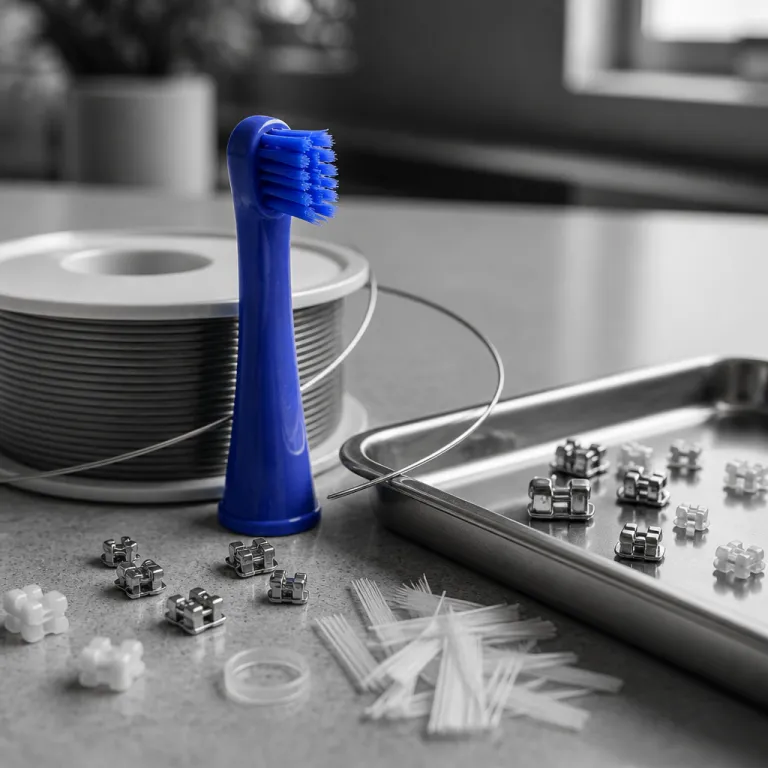
Why braces change everything about brushing with an electric toothbrush
Braces turn a simple brush into a precision job around metal and enamel. Your electric toothbrush has to reach between brackets and wires without scraping, while still removing sticky plaque from every tooth surface. With braces, the best toothbrush is the one that makes effective cleaning feel routine, not heroic.
Fixed brackets and wires create shelves where food particles and plaque collect, so a standard toothbrush head often misses the danger zones. That is why orthodontists commonly steer patients toward an electric toothbrush with a compact brush head and soft bristles that can move around orthodontic hardware. Compared with manual toothbrushes, powered toothbrushes give more consistent cleaning because the motion is built in, which matters when you or your child is tired at night.
For anyone wearing braces, the best electric toothbrush for braces is less about flashy features and more about control, comfort, and reach. A small orthodontic toothbrush head can angle under brackets and wires and along the gumline, while a pressure sensor keeps you from pressing hard enough to bend wires. Parents in Canada or any other country face the same global challenge; they need toothbrushes braces users can handle easily, especially younger teens who rush through dental care.
Key risks of poor brushing with braces
When plaque sits around brackets, it ferments sugars and releases acids that attack teeth. The result can be white spot lesions, which are permanent scars on enamel that appear when braces come off, even if alignment looks perfect. An electric toothbrush with soft, angled bristles and a focused cleaning mode reduces that risk by disrupting plaque daily.
Gums also react quickly to trapped debris around orthodontic products. Swollen, bleeding tissue makes it harder to clean, which then traps more food particles and bacteria, creating a loop that only better oral hygiene can break. A well chosen electric toothbrush, paired with interdental brushes and a water flosser, gives you three complementary tools to keep both teeth and gums healthy during orthodontic treatment.
Parents often underestimate how much longer brushing takes with braces, especially for an adult who is juggling work and family. A two minute timer on many electric toothbrushes is a minimum; orthodontic patients often need closer to three or four minutes to clean thoroughly around every bracket. Choosing a product that feels comfortable to hold and easy to maneuver makes those extra minutes realistic, night after night.
Sonic versus oscillating electric toothbrushes when you have braces
Most orthodontists lean toward sonic electric toothbrushes for braces, because the side to side vibration is gentle on brackets and wires. Sonic models, such as many Philips Sonicare toothbrushes, use high frequency vibrations to create fluid movement that helps dislodge plaque slightly beyond where the bristles touch. That extra fluid action can be useful when a brush head cannot fully reach behind orthodontic hardware.
Oscillating rotating electric toothbrushes, like many Oral B products, use a small round brush head that spins back and forth around each tooth. This motion can be excellent for cleaning individual teeth, but it can feel more aggressive if you press too hard against brackets or wires. With braces, that is where a reliable pressure sensor becomes non negotiable, because it cuts power when you bear down and protects both enamel and orthodontic components.
For a teen with full metal braces, a sonic electric toothbrush with a slim brush head and soft bristles often strikes the best balance between comfort and effective cleaning. Adults with clear aligners can safely use either sonic or oscillating electric toothbrushes, because they remove trays before brushing and do not have fixed brackets to navigate. If you want to understand how sonic vibration numbers translate into real cleaning on teeth, a detailed guide on the best sonic toothbrushes and vibration levels can help you interpret the technical claims.
How brushing feel differs between technologies
Sonic electric toothbrushes create a humming, buzzing sensation that feels like a rapid polishing motion along the teeth. Many brace wearers describe it as a smooth glide over brackets, especially when using orthodontic toothbrush heads designed for braces. Oscillating models feel more like a tiny scrubbing disc, which some people love for the sense of mechanical power on each tooth.
If your child is sensitive to noise or vibration, the gentler ramp up of some Philips Sonicare products can make adoption easier. These models often start with lower intensity and gradually increase over several days, giving gums and teeth time to adapt to the new cleaning style. In contrast, some budget electric toothbrushes jump straight to full power, which can feel harsh against orthodontic appliances and discourage consistent use.
Whichever technology you choose, the best electric toothbrush for braces is the one your family will actually use twice a day. A slightly less powerful brush that feels comfortable will beat a top spec model that sits unused on the bathroom shelf. Think about the brushing experience first, then compare features like timers, pressure sensors, and brush heads.
Choosing the right brush head and bristles for brackets and wires
The brush head is where most of the real work happens, especially around braces. A small, compact head with soft bristles lets you angle the brush around brackets and wires without scraping or catching. When you see the phrase toothbrush braces or orthodontic toothbrush on packaging, it usually signals a head shaped specifically for orthodontic cleaning.
Philips Sonicare offers orthodontic brush heads with trimmed profiles that hug brackets while still reaching the gumline. Oral B sells an Ortho brush head that uses angled bristles to sweep around wires and into the spaces between teeth. These specialized brush heads are not marketing fluff; they genuinely make it easier to clean around orthodontic products in tight spots.
Soft bristles are essential for anyone with braces, whether you use electric toothbrushes or manual toothbrushes. Medium or hard bristles can erode enamel and irritate gums, especially when you are already brushing more carefully around metal hardware. For children and adult patients alike, soft bristles paired with a pressure sensor give a forgiving setup that supports long term oral hygiene.
How many brush heads you really need
Families often underestimate how quickly brush heads wear out when cleaning around braces. The extra friction against brackets and wires causes bristles to splay sooner, which reduces effective cleaning and makes the brush feel scratchy. Most orthodontic toothbrush heads should be replaced every two to three months, and sometimes sooner for heavy brushers.
If you are buying an electric toothbrush for more than one person, consider a handle that supports multiple brush heads with color coded rings. This lets a teen with braces use an orthodontic brush head, while a younger sibling or adult uses a standard head on the same electric handle. Over a year, that flexibility can lower the total cost of dental care products for the household.
Interdental brushes and a water flosser are not substitutes for a good brush head, but they do complement it. Interdental brushes slide under wires and between teeth where even the best toothbrush cannot fully reach. A separate water flosser adds a pressure based rinse that flushes out food particles from around brackets, which is why two in one combo devices often underperform compared with separate brush and flosser tools.
Pressure sensors, smart features, and what actually matters
With braces, a pressure sensor is not a luxury feature; it is basic protection. Pressing too hard with any brush, electric or manual, can wear enamel and irritate gums, but with orthodontic appliances you add the risk of bending wires or loosening brackets. A good pressure sensor cuts power or flashes a light the moment you push too firmly, training you and your child to let the bristles do the work.
Some premium electric toothbrushes layer on smart features like Bluetooth apps, brushing maps, and habit tracking. These tools can help certain users, especially tech motivated teens who like seeing streaks and scores for their oral hygiene. If you are curious about how smart toothbrushes track brushing data and whether that actually improves technique, a detailed analysis of smart toothbrush tracking and real brushing behavior is worth reading.
For most families, the core features that matter with braces are a reliable motor, a gentle cleaning mode, a pressure sensor, and access to orthodontic brush heads. Battery life is nice to have, but even mid range electric toothbrushes now last more than a week between charges. Global availability of replacement brush heads also matters; if you live in Canada or travel often, choose a brand with widely stocked products so you are not stuck reusing worn heads.
When smart modes help and when they distract
Cleaning modes labeled “sensitive” or “gum care” can be genuinely useful for the first weeks after braces are fitted or adjusted. These modes usually lower intensity and sometimes change the brushing pattern, which feels kinder on tender teeth and gums. Over time, many orthodontic patients move back to a standard clean mode for more robust plaque removal.
Whitening or polishing modes are less relevant during active orthodontic treatment, because brackets cover parts of the enamel. Aggressive polishing around brackets can create uneven surfaces once the hardware comes off, so focus on consistent, gentle cleaning instead. For an adult with aligners, whitening modes are safer because trays are removable, but they still should not replace careful daily brushing and flossing.
App based coaching can help some teens learn to angle the brush correctly around braces, especially when the app shows missed zones. For others, the novelty fades quickly, and the electric toothbrush becomes just another tool by the sink. In practice, the best electric toothbrush for braces is the one that quietly supports good habits without demanding constant attention.
Beyond the brush: interdental brushes, water flossers, and technique
No electric toothbrush, however advanced, can fully clean the tight spaces between teeth and under wires. That is why orthodontists almost always recommend interdental brushes and a water flosser alongside toothbrushes braces users rely on daily. Interdental brushes are tiny, cone shaped tools that slide between brackets and wires to remove food particles and plaque where bristles cannot reach.
A water flosser uses a pressurized stream of water to flush debris from around orthodontic hardware and along the gumline. Studies consistently show that combining an electric toothbrush with a water flosser leads to better plaque control and gum health in orthodontic patients than either tool alone. For families, this means budgeting not just for the main brush, but for these complementary products that complete the oral hygiene routine.
Technique still matters, even with the best toothbrush technology. The brush head should be angled at about 45 degrees to the gumline, then tilted slightly above and below each bracket to clean both the tooth surface and the area under the wire. Short, controlled movements with soft bristles and light pressure give more effective cleaning than aggressive scrubbing that risks damaging dental work.
Step by step routine for braces wearers
Start by rinsing to loosen obvious debris, then use interdental brushes to clear the biggest traps around brackets. Next, take your electric toothbrush and work systematically from the upper right teeth to the upper left, then from the lower left to the lower right. This pattern helps ensure no tooth or bracket is skipped, even on rushed evenings.
Spend a few seconds on each tooth, cleaning above the bracket, on the bracket, and below the bracket before moving on. After brushing, use a water flosser to rinse along the gumline and around each bracket, especially after meals with sticky or fibrous foods. Finish with fluoride toothpaste residue left on the teeth; do not rinse aggressively, so the fluoride can keep working against acid attacks.
Parents can support younger children by supervising this routine at least once a day, even if the child handles the brush independently. For an adult patient, setting a timer or using the built in pacer on many electric toothbrushes helps maintain consistent brushing time. Over months of orthodontic treatment, these small habits make the difference between healthy enamel and preventable damage.
Age specific advice: teens with braces versus adults with aligners
Teens with full metal braces face the toughest cleaning challenge, because their motivation and technique are still developing. For them, the best electric toothbrush for braces is usually a lightweight handle with a small orthodontic brush head, a clear pressure sensor, and a simple interface. Complicated modes and tiny icons are less useful than a straightforward clean setting that feels comfortable and easy to repeat.
Parents should look for electric toothbrushes that fit smaller hands and mouths, with soft bristles and angled bristles that can reach around brackets. Some families in Canada and other countries prefer models with travel cases, so teens can maintain dental care routines during school trips or sports events. In this age group, global brand recognition matters less than whether replacement brush heads are affordable and easy to find locally.
Adults with clear aligners or lingual braces have different needs, because they can often remove appliances before brushing. An adult may prioritize quieter sonic models, such as certain Philips Sonicare toothbrushes, that feel more discreet in shared bathrooms. They might also value extra features like multiple brush heads for different goals, from everyday clean modes to gentle gum care settings.
Adapting routines as treatment progresses
At the start of orthodontic treatment, teeth and gums are often sore, so a very soft orthodontic toothbrush and the lowest intensity setting are wise. As discomfort fades, patients can gradually increase intensity to improve plaque removal without sacrificing comfort. Throughout, the pressure sensor remains a safeguard against over enthusiastic brushing that could damage enamel or orthodontic products.
Near the end of treatment, when wires are thinner or aligners are used for fine adjustments, some patients switch back to more standard brush heads. This can be a good time to reassess which electric toothbrush features still matter and which were only essential during the braces phase. Manual toothbrushes can play a supporting role for quick midday cleanups, but they rarely match the consistency of electric toothbrushes for the main morning and evening routines.
Once braces come off, the focus shifts from navigating brackets and wires to polishing and maintaining the newly aligned teeth. A high quality electric toothbrush with fresh brush heads, combined with continued use of interdental brushes and a water flosser, helps protect the investment in orthodontic care. In the end, what counts is not the most advanced product on paper, but the brush that makes your Monday morning cleaning feel simple enough to repeat every single day.
Key figures on electric toothbrushes, braces, and oral health
- Powered toothbrushes, including both sonic and oscillating electric models, reduce plaque by roughly 20% more than manual toothbrushes after three months of use, according to randomized controlled trials summarized in Cochrane and American Dental Association reviews; individual studies report reductions in the 15–25% range depending on plaque index and study design.
- Studies on orthodontic patients show that combining an electric toothbrush with a water flosser can cut bleeding gums scores by around 50% compared with brushing alone, with several clinical trials reporting reductions between one third and one half in gingival bleeding indices over 4–12 weeks of combined use.
- Research comparing sonic and oscillating electric toothbrushes finds both technologies effective, but sonic brushes are often rated as more comfortable around braces by patients in clinical surveys, which can improve long term adherence to oral hygiene recommendations.
- Orthodontic guidelines typically recommend replacing brush heads every two to three months, yet surveys suggest that more than 40% of users stretch heads beyond this window, which reduces effective cleaning and increases the risk of gum inflammation.
- Global sales data indicate that electric toothbrush adoption continues to rise, with particularly strong growth in markets such as Canada, where dental professionals increasingly recommend electric toothbrushes for both adult and adolescent orthodontic patients.
FAQ about electric toothbrushes and braces
Is an electric toothbrush really better than a manual brush for braces ?
For most people with braces, an electric toothbrush offers more consistent plaque removal than a manual brush, because the motor provides thousands of movements per minute that are hard to match by hand. Clinical studies and systematic reviews show powered toothbrushes reduce plaque and gingivitis more effectively, which is critical when brackets and wires create extra plaque traps. A manual toothbrush can still work if technique and time are excellent, but an electric model gives a helpful margin of safety for everyday routines.
Can an electric toothbrush damage brackets or wires ?
Used correctly with soft bristles and light pressure, an electric toothbrush will not damage brackets or wires. Problems arise when users press too hard, especially with stiff bristles or older brush heads that have become sharp at the tips. Choosing a brush with a pressure sensor and using orthodontic toothbrush heads designed for braces greatly reduces the risk of bending wires or loosening brackets.
What type of brush head is best for braces ?
The best brush head for braces is small, compact, and fitted with soft, often angled bristles that can reach around brackets and under wires. Orthodontic specific heads from major brands, such as Philips Sonicare or Oral B, are trimmed to hug brackets while still reaching the gumline. These specialized heads make it easier to achieve effective cleaning without scraping or catching on orthodontic hardware.
How often should someone with braces replace their brush head ?
Because braces create more friction and wear on bristles, orthodontic patients should replace brush heads every two to three months, or sooner if bristles splay or feel rough. Worn bristles clean less effectively and can irritate gums, undermining oral hygiene efforts. Checking the brush head visually each month and replacing it at the first signs of fraying is a simple way to maintain good dental care.
Do I still need floss or a water flosser if I use an electric toothbrush ?
Yes, an electric toothbrush cannot fully clean between teeth or under wires, so flossing tools remain essential. Interdental brushes and water flossers are often easier to use than string floss around braces and have strong evidence for improving gum health in orthodontic patients. The most reliable routine combines an electric toothbrush for surfaces, interdental brushes for tight spaces, and a water flosser for flushing out remaining debris.