
Summary
Editor's rating
Value for money: strong cleaner, but you pay a premium
Design: fancy glass, decent ergonomics, one annoying button issue
Battery life and charging: good, but not mind-blowing
Comfort and everyday use: strong vibrations, small learning curve
Cleaning performance: where it actually shines
What you actually get in the box
Pros
- Very effective cleaning with strong but controlled sonic vibrations
- Pressure sensor and timer actually help avoid over-brushing and under-brushing
- Practical USB charging travel case and stable glass charger
Cons
- High price compared to other electric toothbrushes that still clean well
- Smart app features feel gimmicky after the first week for most people
- Long-term cost of replacement heads and potential button sticking issue

Specifications
View full product page →| Brand | PHILIPS |
A £200+ toothbrush… seriously worth it?
I’ve been using the Philips Sonicare DiamondClean Smart 9400 (the black HX9917/89 with the app and 2 heads) for a few weeks now. Before this, I was on Oral-B oscillating brushes for years, so switching to a sonic brush felt a bit weird at first. I wanted to see if this thing really cleans better or if it’s just an expensive gadget with a fancy glass and an app no one uses after day three. Short version: it cleans very well, but there are a few things that annoyed me.
From the first use, the vibration is pretty intense. If you’re used to a cheap electric toothbrush or a manual one, you’ll probably think it’s overkill on day one. I did the classic mistake: put toothpaste on, turned it on before putting it in my mouth… toothpaste everywhere on the mirror. Lesson learned. Once you get past that and actually use it properly, you do feel a very smooth, polished finish on the teeth that I don’t usually get with a manual brush.
I’ve also played a bit with the app, the pressure sensor, and the different modes. Some of it is useful, some of it is clearly there to justify the price. In day-to-day life, I mostly use one mode, rarely open the app, and I’m more interested in how my teeth feel and how often I need to charge it than in the fancy graphics. For me, the big question is: does this justify costing way more than a mid-range electric brush with a simple charger?
So in this review I’ll break it down like I would explain it to a friend: how it’s built, how it cleans, what the battery is really like, if the app is worth it, and if I think it’s good value. It’s not perfect, and there are a couple of design choices I’m not a fan of, but it does have some strong points that make it hard to dismiss if you care about your teeth and gums and don’t mind the price.
Value for money: strong cleaner, but you pay a premium
Let’s talk money, because that’s where this brush is harder to justify. The Sonicare DiamondClean Smart 9400 is not cheap, especially compared to mid-range electric toothbrushes that also clean well and have a basic timer. You’re clearly paying for the premium design, the glass charger, the USB travel case, the smart features, and the Philips brand. In terms of pure cleaning, yes, it’s very good, but a cheaper Sonicare or even a decent Oral-B can probably get you 80–90% of the result for much less.
Where the value improves a bit is in the included extras: you do get two good quality heads, the travel case that charges via USB, and the glass charger. If you actually travel a lot and use the case often, and if you like having multiple modes and an app to coach you at the start, then the package starts to make more sense. But if you’re the type who will never open the app after week one and just wants clean teeth, you’re basically overpaying for features you won’t use.
Another thing to consider is long-term cost: Sonicare brush heads are not cheap. If you follow the recommended changes every few months, you’ll be spending a fair amount every year just on heads. The BrushSync feature that tells you when to change is handy, but it also means you’re constantly reminded to buy more. Over three to five years, that adds up. And if the button issue or any other hardware problem appears out of warranty, replacing the handle is going to hurt.
So, is it good value? I’d say it’s good if you really care about oral care, want a premium-feeling device, and will actually use the travel case and modes. It’s not great value if you’re just looking for an electric toothbrush that cleans better than manual and don’t care about apps, glass chargers, or fancy lights. There are cheaper models that will get the basic job done for a lot less, even if they feel less fancy on the sink.
Design: fancy glass, decent ergonomics, one annoying button issue
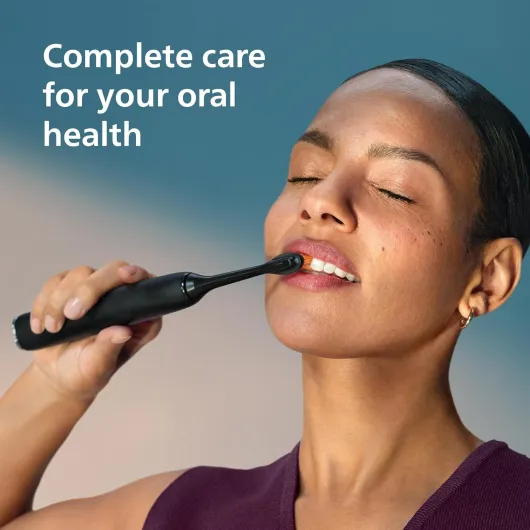
Design-wise, the Sonicare DiamondClean Smart 9400 looks the part. The black handle with the light ring and touch-style buttons gives it a clean, modern look. It’s slim, not too heavy, and sits well in the hand. Compared to my old Oral-B, it feels less chunky and more balanced. The matte-like finish helps with grip when your hands are wet, and it doesn’t feel like it’s going to slip into the sink every time you rinse it.
The charging glass is a nice idea: you drop the handle into the glass, and it charges through the base. In practice, it’s convenient because the brush doesn’t topple over easily, and the glass itself is actually usable as a rinse glass. It does take a bit more counter space than a tiny charging stand, though. If your bathroom sink area is already crowded, this can be slightly annoying. The USB travel case is probably my favourite part of the design: you put the handle and heads inside, plug it into a USB port or power bank, and it charges while being protected. For travel, that’s genuinely handy.
Now, the downside: the lower button. Some users mention that on previous Philips models the bottom button tends to stick after a while, and that’s something I’m a bit wary of. On mine so far it’s fine, but the button does feel slightly softer and less “clicky” than I’d like, especially considering the price. I can see how, with toothpaste residue and water, this could eventually start to gum up. For a device that’s supposed to last years, that’s not ideal. It’s one of those little things that can turn an expensive brush into a headache if it fails out of warranty.
In everyday use, though, the design is mostly practical: easy to stand, easy to rinse, and not too noisy. The vibrations are strong but the sound is more of a high-pitched buzz than a loud mechanical noise. If you live with someone and brush early or late, it’s not silent but it’s not like having a drill in the bathroom either. Overall, the design is pretty solid, but I do think for the money they could have beefed up the buttons a bit more to avoid the sticking issue some people report.
Battery life and charging: good, but not mind-blowing
Battery-wise, the Sonicare DiamondClean Smart 9400 is decent. With two 2-minute brushes a day, I’m getting roughly two weeks before the battery indicator gets low. That lines up with what some other users say: charging every couple of weeks or so. It’s not the longest battery life I’ve seen on an electric toothbrush, but it’s solid enough that you’re not constantly thinking about charging it. For daily use at home, you can easily just drop it in the glass every few days and keep it topped up.
The charging glass and induction base are easy to use: you literally just drop the handle in. There’s no fiddling with tiny pins. The downside is that it’s a bit bulkier than a simple plug-in charger. If your bathroom has limited space or only one socket, you’ll have to commit that spot to this unit. Also, the glass itself is breakable. If you’re clumsy or have kids around, there’s always that risk. I’m careful with it, but it’s something to keep in mind because replacing it won’t be cheap.
Where it scores points for me is the USB travel case. This is actually practical: if you travel a lot, you don’t need to bring the whole glass and base. You just put the handle and heads in the case, plug the supplied USB cable into a power bank, laptop, or phone charger, and it charges. That’s exactly the kind of small detail that makes life easier if you’re on the road often. I’ve used it with a power bank and it worked fine, no hassle. For me, this is one of the features that actually matches the price tag.
Overall, the battery is good, but not mind-blowing. There are cheaper brushes out there with longer battery life. Here, you’re paying partly for the convenience of the glass and the USB travel case more than for an insane battery duration. If you want a brush you can forget to charge for a month, this isn’t it. If two weeks is enough for you and you like the travel flexibility, then it does the job without drama.
Comfort and everyday use: strong vibrations, small learning curve
Comfort-wise, the first few days are a bit odd if you’re new to sonic brushes. The vibrations are strong and the sensation on the teeth and gums is different from the rotating heads of Oral-B. The first time I used it, it almost tickled my gums and lips in a slightly unpleasant way. After about three or four sessions, though, I got used to it, and now it feels normal. If you’re very sensitive, dropping the intensity to level 1 at the beginning helps a lot.
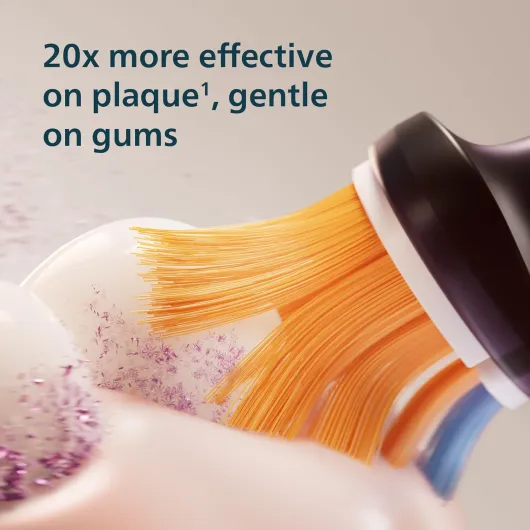
The brush heads themselves are medium firmness. They don’t feel harsh, and the shape makes it relatively easy to reach the back molars without dislocating your jaw. I didn’t get any gum bleeding beyond the usual when you improve your cleaning routine. The Gum Care head is a bit softer and nice if your gums are already irritated. One thing to note: because of the high-frequency vibration, you really don’t need to press hard. If you do, it becomes uncomfortable quickly and the pressure sensor will nag you anyway.
Noise-wise, it’s reasonably quiet. There’s a noticeable buzz, but it’s not as loud as some cheaper electric brushes that sound like a shaver. You can use it without waking the whole house, unless your walls are paper thin. The built-in 2-minute timer and 30-second pacing are simple but make the routine more structured. You don’t stand there guessing how long you’ve been brushing, which, in my case, usually meant I used to stop too early with a manual brush.
Day to day, once you get past the first week, it’s a comfortable brush to use. The only small annoyance is the potential for the buttons to get sticky over time, as some users reported with other Philips models. I haven’t had it long enough to confirm, but it’s something I’ll be watching. Apart from that, in terms of grip, noise, and feeling on the teeth and gums, it’s pretty user-friendly as long as you take a couple of days to adjust and maybe start on the lower intensity.
Cleaning performance: where it actually shines
This is the part where the Sonicare 9400 really earns some points. The cleaning is strong. The vibrations (they claim 62,000 movements per minute) feel intense at first, but once you adapt, your teeth genuinely feel very smooth after a 2-minute session. Compared to my old Oral-B, the feeling is different: less of a scrubbing motion and more like a fast, gentle polish that also pushes water and toothpaste between the teeth. After the first three or four days, I noticed less plaque feeling with my tongue, especially around the gumline.
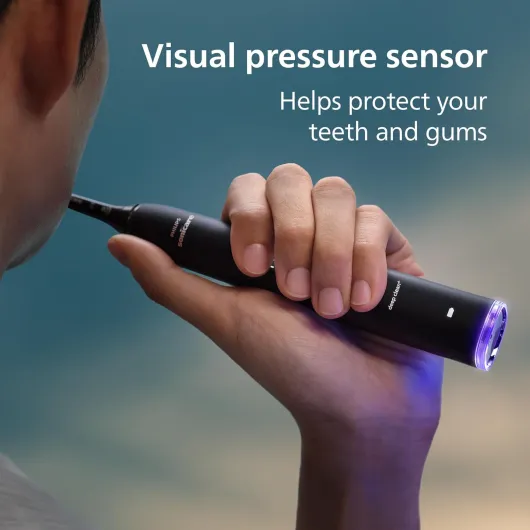
The built-in timer with QuadPacer is useful. It pauses briefly every 30 seconds to tell you to move to another quadrant, and after 2 minutes it stops. This makes it easy not to cheat and cut your brushing short. I also like the pressure sensor: when I pressed too hard (old manual brushing habit), the light ring flashed and the vibration toned down. After a week, I found myself automatically using lighter pressure, which is good for gums. My gums didn’t feel sore or irritated, even when using the Deep Clean+ mode, which is more intense.
The different modes are… fine. To be honest, you could probably live with just Clean and maybe Deep Clean+. White+ is okay if you’re focused on stain removal, but I didn’t see a huge visible difference in a short period. Gum Health mode is a bit gentler and nice if your gums are sensitive. The three intensity levels are more useful: if you find the default too strong, dropping one level makes it more comfortable without feeling weak. It’s good that you can tune it, because at full blast on day one it can be a bit much.
So in practice, in terms of pure cleaning, this brush does the job very well. Teeth feel cleaner, plaque build-up seems reduced, and I’m less worried about over-brushing my gums thanks to the pressure sensor. If your main goal is performance and you don’t care about the app, this part of the product is honestly the strongest argument for it. It’s not magic, you still need to floss and do the basics, but as a toothbrush, it’s clearly more effective than a manual brush and better than cheap electric ones I’ve used before.
What you actually get in the box
Out of the box, you get the handle, 2 brush heads (A3 Premium All-in-One and G3 Premium Gum Care), the charging glass with the induction base, and a USB travel case that also charges the brush. No extra nonsense, but no big surprises either. The whole thing feels like a premium kit, but you can also tell Philips expects you to buy more heads pretty quickly once these are done. They say it’s about a year of brush heads if you change them on schedule.
The handle has 4 modes (Clean, White+, Gum Health, Deep Clean+) and 3 intensity levels. In reality, I use Clean 90% of the time, Deep Clean+ if I’ve been lazy with flossing, and I tried White+ a couple of times but didn’t see a dramatic difference except that it feels a bit more intense. The mode and intensity buttons are clear enough, but you do need a couple of days to remember what each little icon is supposed to mean. There’s a light ring at the bottom that flashes if you press too hard, and that actually helped me relax my grip.
The app connects via Bluetooth and shows you a live map of your mouth, how long you brushed, and if you missed areas. It’s kind of fun the first week. After that, I personally stopped using it daily. The main reason: you need your phone out, app open, toothbrush connected every time. In the morning, I just want to brush and go, not fiddle with Bluetooth. So for me, the app is more of a training tool for the first few days rather than something you’ll use for years.
Overall, the package is pretty solid: it looks high-end, you’ve got enough modes, and you can travel with it easily thanks to the USB case. Just keep in mind you’re also paying for the whole “smart” side of it, even if you end up ignoring the app most of the time. If you just want a basic electric toothbrush, this is probably overkill. If you like tech and options, at least here you actually get a full kit, not just a bare handle and one sad brush head.
Pros
- Very effective cleaning with strong but controlled sonic vibrations
- Pressure sensor and timer actually help avoid over-brushing and under-brushing
- Practical USB charging travel case and stable glass charger
Cons
- High price compared to other electric toothbrushes that still clean well
- Smart app features feel gimmicky after the first week for most people
- Long-term cost of replacement heads and potential button sticking issue
Conclusion
Editor's rating
After using the Philips Sonicare DiamondClean Smart 9400 for a while, my overall feeling is: it’s a very solid toothbrush with a price that’s a bit hard to swallow. The cleaning performance is strong, the teeth feel smooth, and the pressure sensor plus timer actually help build better habits. Battery life is decent, the USB travel case is genuinely practical, and the design looks good on the sink. If your main goal is to seriously upgrade from a manual brush or a very basic electric one, this will do that job very well.
On the flip side, a chunk of the price is tied up in the smart features and premium accessories. The app is nice at the start but quickly feels optional. The fancy glass charger looks good but takes space and can break. Replacement heads are not cheap, and there are some worries from other buyers about the lower button sticking over time. So it’s not perfect, and there are cheaper options that still clean well, especially if you don’t care about Bluetooth and multiple modes.
I’d recommend this brush to people who: 1) already like Philips Sonicare or want to move up from a basic electric brush, 2) travel enough to make the USB case useful, and 3) are okay spending more for a premium feel and strong cleaning. If you’re on a tighter budget, don’t care about apps, or just want something simple that gets the job done, I’d look at a cheaper Sonicare or a mid-range Oral-B instead and save the extra cash for dental check-ups.
![Sonicare 5500 Electric Toothbrush, Sonic Toothbrush with 2 Modes, Pressure Alert, EasyStart, SmarTimer and BrushPacer, Navy, Model HX7113/01 [New Technology] Sonicare 5500, Navy, Travel Case](https://www.electric-toothbrush-guru.com/storage/1025316/conversions/71vNjog50vL._AC_SL1500_-medium.webp)